Keto Egg Muffins
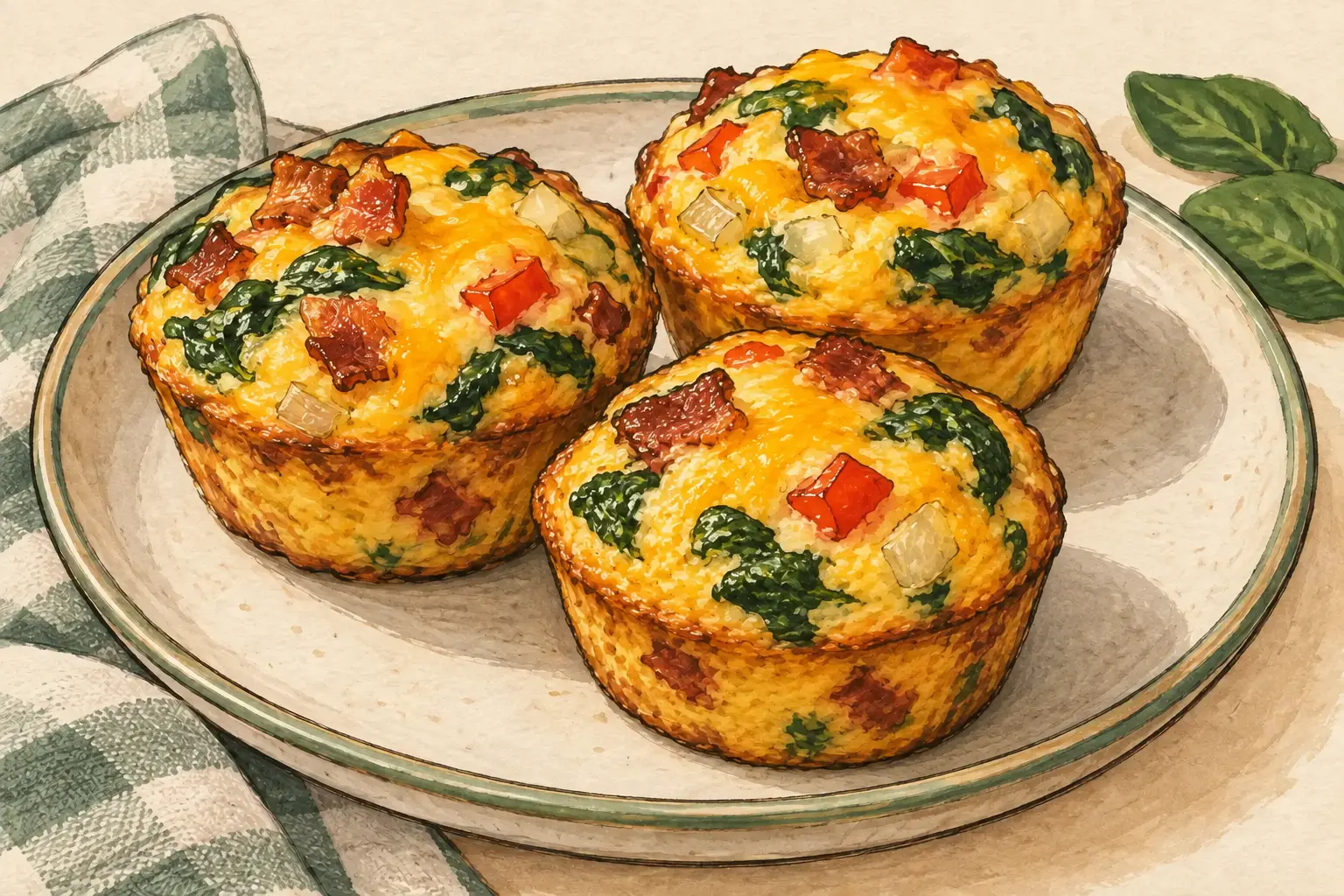
These baked egg muffins layer cheddar, crumbled bacon, and sautéed vegetables in a butter-greased 12-cup muffin tin. This is an untested editorial proposal; it is not kitchen-tested.
Recipe status: This fixed editorial formula is not kitchen-tested. The pictures are conceptual illustrations, not photographs of a cooked result. Finished yield, preparation time, texture, storage quality, and nutrition have not been measured or calculated.
Food safety first: For this meat-containing egg dish, check the center of muffins in several areas of the pan with a food thermometer and continue baking until each checked center reaches 165°F (74°C). Refrigerate uneaten muffins in a shallow container within 2 hours of cooking, or 1 hour above 90°F (32°C). See egg with meat leftovers.
Ingredients
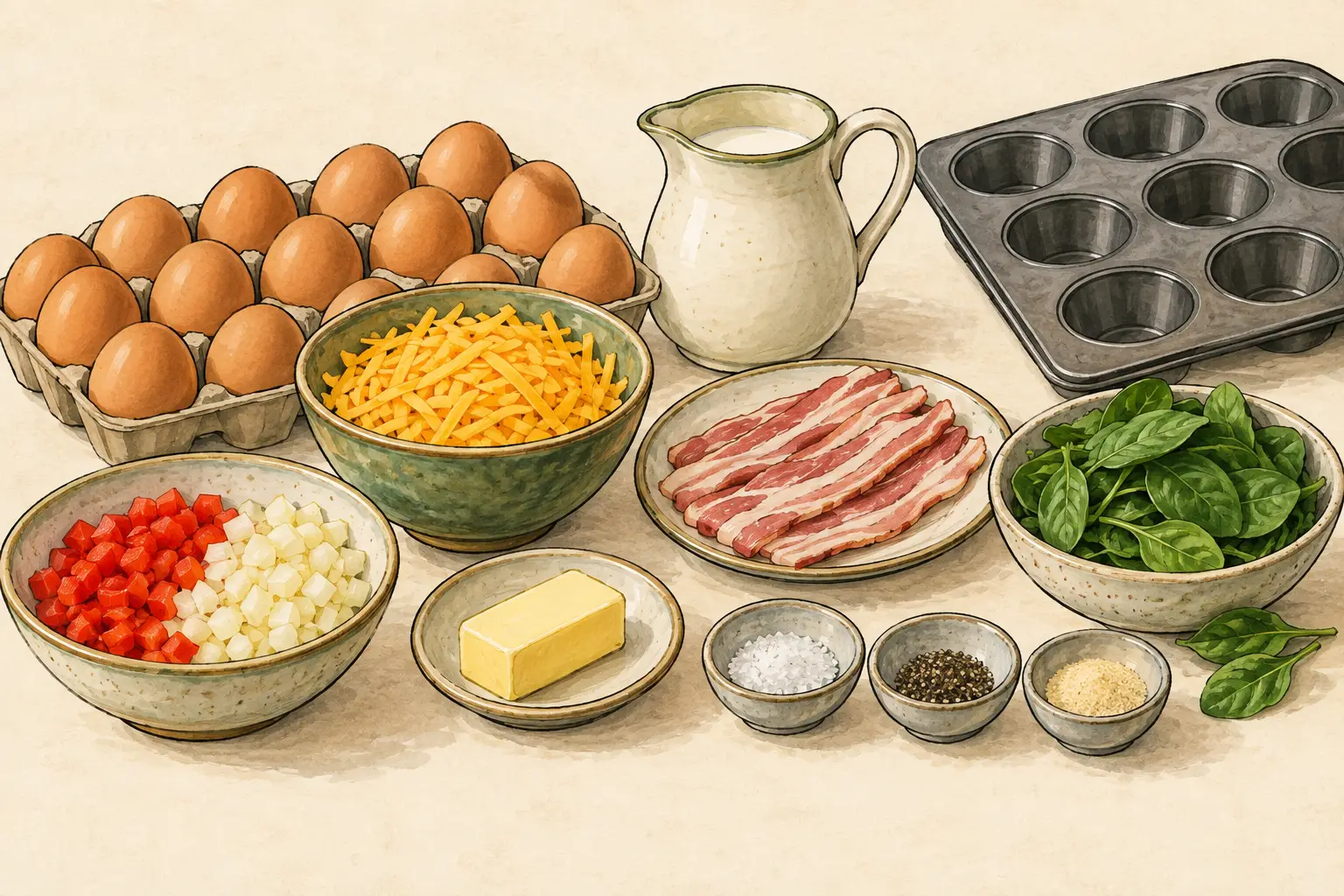
- Raw whole egg contents, 600 g weighed after cracking (roughly 12 large eggs; weigh the edible contents)
- Heavy cream, 120 g (about 1/2 cup)
- Shredded sharp cheddar cheese, 113 g (about 1 cup), divided
- Bacon, 170 g raw (about 6 slices), cooked and crumbled
- Red bell pepper, diced, 75 g (about 1/2 cup)
- Yellow onion, diced, 40 g (about 1/4 cup)
- Fresh baby spinach, chopped, 60 g (about 2 cups)
- Fine sea salt, 3 g (about 1/2 tsp)
- Black pepper, 0.5 g (about 1/4 tsp)
- Garlic powder, 0.75 g (about 1/4 tsp)
- Butter, 14 g (about 1 tbsp), for greasing the muffin tin
Equipment
- 12-cup muffin tin
- skillet
- large mixing bowl
- whisk
- instant-read food thermometer
- cutting board and knife
- measuring cups and spoons
- shallow storage container for the refrigerator
Method
- Preheat the oven to 350°F (175°C) and grease a standard 12-cup muffin tin with most of the measured butter, reserving some in case another batch is needed.
- Cook the bacon in a skillet over medium heat, checking for doneness starting around 6 to 8 minutes, until browned throughout; drain on paper towels, then crumble once cool enough to handle.
- In the same skillet, cook the diced red bell pepper and yellow onion, checking starting around 3 to 4 minutes, until softened, then add the spinach and cook briefly, checking until just wilted; remove from heat.
- In a large bowl, whisk the raw whole egg contents, heavy cream, sea salt, black pepper, and garlic powder until fully combined.
- Distribute the crumbled bacon, cooked vegetables, and about three-quarters of the cheddar cheese across the muffin cups, dividing the fillings as evenly as practical.
- Pour egg mixture over the fillings without filling any cup more than about three-quarters full, then top with the remaining cheddar. If mixture remains, use the reserved butter to grease cups for another batch rather than overfilling.
- Bake, beginning to check for doneness starting around 20 to 22 minutes, using an instant-read food thermometer inserted into the center of muffins in more than one area of the pan; continue baking until every checked center reads at least 165°F (74°C), since this is a meat-containing egg dish.
- Remove from the oven and let the muffins rest in the tin for 5 minutes, then run a knife around the edges to loosen each one.
- Place any uneaten muffins in a shallow container and refrigerate promptly, within 2 hours of removing the pan from the oven, or within 1 hour if the surrounding temperature is above 90°F (32°C).
Practical notes
- Check the center of muffins in more than one location, since fillings and oven hot spots can vary the temperature reached across the pan.
- A food thermometer reading of 165°F (74°C) is the way to confirm the safe endpoint for this meat-containing egg dish; a set appearance alone is not a safety measurement.
- A 12-cup muffin tin is the starting equipment, but this formula has not been tested for pan fit or a finished count; work in batches if mixture remains.
- Refrigerate uneaten muffins in a shallow container promptly within 2 hours of baking (or within 1 hour above 90°F/32°C), and reheat leftovers to 165°F (74°C) if served warm later.
Contains egg and dairy (heavy cream, cheddar cheese) and pork (bacon); this formula does not include tree nuts or fish.
The ingredient choices follow a lower-carbohydrate style, but no nutrient calculation or individual keto-fit verdict has been approved for this formula.
Article history
- Restored as an editorially developed, not kitchen-tested recipe with a fixed formula and no measured yield, timing, sensory, or nutrition claims
- First published
Your learning guide