Keto Flu Symptom Checker
Review timing, severity, symptoms, and warning signs to receive cautious educational guidance. The result cannot identify a cause, diagnose keto flu, or determine whether a specific electrolyte is low.
Adult scope: this checker is for adults. A child or teenager needs guidance from their pediatric care team. Headache, fatigue, nausea, dizziness, and similar symptoms can also reflect infection, medication effects, low glucose, pregnancy, inadequate intake, sleep loss, or another condition.
Education is not diagnosis
- General education
- Personal self-check
- Clinician discussion
- Urgent care if needed
Know when to get medical help
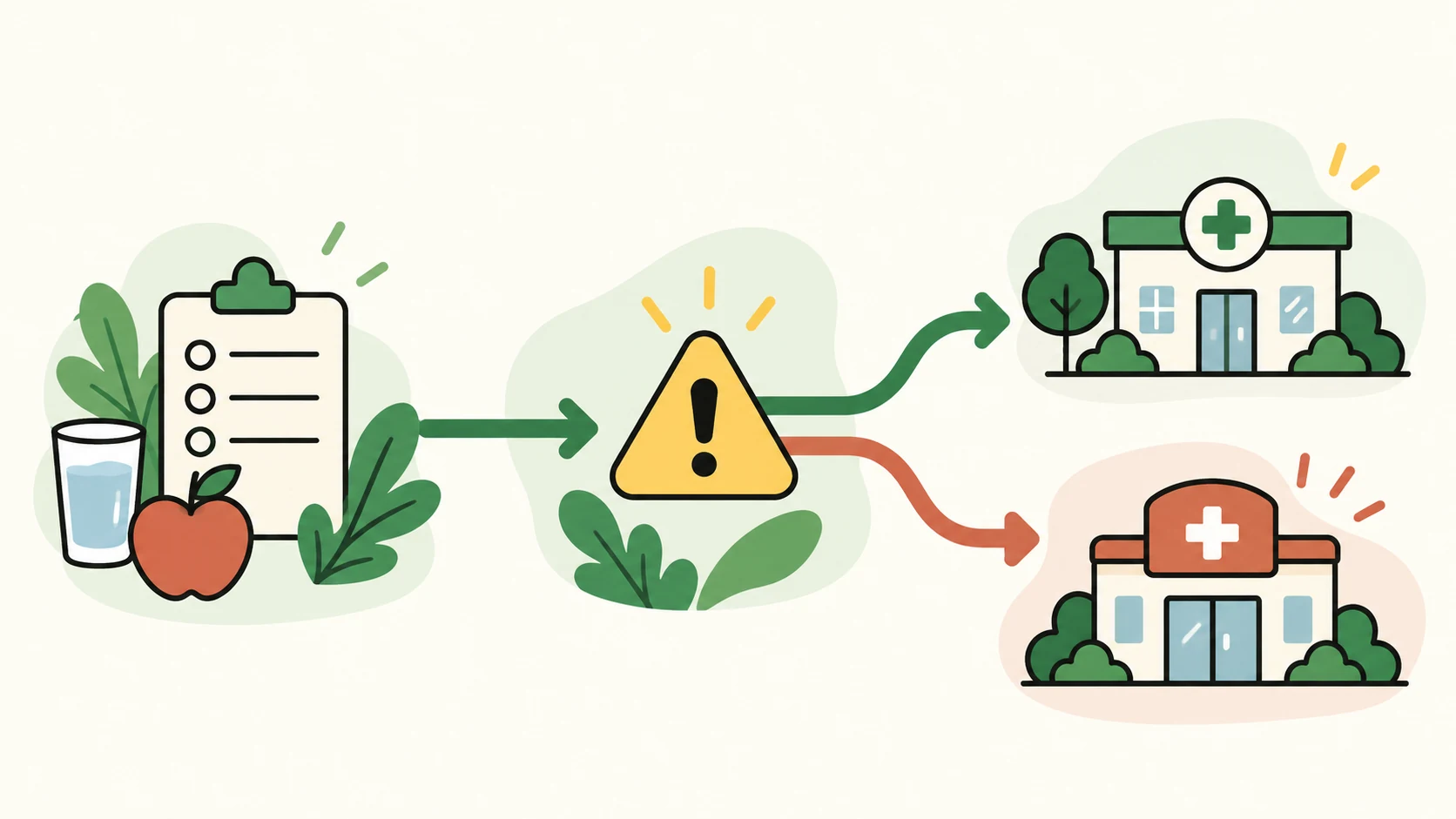
Do not assume severe, worsening, or unusual symptoms are keto flu. Emergency signs take priority over every other answer in this guide; other concerning signs need same-day medical advice.
- Emergency: Trouble breathing or unusually rapid, deep breathing
- Emergency: Chest pain or pressure
- Emergency: Fainting, a seizure, new confusion, or difficulty waking
- Emergency: Repeated vomiting or being unable to keep fluids down
- Emergency: Fruity-smelling breath, especially with nausea, vomiting, abdominal pain, excessive thirst, or frequent urination
- Same-day: A new, very fast, pounding, or irregular heartbeat
- Same-day: Worsening dizziness, very dark urine, or urinating much less than usual
- Same-day: A fever, severe pain, or symptoms that are rapidly worsening
What a tool can and cannot do
- User input
- Transparent method
- Bounded output
- Known limits
How this guide works
This is a transparent, rule-based educational guide—not a validated screening instrument. Emergency warning signs override all other answers; severe or high-risk contexts route to professional care; only mild or moderate, recent symptoms with no selected risk context produce general self-care options. Your answers stay in this page state and are not saved by the checker.
Oddbjørn Skartun, Callum Rhys Smith, Johnny Laupsa-Borge, and Simon Nitter Dankel reported in a 2025 scoping review that symptoms, definitions, proposed mechanisms, and timelines varied widely, with few mechanisms or relief strategies tested directly. Emmanuelle Bostock, Kenneth C. Kirkby, B. V. Taylor, and J. A. Hawrelak found a first-week peak and a decline across four weeks in retrospective forum reports, but that uncontrolled sample cannot establish prevalence or an individual timeline. The checker therefore uses persistence only as a reason to seek another explanation, not as a diagnostic cutoff.