Ketone Reading Guide
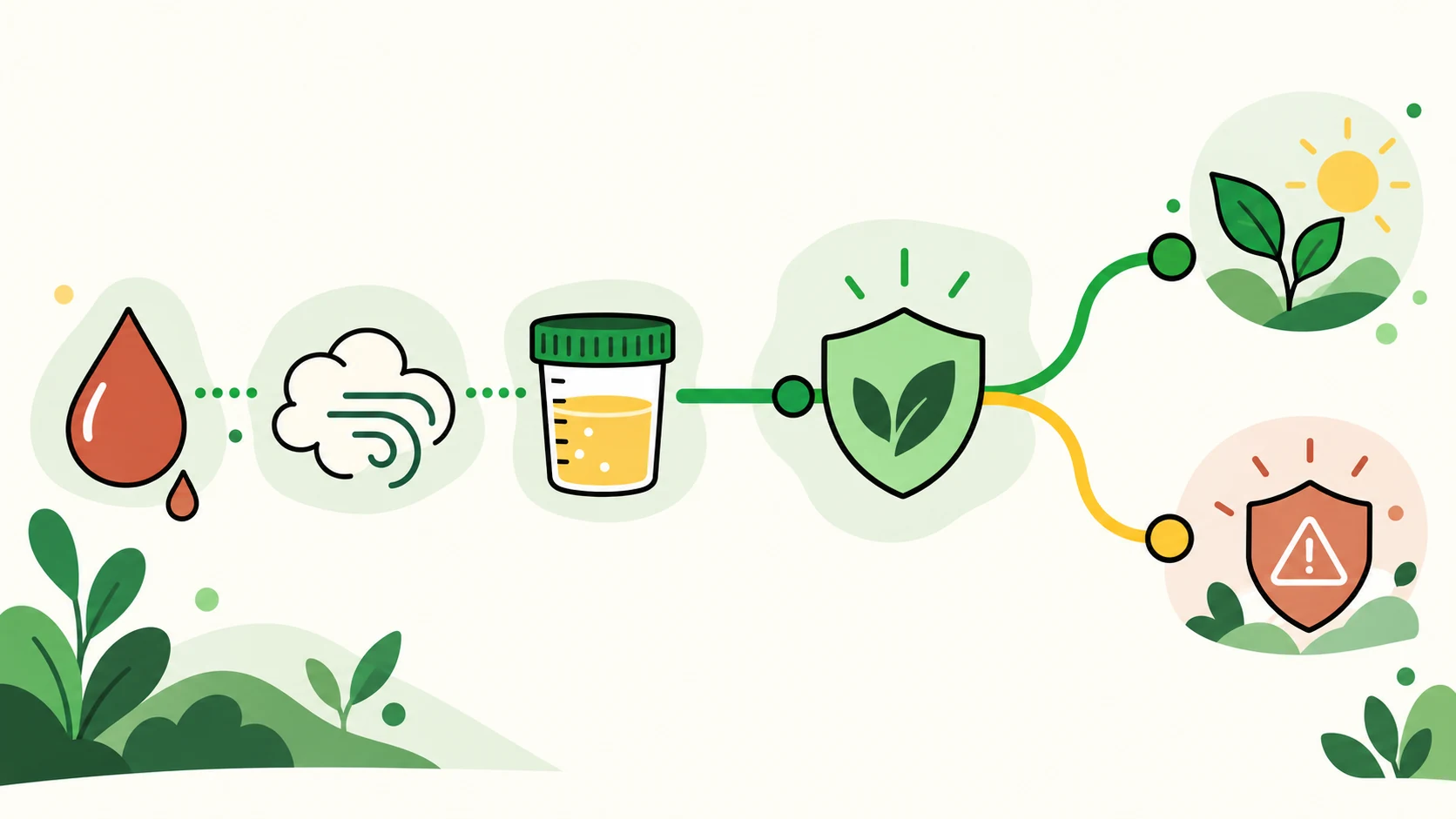
Blood, breath, and urine tests measure different ketones on different scales. This guide identifies the measurement you entered and applies conservative blood and urine safety routes. It does not diagnose a medical condition or label a reading as a weight-loss, wellness, or therapeutic target.
If a clinician has given you a diabetes or ketone sick-day plan, follow that plan instead of this guide.
Adult scope: This guide is for adults. For a child or teenager, use the pediatric diabetes or ketone plan from their care team. Seek emergency help for the warning symptoms below.
When not to use an online interpreter
Get emergency help now for repeated vomiting or inability to keep fluids down, abdominal pain while very unwell, rapid or deep breathing, confusion, or unusual sleepiness. Do not wait for glucose to become high: DKA can occur with lower glucose, particularly with SGLT2-inhibitor use and during pregnancy.
A home glucose or ketone result cannot diagnose or exclude DKA because it does not measure blood pH or bicarbonate.
What each test measures
| Test | Measurement | Important limit |
|---|---|---|
| Blood meter | Circulating beta-hydroxybutyrate (BHB) | A home BHB value does not measure acidosis or establish a nutrition target. |
| Breath meter | Breath acetone | Device scales vary and do not have a reliable one-to-one BHB conversion. |
| Urine strip | Excreted acetoacetate | Timing, hydration, and the product color scale affect the result. A moderate or large category with diabetes, SGLT2-inhibitor use, or pregnancy routes to urgent medical guidance. |
Check a ketone reading
Safety check and reading
No result yet. Enter a reading, complete the safety context, and select “Check this reading.”
Education is not diagnosis
- General education
- Personal self-check
- Clinician discussion
- Urgent care if needed
What the DKA criteria actually require
The 2024 ADA/EASD/JBDS/AACE/DTS consensus requires all three parts for a DKA diagnosis: diabetes or glucose at or above 200 mg/dL (11.1 mmol/L), ketonemia (blood BHB at or above 3.0 mmol/L or urine ketones at 2+ or higher), and metabolic acidosis. A home meter cannot assess the acid-base criterion.
The same consensus recognizes euglycemic DKA, so normal or lower glucose cannot rule it out. SGLT2 inhibitors, pregnancy, and reduced food intake are among contexts in which a lower-glucose presentation may occur. See the 2024 hyperglycemic-crises consensus report.
How this differs from GKI
GKI is a glucose-to-BHB ratio proposed for research monitoring; it is not a DKA screen. If you have blood readings taken at roughly the same time, the GKI calculator checks both raw values before doing the arithmetic. Its methodology is described in the original 2015 GKI paper.
What a tool can and cannot do
- User input
- Transparent method
- Bounded output
- Known limits