Keto Meal Planning: Build a Safer, Flexible First Week
Keto meal planning is a way to make food, shopping, budget, leftovers, and safety decisions visible before the week starts. It can make a plan easier to carry out; it cannot guarantee ketosis, weight change, health benefits, or that keto is appropriate for a particular person.
Begin with the keto safety screen if you have not already done so. Planning is not a substitute for medication advice, clinical assessment, or a food-safety plan.
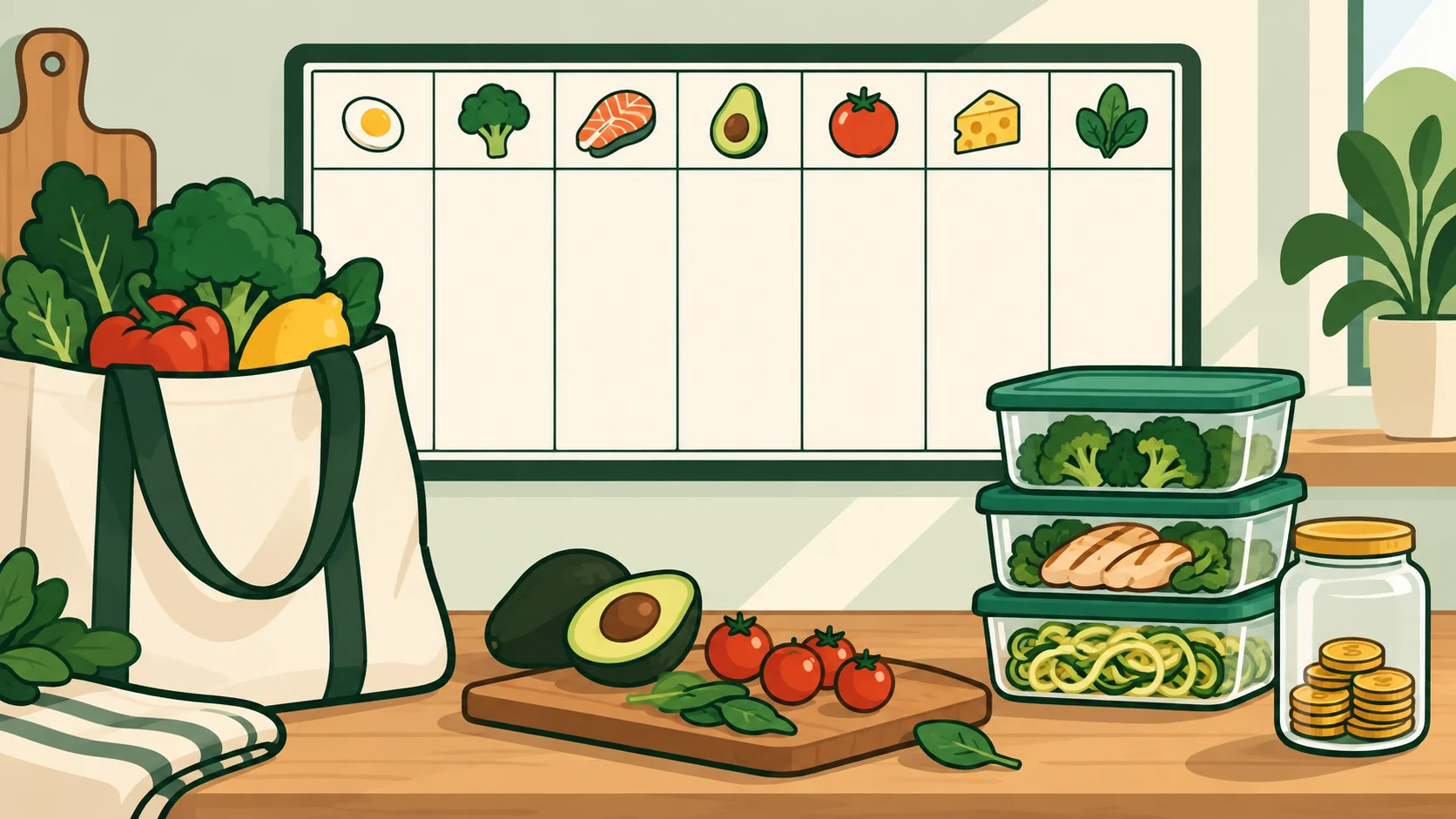
A flexible planning loop
- Plan
- Shop
- Prepare
- Review and adapt
Plan decisions in the order they matter
Do not start with a rigid seven-day menu. First decide whether the diet is appropriate, identify food roles that can meet your needs, and set a realistic shopping and storage plan. Only then should a sample menu become useful.
The six-step learning path below keeps the planning decisions in sequence: choose a workable approach, create it, adapt it to a budget, prepare food, store it safely, and extend it beyond one week. The 7-day keto meal-plan template remains a separate, flexible reference once you have that context.
Guided path
Plan keto meals
Move from a food list to repeatable meals, a workable budget, and safer preparation and storage habits.
0 of 6 read
- Why Meal Planning Matters
Choose a planning method that fits your schedule and household.
- How to Create a Keto Meal Plan
Build meals around your preferences, food access, and constraints.
- Keto on a Budget
Adapt the plan when cost is an important constraint.
- Meal Prep Tips and Tricks
Make the plan easier to repeat during a busy week.
- Freezing and Storing Keto Meals
Use evidence-based food-safety guidance for prepared meals.
- Monthly Keto Meal Plans
Scale a working weekly pattern into a longer planning rhythm.
What a useful plan checks
A workable week gives each ingredient a role: a meal, a second use, or a storage plan. It also makes practical constraints explicit.
- Food pattern: protein foods, non-starchy vegetables, fiber sources that fit the person's approach, and predominantly unsaturated fats rather than a list of branded "keto" foods.
- Medication and health context: agreed monitoring and clinician instructions when glucose-lowering medicines or other relevant conditions are involved.
- Money and access: an inventory, substitutions, unit-price comparisons, and a budget that fits the household.
- Time and storage: prep tasks, leftovers, refrigerator or freezer destinations, and food-safety dates.
- Flexibility: an alternative meal for a busy day, a social meal, allergies, or an unavailable ingredient.
Meal planning research supports a modest, practical claim: in a large observational study, people who reported planning meals also reported greater food variety and closer adherence to nutrition guidance. That study cannot establish that planning caused those outcomes, and it was not a keto trial.1 Keto-specific evidence also shows why planning must not be reduced to carbohydrate arithmetic: in the Keto-Med trial, the ketogenic phase had lower fiber and some nutrients and higher LDL cholesterol than the Mediterranean-plus phase, despite structured support.2
Printable planning kit
Keep the plan, list, and swaps together
These files and guides organize a week; they do not calculate a personal nutrition target or replace clinical instructions. Use the current label and the food's actual form whenever you swap an ingredient.
Plan the food roles
Choose a few protein, vegetable, fat, and backup-meal roles before deciding on a menu.
Build a flexible planShop with a fallback
Match the actual food form and package label, then write a substitution before an ingredient is unavailable.
Use the grocery guidePrepare and store
Give each prepared ingredient a meal, a second use, or a safe refrigerator or freezer destination.
Check storage stepsReview, then adjust
Keep what worked and change the specific bottleneck—cost, waste, symptoms, access, or a nutrition gap.
Review a lower-cost approach
7-day sample plan
A flexible one-week menu. It deliberately does not set portions or macro targets.
Open PDFShopping list
A 45-item checklist to adapt to the meals, labels, allergies, and food already at home.
Open PDFBlank monthly planner
An undated overview and weekly sheets for meals, leftovers, substitutions, and top-ups.
Open PDFNeed to compare a plain ingredient or form? Use the Food Database as a source-recorded starting point, then verify the food you actually buy.
Plan around the day you actually have
The six-step path builds a weekly foundation. For a particular constraint, use the guide that follows the meal through that setting:
- Pack a low-carb workday lunch from home storage to the office table.
- Cook one dinner for different plates with a shared main and separate sides.
- Plan low-carb meals for one around ingredient reuse and manageable leftovers.
- Handle a road-trip meal when a cooler, stop, or planned meal changes.
- Plan food for a hotel room after checking its actual storage and equipment.
- Consider leaving keto when the useful next step is broadening your food pattern.
Make a sample plan serve you, not the other way around
The 7-day keto meal-plan template is a flexible example, not a prescription. Swap foods to account for culture, budget, allergies, preferences, and clinician guidance. For people with diabetes, especially those taking glucose-lowering medicine, a sharp carbohydrate change can require a medication plan before the menu changes.3
Use current package labels, dates, and local food-safety guidance when you shop and store food. A plan is successful when it is nutritionally adequate, safe, affordable, and sustainable—not when it produces the strictest-looking grocery list.
Build the week with these guides
Step 2
Keto grocery shopping list
Translate a plan into labels, quantities, substitutions, and a practical shop.
Step 3
How to create a keto meal plan
Use a flexible framework instead of copying a fixed macro ratio.
Step 4
Freezing and storing keto meals
Give prepared food a safe destination before you cook extra portions.
Sources
Your learning guide