50 Easy Keto Snacks (Store-Bought & Homemade)
A snack can fit a carbohydrate-restricted diet without being high in added fat or carrying a "keto" claim on the package. The useful questions are concrete: What is the serving size? How much total carbohydrate and fiber does the food contain? Does it have added sugar? Does it need refrigeration? Does it contain an allergen you avoid?
This guide gives 25 store-bought and 25 homemade ideas. It does not assign generic net-carb numbers to them. Formulas, brands, recipes, and serving sizes differ too much for one estimate to describe the food in your hand.
Recipe and storage checks
- Check ingredients
- Cook safely
- Cool and store
- Reheat or discard
Read the label before the marketing
The FDA Nutrition Facts label reports serving size, total carbohydrate, dietary fiber, total sugars, and added sugars. "Net carbs" is not a required line, and a package's front-panel claim does not replace the full label.1
Use this sequence:
- Compare the labeled serving with the amount you plan to eat.
- Read total carbohydrate, fiber, total sugars, and added sugars.
- Review the ingredient list for sweeteners and starches.
- Check the allergen statement and any cross-contact warning.
- If the package promotes "net carbs," look for the company's calculation instead of assuming every sugar alcohol or fiber is treated the same way.
The net-carb calculator can do the arithmetic after you enter a product's current values. For foods without a label, use the matching entry and serving weight in USDA FoodData Central.5 A universal "carbs per snack" cutoff is less useful than checking the snack against the daily plan you or your clinical team selected.
Shelf-stable does not mean every packaged food
USDA describes shelf-stable food as food that can remain safely at room temperature in a sealed container because of the way it was processed and packaged.2 The package must say whether an unopened product is shelf-stable and whether it needs refrigeration after opening.
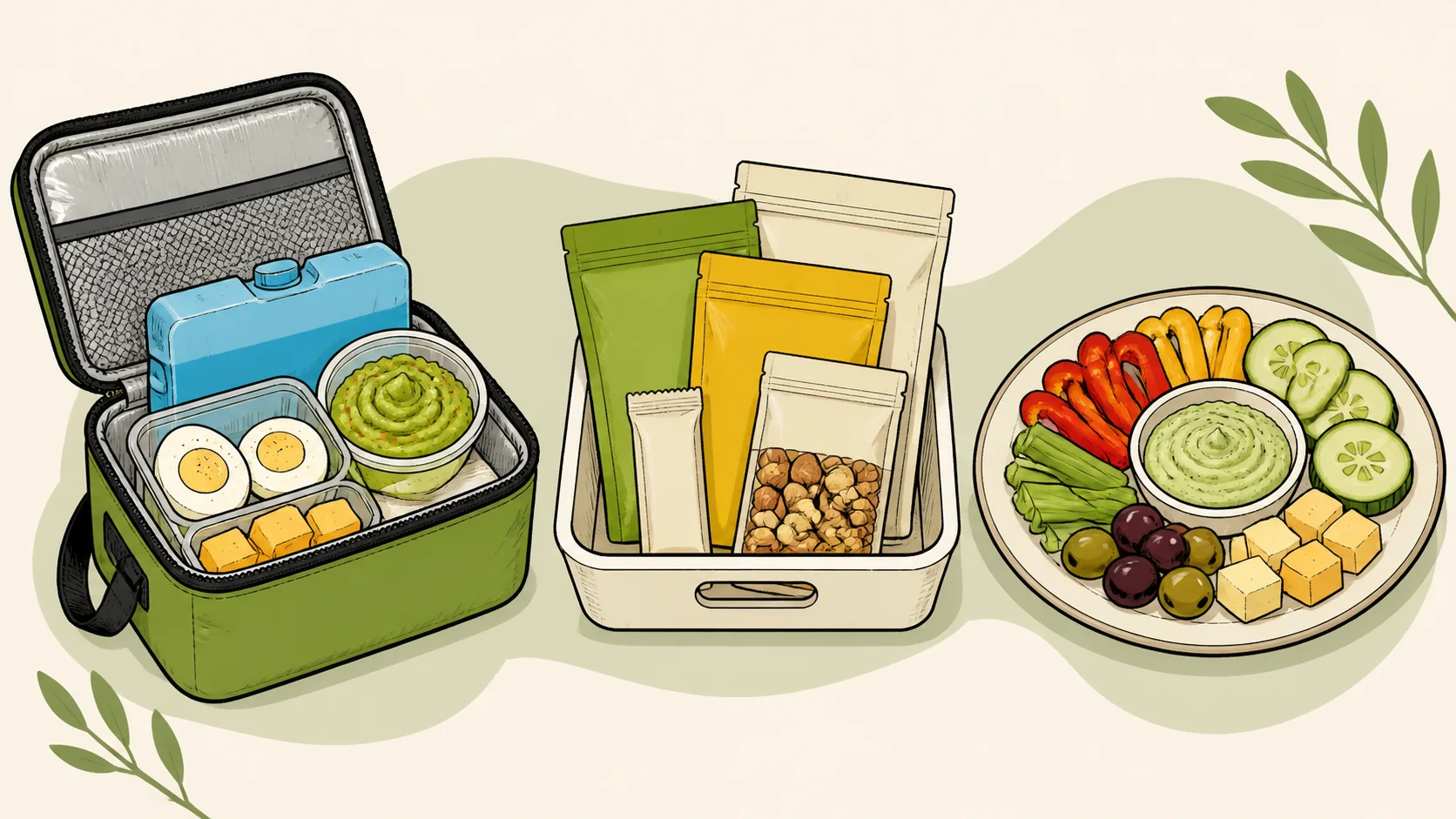
Cheese, yogurt, cottage cheese, hard-boiled eggs, guacamole, dips, meat-and-cheese packs, smoked fish, and homemade egg or meat dishes are perishable unless a specific package says otherwise. Keep cold food refrigerated or in an insulated cooler with enough ice or frozen gel packs to stay cold. Refrigerate perishables within 2 hours, or within 1 hour above 90°F.3 A parked car is not safe cold storage.
For cooked leftovers, use shallow containers, refrigerate within the same time limit, and use within 3 to 4 days or freeze. Reheat leftovers to 165°F.3 Cook egg dishes to 160°F in the center.4
25 store-bought snack ideas
Pantry options, when the label says shelf-stable
- Pork rinds. Compare flavored versions for added sugars and starch-based coatings.
- Shelf-stable beef jerky. Confirm the unopened package can be stored at room temperature; refrigerate after opening if directed.
- Shelf-stable turkey jerky. Read both the carbohydrate line and storage directions because formulations differ.
- Shelf-stable meat sticks. Do not assume every salami or sausage stick belongs in a desk drawer; the label decides.
- Baked cheese crisps. Choose a sealed shelf-stable product, or use a tested cracker formula.
- Roasted seaweed snacks. Check flavored packs for sweetened sauces and allergen warnings.
- Dill pickles. An unopened shelf-stable jar may require refrigeration once opened.
- Olives. Single-serve sealed cups can be convenient; follow the label after opening.
Refrigerated dairy and prepared food
- String cheese. Pack it with a cold source.
- Mini wax-wrapped cheese. Wax wrapping does not make a refrigerated cheese shelf-stable.
- Cheese cubes. Portion them into a cold container shortly before leaving.
- Plain Greek yogurt. Compare added sugar and serving size across products.
- Cottage cheese. Keep it chilled and follow the package's storage directions.
- Macadamia nuts. Check flavored coatings and portion from the label.
- Pecans. Plain or dry-roasted versions make label comparison simple.
- Almonds. Review honey-roasted, candied, and seasoned versions separately.
- Pumpkin seeds. Check whether the listed serving includes shells.
- Roasted sunflower seeds. Seasoned varieties can contain sugar or starch.
- Dark chocolate. Cocoa percentage alone does not give the carbohydrate amount; read the label.
- Packaged low-carb confections. Check serving size, sweeteners, and any gastrointestinal warning on the package.
- Low-carb protein bars. Compare the full carbohydrate panel and ingredient list, not the product name.
- Meat and cheese packs. These belong in a refrigerator or cooler.
- Single-serve guacamole. Treat it as perishable unless the label expressly permits room-temperature storage.
- Packaged hard-boiled eggs. Keep refrigerated and follow the use-by date.
- Jerky bites or meat crisps. Confirm shelf stability product by product; lower sugar, lower sodium, or other health claims cannot be inferred from the format.
Use the keto grocery list to plan ingredients, then verify each branded product in the store. If protein is the priority, the high-protein snack guide organizes options around that separate goal.
25 homemade snack ideas
The instructions below are formats, not fully tested recipes. Use a tested recipe when cooking meat or egg dishes, and use a thermometer where a safe internal temperature applies.
Savory bites
- Deviled eggs. Cook the eggs until the yolks and whites are firm, make the filling with clean utensils, and keep the finished eggs chilled.
- Bacon-wrapped asparagus. Use a tested formula and refrigerate leftovers within 2 hours.
- Cucumber and cream cheese bites. Assemble close to serving and keep cold.
- Antipasto skewers. Thread refrigerated cheese and cured meat with olives; transport with a cold source.
- Parmesan crisps. Bake small mounds of cheese until set, cool, and store according to the recipe.
- Ham and cream cheese roll-ups. Keep both ingredients and the finished rolls refrigerated.
Dips and dippers
- Guacamole with celery or bell pepper. Prepare with clean produce and refrigerate promptly.
- Ranch dip with vegetables. Mix in a clean container and keep chilled during service.
- Spinach-artichoke dip. Serve hot or cold according to a tested recipe; refrigerate within 2 hours and reheat leftovers to 165°F.
- Buffalo chicken dip. Start with chicken cooked to 165°F, prevent cross-contamination during shredding, and reheat leftovers to 165°F.
Sweet options
- Cocoa-coconut bites. Combine coconut, cocoa, and a nut or seed butter; chill to set.
- Peanut butter coconut bites. Use a nut or seed butter whose label fits your needs and refrigerate the finished mixture.
- Chia seed pudding. Mix with an unsweetened refrigerated milk or shelf-stable milk, then refrigerate the prepared pudding.
- Berries with whipped cream. Wash the fruit under running water, dry it, and assemble just before eating.
- Coconut butter cups. Chill coconut butter and cocoa in small molds. This avoids uncooked flour and raw egg.
Crisp and make-ahead options
- Homemade trail mix. Combine nuts, seeds, unsweetened coconut, and labeled dark chocolate.
- Roasted spiced nuts. Bake from a tested formula and cool before sealing so condensation does not soften them.
- Kale chips. Wash and dry the leaves thoroughly before oiling and baking.
- Zucchini chips. Slice evenly and use a tested oven or dehydrator method; discard any batch that develops mold or an off odor in storage.
- Roasted cauliflower bites. Refrigerate cooked leftovers and reheat to 165°F.
- Mini egg muffins. Use a tested formula, cook the center to 160°F, refrigerate within 2 hours, and reheat leftovers to 165°F.
- Tuna or chicken salad lettuce cups. Keep the salad chilled and add it to washed, dried lettuce just before eating.
- Caprese skewers. Keep mozzarella and the assembled skewers refrigerated.
- Baked pepperoni chips. Use ready-to-eat pepperoni, bake until crisp, and refrigerate leftovers if the package directs.
- Nut-and-seed energy bites. Mix nut or seed butter with coconut and chia; use an alternative for any relevant allergy and refrigerate the finished bites.
Pack for the setting
- Desk drawer: choose only sealed items whose labels permit room-temperature storage, such as plain nuts, seeds, pork rinds, seaweed snacks, dark chocolate, or a specifically shelf-stable jerky.
- Commute or road trip: put cheese, eggs, yogurt, dips, guacamole, prepared meat, salad, and cut produce in an insulated cooler with cold packs. Do not rely on air conditioning or outside weather to keep food safe.
- At home: return dips, dairy, eggs, meat, and cut produce to the refrigerator before the 2-hour limit. Use a clean utensil rather than eating repeatedly from a batch container.
- Allergy-aware packing: nuts, dairy, egg, sesame, fish, and soy appear often in this list. Check every package and prevent cross-contact when preparing food for someone else.
Products that need a closer label check
Dried fruit, sweetened jerky, flavored yogurt, granola, trail mix, bars, and "keto" confections vary enough that category-wide carb numbers are misleading. A product may combine a small labeled serving with added sugars, starches, or several sweeteners. Compare the intended portion with the serving size and use the Nutrition Facts panel rather than a front-of-package adjective.
The same rule applies to sugar alcohols. Their presence does not justify automatically subtracting all listed grams. If a manufacturer publishes a net-carb number, review its stated method and decide whether it matches the method in your dietary plan.
Do you need a snack?
No meal pattern requires snacking. Eat a snack when it solves a specific problem, such as a long interval between meals or an activity that changes your schedule. If you routinely need snacks because meals leave you hungry, review the meals themselves rather than adding automatic fat portions.
For a full-day view, compare the snack with the 7-day keto meal plan or use the meal template builder for breakfast, lunch, and dinner ideas. New symptoms should not be assumed to be routine "keto flu"; the keto flu checker separates common timing patterns from warning signs that need medical attention.
Frequently Asked Questions
Which keto snacks can stay in a desk drawer?
How long can cheese, eggs, dips, or meat snacks sit out?
How long do homemade cooked snacks keep in the refrigerator?
What temperature should mini egg muffins reach?
How many carbs should a keto snack have?
Are products labeled keto automatically low in carbohydrate?
Works cited
Your learning guide