High-Protein Keto Snacks: Labels, Storage & Ideas
Before you reach for a snack, ask two questions: does eating between meals actually help here, and can this specific item survive the trip from pantry or fridge to your mouth safely? A snack can bridge a gap between meals. If medication, low appetite, or a treatment plan affects when you eat, follow that plan rather than a blanket rule to snack or skip.
If a snack is useful, the next filter isn't just carbs or protein grams — it's whether the exact product in your hand is safe to eat where you are. Check ingredient and allergen labels, too. A refrigerated cup of yogurt riding along without reliable cold storage, or a pouch after its seal is broken, isn't the same food safety question as an item straight from a cold fridge or a still-sealed package. Pregnancy, kidney or liver conditions, and diabetes medications can change which food and schedule fit; the clinical caveats below deserve attention before the snack list.
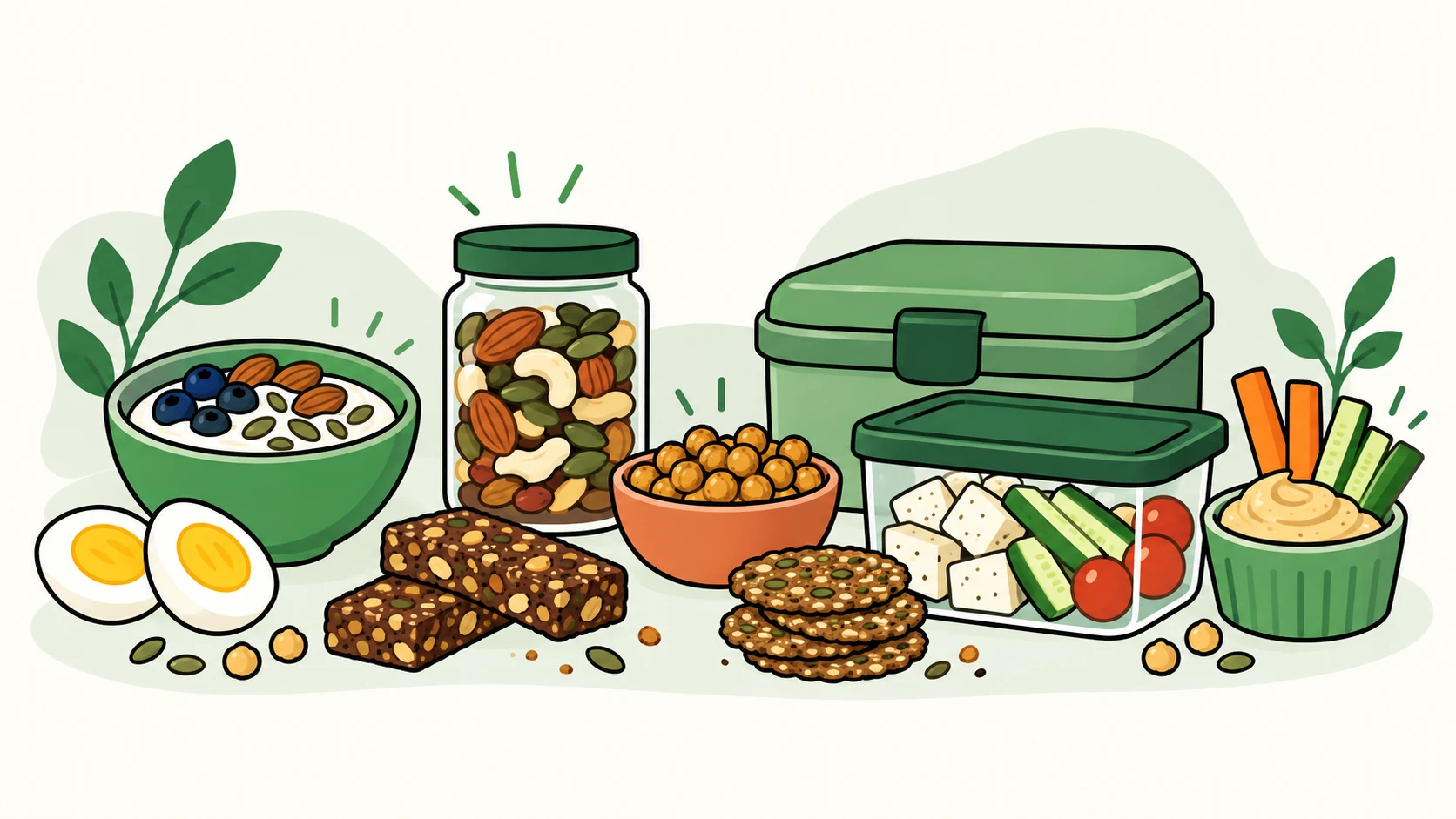
Choose by package state, not by food type
| Package state | Practical check |
|---|---|
| Refrigerated ready-to-eat food | Keep at 40°F (4°C) or below. FoodSafety.gov lists hard-cooked eggs for up to one week and prepared egg salads or cooked meat/poultry for 3–4 days refrigerated. |
| Sealed shelf-stable product | Follow the unopened-storage instructions on its own label; a pouch, bar, and drink may have different rules. |
| Opened product | Follow its after-opening directions. If it requires refrigeration, keep it cold or choose something you can store safely. |
What a real serving looks like
Two single-food records from the site's food database show how differently a "protein snack" can shape up. A 150 g serving of plain nonfat Greek yogurt — refrigerated, ready-to-eat — carries 15.5 g protein and 5.5 g total carbohydrate (FDC 2705424). A 28.35 g serving of unroasted almonds — whose relevant safety question is package state, not a refrigerator clock — carries 6.1 g protein and 5.7 g total carbohydrate (FDC 2707486).
These are single-food values for the plain items only, at these exact gram amounts — not interchangeable protein doses, not complete snacks, and not a guarantee about a branded yogurt cup or almond pouch on a store shelf. Berries, granola, a sweetened coating, a nut butter dip, or any change in packaging makes a different product that needs its own current label and quantity, not these numbers.
Which snacks need refrigeration?
- plain Greek-style yogurt, skyr, or cottage cheese;
- hard-cooked eggs;
- tofu cubes or edamame;
- homemade tuna, salmon, chicken, or egg salad;
- deli meat and cheese roll-ups;
- an opened ready-to-drink shake;
- leftover chicken, fish, or meat.
Keep these foods at 40°F (4.4°C) or below. Pack them with enough ice or frozen gel packs and return leftovers to safe refrigeration promptly. Discard perishable food left out more than two hours, or more than one hour above 90°F (32.2°C).1
The cottage-cheese chips page offers an oven method for a dairy snack. It is an untested editorial formula; crispness and protein per finished portion have not been verified.
Which unopened products can travel without a refrigerator?
- a sealed tuna, salmon, or chicken pouch labeled shelf-stable;
- jerky or a meat stick whose package permits room-temperature storage;
- an unopened shelf-stable protein drink;
- a labeled protein bar that fits the carbohydrate plan;
- nuts or seeds;
- dry-roasted edamame or lupini snacks;
- a single-serve packet of nut or seed butter.
Read the storage instruction, not the product category. Once a pouch or drink is opened, it may require refrigeration. “A normal travel day” is not a food-safety standard.
What should you check on the label?
- Serving size: the package may contain more than one serving.
- Protein: use the stated amount for that serving.
- Total carbohydrate and fiber: apply the correct U.S. or EU/UK label method.
- Added sugars and syrups: common in jerky, bars, yogurt, and shakes.
- Sugar alcohols and allulose: use explicit label adjustments rather than a blanket subtraction.
- Sodium and saturated fat: low carbohydrate does not neutralize either.
- Storage after opening: follow the manufacturer's direction.
Use the net-carb calculator for transparent arithmetic. Use the food guide when choosing between whole-food and packaged options.
What works after resistance training?
A normal meal can supply post-training protein; a supplement is not required. When a meal is delayed or appetite is limited, plain cultured dairy, eggs, tofu, a fish pouch, or a labeled shake can be convenient. Total daily intake and the resistance-training program matter more than a special “anabolic” snack window.
The sports-nutrition evidence supports adequate total protein for exercising adults, but it does not prove that every keto dieter needs the top of a broad athletic range.2 For the wider context, see working out on keto.
What works with a small appetite on GLP-1 therapy?
Try a small portion of plain yogurt, cottage cheese, egg, tofu, or a drink that is tolerated. Large, fatty snacks can worsen nausea or fullness for some people. The 2025 joint advisory emphasizes nutrient adequacy and structured resistance training; it also acknowledges uncertainty about the best protein calculation for people with obesity.3
Protein alone does not preserve skeletal muscle. See GLP-1, lean mass, and protein for the distinction between DXA lean mass and muscle.
Which pregnancy precautions apply?
CDC advises pregnant people to choose pasteurized dairy; cook eggs until whites and yolks are firm; avoid premade deli salads; and heat deli meats, cold cuts, hot dogs, and fermented or dry sausages to 165°F or until steaming hot.4 Adults 65 or older and people with weakened immunity should follow the same Listeria precautions.
A sealed shelf-stable fish pouch is not the same as refrigerated smoked fish. Check species-specific pregnancy advice about mercury as well as carbohydrate and storage.
When is a snack a poor solution?
Repeated grazing can obscure appetite and add more energy than intended. Cheese, nuts, pork rinds, and fat-based “keto bites” may be low in carbohydrate without supplying much protein for the portion. If snacks routinely replace vegetables and complete meals, solve the meal plan rather than adding another packaged product.
Use the breakfast guide and meal templates to build more complete options.
The keto calculator is an input-only macro arithmetic worksheet. It calculates results from values you enter; it does not choose a personalized protein or macro target.
If you need more than a snack
Sometimes the gap isn't a snack — it's the next real meal. If you're carrying food with you, see low-carb packed lunches, low-carb road trip meals, or low-carb hotel meals for options built around travel and limited kitchens. If what's missing is a full meal's worth of protein, high-protein low-carb meals and high-protein low-carb breakfasts cover that directly.
Frequently Asked Questions
What is the best high-protein keto snack?
Are tuna pouches shelf-stable?
Can a protein bar be high in carbs?
Do you need a protein snack immediately after training?
Are deli roll-ups safe during pregnancy?
Works cited
Your learning guide