7-Day Keto Meal Plan: A Flexible Beginner Template
Free printable
7-Day Keto Meal Plan (Sample)
A printable one-week sample menu with breakfasts, lunches, dinners, and optional snacks.
PDF · 2 pages · Letter landscape
What this plan does and does not do
- It supplies seven days of meal ideas that match the printable plan.
- It deliberately omits serving sizes and macro totals because recipes, brands, cooking fat, and individual needs are unspecified.
- Snacks are optional. Add, remove, or replace them according to hunger, the rest of the day, and any clinician-approved target.
- It cannot guarantee ketosis, weight loss, glucose control, nutritional adequacy, or medication safety.
This article was written from the cited research paper and current guidance from the American Diabetes Association, FDA, and USDA. Commercial meal-plan summaries were not used as evidence.
Check safety before using the menu
Review how to start keto safely and whether keto is appropriate for you before changing your usual carbohydrate intake.
Do not use this template as a self-directed treatment plan if you take insulin, a sulfonylurea, an SGLT2 inhibitor, or another medicine affected by a major diet change. Medical planning is also important for type 1 diabetes, a history of DKA, pregnancy or lactation, childhood or adolescence, kidney or liver disease, pancreatic disease, an eating disorder or relevant history, and clinician-directed ketogenic therapy for epilepsy.
The American Diabetes Association's 2026 Standards recommend individualized meal plans and ongoing medical oversight for very-low-carbohydrate approaches in diabetes. They discourage a ketogenic pattern with SGLT2 inhibitors and do not recommend very-low-carbohydrate plans during pregnancy or lactation, for children, for people with kidney disease, or for people with or at risk for disordered eating.1 A menu cannot safely determine medicine changes. Never reduce or stop insulin to match these meals.
How to make the template usable
- Choose portions separately. The amount depends on energy needs, protein needs, medical conditions, appetite, and the rest of the day's food. The menu does not define a serving.
- Check every packaged ingredient. Yogurt, granola, hot chocolate, cream sauce, salsa, Caesar dressing, pesto, meatballs, salami, nut butter, and coconut products vary substantially by recipe and brand.
- Count what is actually used. Cooking oil, sauces, dressings, drinks, and seconds affect the final meal even when they are absent from the meal name.
- Treat snacks as options. They are available for people who need them, not mandatory additions.
- Plan substitutions before shopping. Allergies, vegetarian eating, budget, availability, and saturated-fat goals can all require changes.
For a packaged product, start with its labeled serving size. FDA guidance explains that all nutrient values on the Nutrition Facts panel apply to that serving and that the serving size describes an amount typically consumed; it does not prescribe how much a person should eat.2 Then read total carbohydrate, fiber, added sugar, and any listed sugar alcohol. The net-carb calculator can show the arithmetic and its limits.
For plain ingredients, use USDA FoodData Central and match the food's form and amount. Foundation Foods, dietary-survey records, and industry-supplied branded records have different methods and metadata, so an entry for a raw vegetable is not interchangeable with a prepared branded dish.3 Calculating your macros explains why no single carbohydrate or fat ratio fits every reader.
The seven-day menu
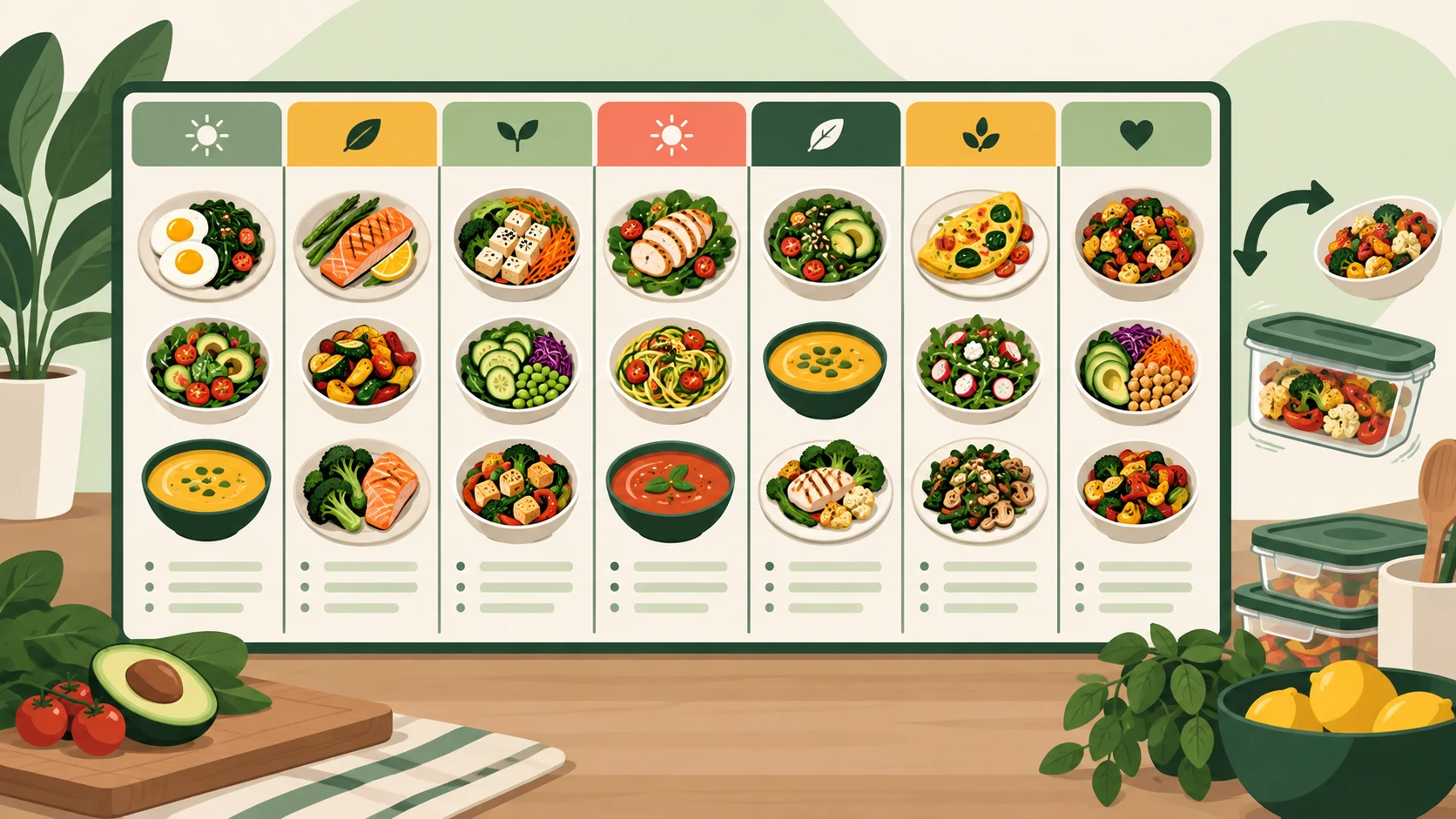
The meals below match the downloadable plan. They are ingredient prompts, not complete recipes.
Monday
- Breakfast: Scrambled eggs with cheese and spinach
- Lunch: Bunless burger with cheese, mushrooms, avocado, and greens
- Dinner: Pork chops with green beans
- Optional snacks: Almonds; cheddar cheese
Tuesday
- Breakfast: Mushroom omelet
- Lunch: Tuna salad with celery, tomato, and greens
- Dinner: Roast chicken with cream sauce and broccoli
- Optional snacks: Avocado with chicken salad; low-carb hot chocolate
Wednesday
- Breakfast: Bell pepper stuffed with cheese and eggs
- Lunch: Arugula salad with egg, turkey, avocado, and blue cheese
- Dinner: Grilled salmon with spinach
- Optional snacks: Guacamole with low-carb vegetables; cheese
Thursday
- Breakfast: Full-fat yogurt with keto granola
- Lunch: Steak bowl with cauliflower rice, cheese, herbs, avocado, and salsa
- Dinner: Bison steak with cheesy broccoli
- Optional snacks: Coconut, nut, and seed trail mix; sugar-free jelly with cream
Friday
- Breakfast: Baked avocado egg boats
- Lunch: Chicken Caesar salad
- Dinner: Pork chops with vegetables
- Optional snacks: Hard-boiled eggs; celery with unsweetened nut butter
Saturday
- Breakfast: Cauliflower toast with cheese and avocado
- Lunch: Bunless salmon burger with pesto
- Dinner: Meatballs with zucchini noodles and Parmesan
- Optional snacks: Coconut chips; green olives
Sunday
- Breakfast: Coconut-milk chia pudding with coconut and walnuts
- Lunch: Cobb salad with greens, egg, avocado, cheese, and turkey
- Dinner: Coconut chicken curry
- Optional snacks: Olives and salami; Greek yogurt with flax
For more options, browse the keto recipe index or use the keto food list to compare ingredients.
Shopping list
Quantities depend on the chosen portions, recipes, and number of people. Check what is already available before buying:
| Category | Foods used in the plan |
|---|---|
| Protein foods | Eggs; ground beef or burger patties; pork chops; chicken; tuna; turkey; salmon or salmon burgers; steak; bison; meatballs; salami |
| Dairy or substitutes | Cheese; blue cheese; Parmesan; plain full-fat yogurt; Greek yogurt; cream or a suitable alternative |
| Vegetables and fruit | Spinach; mushrooms; avocado; salad greens; green beans; celery; tomato; broccoli; bell pepper; arugula; cauliflower; herbs; salsa ingredients; mixed vegetables; zucchini |
| Nuts and seeds | Almonds; walnuts; chia; flax; trail-mix nuts and seeds; unsweetened nut butter |
| Pantry and prepared items | Unsweetened coconut products; low-carbohydrate hot-chocolate ingredients; granola; sugar-free jelly; guacamole; Caesar dressing; pesto; curry ingredients; coconut chips; olives; cooking oil; herbs and spices |
The list does not require organic produce, grass-fed meat, wild fish, specialty MCT products, or foods sold with a “keto” claim. Compare the complete label, price per usable amount, and ingredients that fit the actual meals. The keto grocery shopping guide provides a broader category list.
Turn the menu into your own shopping checklist
The Keto Shopping List Builder starts with a fixed 45-item checklist that you can adapt to the meals, substitutions, and food already at home, then print. It does not calculate portions, nutrient adequacy, allergies, or a clinical diet. Checked items stay only in the browser unless you print the list.
Allergen and substitution audit
This menu commonly contains milk, egg, fish, and tree nuts. Depending on the recipe or brand, it may also contain wheat, soy, peanuts, sesame, or other allergens. Pesto often contains milk and tree nuts; Caesar dressing may contain egg, milk, and fish; meatballs and burgers may contain egg, milk, soy, or wheat; granola, hot chocolate, sauces, curry paste, and meat substitutes require their own checks.
The FDA identifies nine major food allergens in the United States: milk, eggs, fish, Crustacean shellfish, tree nuts, peanuts, wheat, soybeans, and sesame. Packaged foods must identify relevant major allergen sources, but cross-contact and food prepared outside a package still require attention.5 If an allergy is severe, use products and preparation practices approved for that person's allergy plan rather than relying on a generic swap.
| Need | Possible change | What still needs checking |
|---|---|---|
| Dairy-free | Omit cheese and cream; use olive oil, avocado, or an unsweetened dairy-free product where it fits. | Soy, tree nuts, coconut, added sugar, total carbohydrate, calcium and vitamin D fortification |
| Egg-free | Use tofu or another suitable protein in breakfasts and salads; choose egg-free dressing and meatballs. | Soy, wheat, sesame, protein amount, and the substitute's label |
| Fish-free | Replace tuna and salmon with poultry, tofu, tempeh, eggs if tolerated, or another suitable protein; use anchovy-free dressing. | Protein amount, soy or wheat allergens, and carbohydrate in prepared substitutes |
| Peanut- or tree-nut-free | Use tolerated seeds or seed butter and a nut-free granola; omit pesto unless its ingredients are safe. | Cross-contact, sesame, and whether seeds are safe for the individual |
| Vegetarian | Replace meat and fish with tofu, tempeh, eggs and dairy if included, or labeled meat alternatives. | Total carbohydrate, protein, sodium, iron, vitamin B12, and allergens |
A fully vegan version requires replacing eggs, dairy, meat, and fish across most days. That is a different menu, not a simple single-ingredient exchange. A registered dietitian can help assess protein and micronutrient adequacy when the plan is both vegan and highly carbohydrate restricted.
Lower-cost changes
The plan includes expensive ingredients that are optional examples. Use these swaps to preserve the meal structure without paying for a specialty label:
- Replace bison or steak with a less expensive ground meat, poultry, eggs, tofu, or tempeh that fits the meal and dietary needs.
- Use canned tuna or salmon in place of fresh fish where texture and recipe allow.
- Choose frozen plain spinach, broccoli, cauliflower, or green beans when they cost less or reduce waste.
- Replace packaged “keto” granola or cauliflower toast with another breakfast already on the plan, such as eggs or plain yogurt, if tolerated.
- Buy nuts and seeds by unit price and portion them at home. Omit optional snacks when they are unnecessary.
- Reuse ingredients across meals. Avocado, greens, eggs, broccoli, cheese or its substitute, and cooked protein appear several times.
Any substitution changes the nutrition totals. Check the new ingredient rather than assuming a swap has the same carbohydrate, protein, sodium, or saturated fat.
A flexible planning loop
- Plan
- Shop
- Prepare
- Review and adapt
Prepare components and store them safely
A short preparation session can cover components without holding cooked food too long:
- Wash and dry salad greens; chop sturdy vegetables; keep dressings separate until serving.
- Hard-boil eggs for the later salads or snacks if eggs are included.
- Cook Tuesday's roast chicken, then freeze a separately cooled portion intended for Sunday's curry rather than leaving it refrigerated for five days.
- Shape ground meat for Monday's burger and Saturday's meatballs, then freeze the later portion raw or cooked in a clearly dated container.
- Portion nuts, seeds, olives, and shelf-stable ingredients. Keep perishable snacks refrigerated.
USDA Food Safety and Inspection Service guidance says to refrigerate perishable leftovers within two hours, or within one hour when the temperature is above 90°F (32°C). Refrigerated leftovers should generally be used within three to four days. Reheat leftovers to 165°F (74°C). Whole cuts of beef and pork should reach at least 145°F (63°C) and rest for three minutes; ground meat should reach 160°F (71°C); poultry should reach 165°F (74°C).6
Label containers with the preparation date. Thaw frozen food in the refrigerator, cold water, or microwave rather than on the counter, and reheat only the amount needed.
Check the pattern after the week
This menu contains cheese, cream, processed meat, and red meat on several days. It is therefore a template to modify, not evidence that those foods should supply most of a ketogenic diet. The American Heart Association scientific statement led by researcher Alice Lichtenstein recommends varied, minimally processed food and replacement of saturated and trans fats with unsaturated fats.4 Olive or other nontropical liquid plant oils, fish, avocado, nuts or seeds, and suitable plant proteins can reduce reliance on butter, cream, fatty meat, and coconut fat.
At the end of the week, review:
- whether the plan supplied a workable variety of vegetables, fiber sources, and protein foods;
- whether constipation, nausea, weakness, dizziness, or other symptoms persisted;
- whether the shopping cost, cooking time, and leftovers were manageable;
- whether glucose, blood pressure, weight, lipids, or medicines need clinician review;
- whether a less restrictive eating pattern would meet the same goal more safely or comfortably.
Do not treat a ketone result as a nutrition score. If the menu causes persistent symptoms, worsens a relevant laboratory marker, creates distress around eating, or cannot meet nutritional needs, revise the plan or stop with appropriate clinical guidance. Potential side effects explains warning signs and safer next steps.
Sources
Article history
- Updated the plan and added a direct shopping-list-builder handoff for adapting the sample menu without generating portions or nutrition targets.
- First published
Your learning guide