30 Keto Breakfast Ideas: Quick, Egg-Free & Make-Ahead
These 30 breakfast templates are organized by the problem they solve: quick egg dishes, egg-free choices, make-ahead meals, no-cook backups, sweet options, and portable food. They do not use a universal carb or fat target. A suitable breakfast depends on the ingredients, serving size, the rest of the day, and any clinical plan you follow.
For packaged foods, start with the Nutrition Facts label. The FDA label reports total carbohydrate, dietary fiber, total sugars, added sugars, and serving size. "Net carbs" is not a required line on that label, so brand calculations may differ.1 Use the net-carb calculator as an arithmetic aid after entering the values from the product you are actually eating, rather than treating an estimate in a recipe list as a guarantee. For unpackaged foods, USDA FoodData Central provides searchable nutrient records, but the selected food and serving amount still matter.4
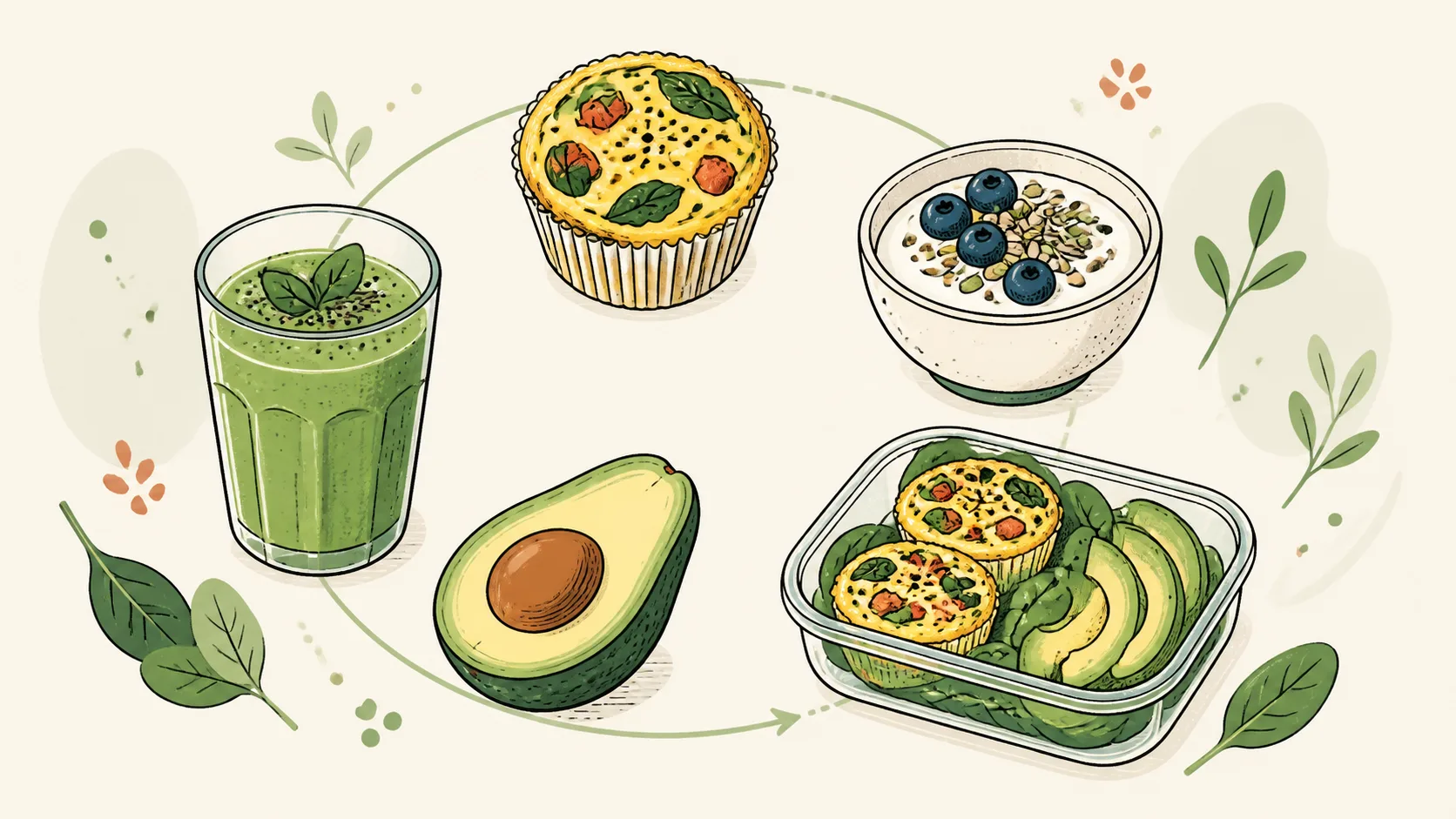
From idea to method
Choose the breakfast job before choosing a recipe
Use the catalog when you need one published ingredient list and method. Use the sections below when you need a format or a practical fallback.
Cook now
Quick egg ideas
Start with six egg-based formats and follow the measured food-safety endpoints above them.
See quick egg ideasNo eggs
Egg-free formats
Start with the egg-free section when eggs are not part of your plan or preference.
See egg-free ideasPlan ahead
Make-ahead formats
Jump to the six make-ahead ideas and their chilling, storage, and reheating limits.
See make-ahead ideasNo cooking
Cold backups
Use the no-cook section for portable choices and its cold-storage reminders.
See no-cook backupsRecipe and storage checks
- Check ingredients
- Cook safely
- Cool and store
- Reheat or discard
Food-safety rules for breakfast prep
Eggs, dairy, cooked meat, cut produce, and prepared dishes need temperature control. Keep them refrigerated or in an insulated cooler with enough ice or frozen gel packs to stay cold. Refrigerate perishable food within 2 hours, or within 1 hour when the temperature is above 90°F.2
- Cook egg dishes such as muffins, casseroles, and baked egg boats to 160°F, measured in the center with a food thermometer.3
- Refrigerate cooked leftovers in shallow containers. Use them within 3 to 4 days, or freeze them; reheat leftovers to 165°F.2
- Do not use a fixed baking time or appearance as the safety test. Ovens, pan sizes, fillings, and starting temperatures change how quickly the center heats.
- Follow the package's storage directions for smoked fish, yogurt, cheese, prepared meats, and ready-to-eat egg products.
Our freezing and storing guide covers the same cold-chain principles in more detail.
Six quick egg breakfasts
For scrambled or fried eggs, cook until the white and yolk are firm. For mixed or baked dishes, verify 160°F in the center.
- Cheesy veggie scrambled eggs in butter. Wilt spinach first, add beaten eggs, and fold in cheese near the end.
- Western omelet with ham and peppers. Sauté the pepper and onion before adding egg so the filling is hot when the omelet sets.
- Baked avocado egg boats. Scoop out enough avocado to hold the egg, support the halves in a small baking dish, and bake until the egg reaches 160°F.
- Crustless spinach and feta egg muffins. Use a tested formula, then check a center muffin for 160°F with a food thermometer.
- Bacon and eggs with sautéed greens. Cook the bacon, drain it, then use the pan to wilt kale, chard, or spinach before cooking the eggs.
- Cheese-stuffed bell peppers with baked eggs. Part-bake pepper halves, add cheese and egg, then continue cooking to 160°F.
Six egg-free ideas
Check labels on yogurt, plant milks, nut butters, granola, smoked salmon, and prepared salads. Added sugar and serving sizes vary widely across products.
- Plain Greek yogurt with nut-and-seed granola. Check the current labels and serving sizes for the yogurt, granola, and any berries.
- Coconut milk chia seed pudding. Stir well, refrigerate in a covered container, and stir again before serving.
- Cinnamon cottage cheese bowl with flaxseed. Add walnuts or pecans for texture.
- Avocado boat with tuna or chicken salad. Use freshly prepared salad or one kept properly chilled; do not pack it without a cold source.
- Green smoothie with avocado and nut butter. Blend unsweetened milk, spinach, avocado, nut butter, and ice. Recheck the milk and nut-butter labels when changing brands.
- Smoked salmon and cream cheese cucumber roll-ups. Assemble immediately before serving or transport in a cooler.
Six make-ahead breakfasts
Make only as much refrigerated cooked food as you can use within 3 to 4 days. Freeze the rest promptly in portions.
- Batch-baked egg muffins. Cool and refrigerate within 2 hours. Reheat to 165°F.
- Overnight chia and coconut pudding jars. Make several covered jars and keep them refrigerated; use the shortest storage instruction among the ingredients.
- Breakfast casserole with sausage, cheese, and peppers. Cook the center to 160°F, divide leftovers into shallow containers, and reheat portions to 165°F.
- Almond flour pancakes. Use a tested formula and follow its storage and reheating guidance.
- Sheet-pan bacon and roasted vegetables. Portion the cooked food into shallow containers and refrigerate it within the 2-hour limit.
- Pre-portioned freezer smoothie packs. Freeze washed produce in measured packs; add refrigerated liquid only when you are ready to blend.
Five no-cook backups
- Avocado half with olive oil and everything seasoning. Prepare it just before eating to limit browning.
- Nut butter celery boats. Check that the nut butter has no added sweetener you did not intend to use.
- Charcuterie plate. Combine cheese, olives, refrigerated cured meat, and nuts. Return perishables to the refrigerator promptly.
- Coffee with cream alongside a separate breakfast. Coffee blended with butter or oil is a beverage, not a nutritionally complete breakfast. Pair it with food that supplies protein, fiber, and micronutrients if you eat breakfast.
- Cold cottage cheese and nut cup. Keep it refrigerated or in a cooler until eating.
Five sweet breakfast formats
- Almond flour muffins with berries. Use a tested formula and check doneness in the center; refrigerate or freeze leftovers when the recipe contains egg or dairy.
- Coconut flour porridge, or "noatmeal." Whisk coconut flour with egg and dairy or an unsweetened alternative, then cook the egg mixture to 160°F.
- Almond flour pancakes. Use a tested formula appropriate for the flour and equipment.
- Berries with unsweetened whipped cream and pecans. Assemble immediately and keep the cream chilled.
- Chocolate-chip mug muffin. Use a tested microwave recipe; because it contains egg, verify the center reaches 160°F instead of relying on a fixed microwave time.
Two portable or restaurant options
- Fast-food egg bites or a protein box, without the bread. Check the restaurant's current nutrition and allergen information. Egg bites, hard-boiled eggs, cheese, and prepared meat remain perishable even when sold in portable packaging.
- Portable trail mix cup. Combine nuts, seeds, unsweetened coconut, and dark chocolate in a sealed container. This is the only option in this section that normally travels without a cold source, provided every ingredient's label permits room-temperature storage.
For a longer plan, use the 7-day keto meal plan or browse a separate fixed catalog with the meal template builder. The keto food list can help with substitutions, but the package label remains the source for a branded product's current carbohydrate and allergen information.
Frequently Asked Questions
What can I eat for breakfast on keto besides eggs?
How many carbs should a keto breakfast have?
How long do cooked make-ahead breakfasts keep?
What temperature should egg muffins and breakfast casseroles reach?
What is a simple beginner breakfast?
Is butter or MCT coffee a complete keto breakfast?
Works cited
Your learning guide