Keto Food List: Evidence-Based Choices and Label Rules
The practical rule: Build meals around non-starchy vegetables, an adequate protein source, and mostly unsaturated fats. Then count carbohydrate from the amount and form you will actually eat.
The label rule: A front-of-package “keto” claim does not settle the question. Serving size, the regulated nutrition panel, ingredients, allergens, and your own plan do.
A ketogenic diet may be inappropriate or require clinical supervision during pregnancy or lactation, in childhood, with an eating-disorder history, or for people with diabetes, kidney, liver, pancreatic, or gallbladder conditions. Diabetes medicines create particular risks. Review whether keto is appropriate for you before making a large change, and do not adjust medicine from a food list.
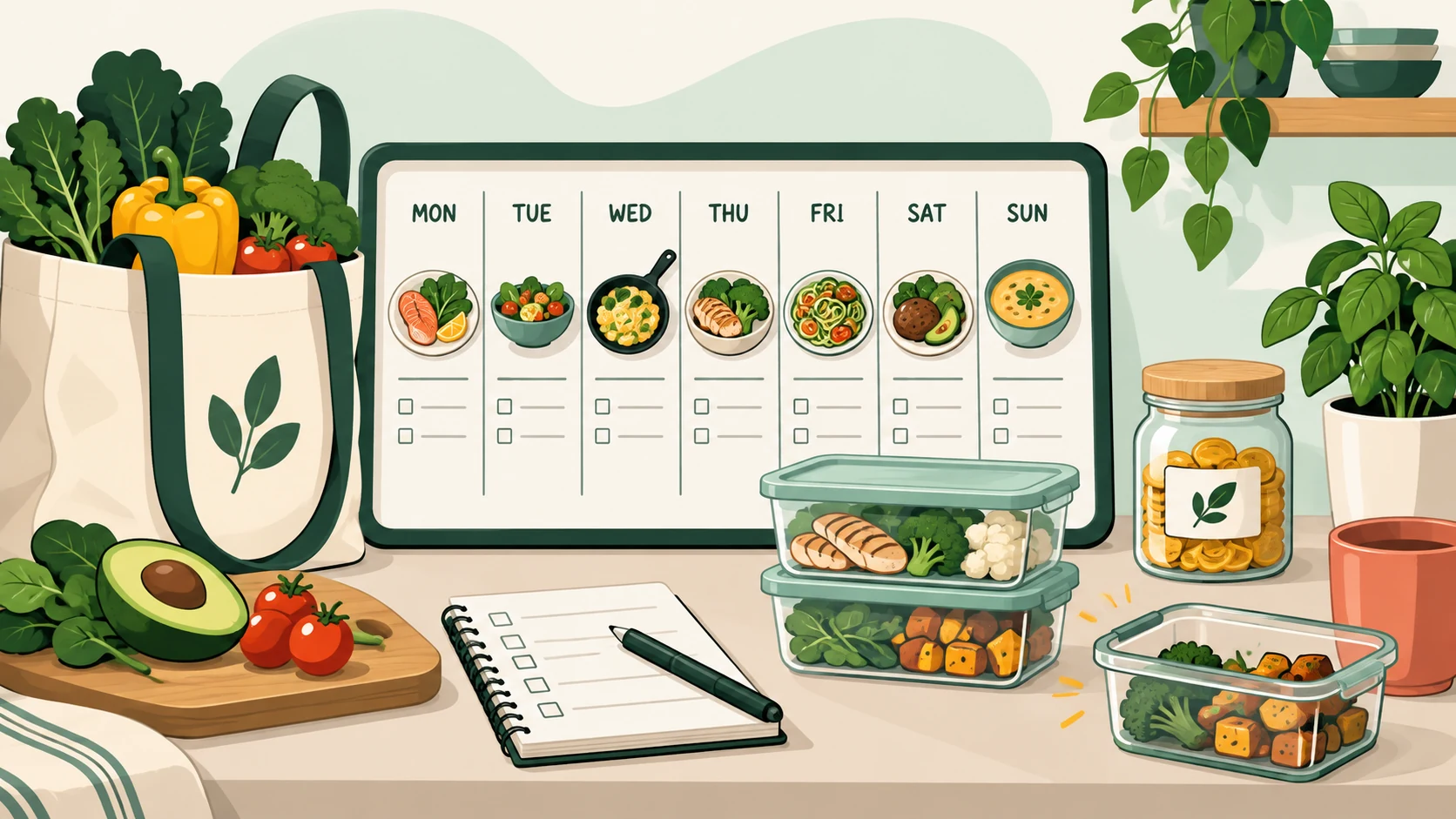
This guide uses original food-label regulations, USDA food-composition data, the National Academies' nutrient reference report, and current cardiovascular guidance. It sorts foods by the decisions they require. It does not divide food into morally “clean” and “dirty” categories or treat every person as if they had the same carbohydrate target.
Free printable
Keto Food List Cheat Sheet
A printable category prompt for planning; exact portions and current package labels still control.
PDF · 2 pages · Letter landscape
How to decide whether a food fits
Use the same sequence for a head of broccoli, a bowl of yogurt, or a packaged snack:
- Name the purpose. A clinician-prescribed ketogenic therapy has different targets and monitoring from a self-selected eating pattern. For a general plan, use the macro-calculation guide as an estimate, not a prescription.
- Match the exact food. Raw and cooked foods, drained and undrained foods, different cuts, and different recipes can have different nutrient values. USDA FoodData Central separates these forms and explains whether data came from chemical analysis, calculations, research, or a manufacturer.1 Use the Food Database to compare the corresponding plain-food record and its listed portion before doing the arithmetic.
- Use the amount you will eat. A label serving is a standardized reference, not a recommended portion. If you eat two labeled servings, every listed nutrient doubles.2
- Check the whole nutrition profile. Carbohydrate matters for ketosis. Fiber, protein, saturated fat, sodium, allergens, food variety, and total energy still matter for health.
There is no universal “allowed” list. A small portion of a carbohydrate-dense food may fit one plan, while a large portion of a lower-carbohydrate food may not fit another.
Foods that usually make planning easier
The examples below are starting categories. USDA values can help with plain foods that lack a label; the package in hand is the better source for a branded product.
| Category | Examples to consider | What to check |
|---|---|---|
| Non-starchy vegetables | Leafy greens, broccoli, cauliflower, cabbage, courgette or zucchini, aubergine or eggplant, mushrooms, peppers, cucumber, green beans, okra | Preparation method, edible portion, sauces, breading, and enough variety to support fiber and micronutrient intake |
| Animal protein | Fish and shellfish, eggs, poultry, and unbreaded meat | Marinades, breading, processed-meat frequency, sodium, and the saturated fat in the cut or preparation |
| Vegetarian protein | Plain tofu, tempeh, unsweetened soy foods, eggs and dairy if included, nuts, seeds, seitan if gluten is suitable | Total carbohydrate per serving, protein contribution, added starch or sugar, and soy, wheat, nut, sesame, egg, or milk allergens |
| Mostly unsaturated fat sources | Olive, canola, soybean, sunflower, safflower, peanut, or avocado oil; olives, avocado, nuts, seeds, and fish | Saturated fat, portion, heat and storage instructions, and allergens |
| Plain dairy and alternatives | Plain yogurt, cottage cheese, cheese, and unsweetened fortified alternatives | Lactose and total carbohydrate, added sugar, saturated fat, calcium and vitamin D, and milk, soy, or nut allergens |
| Lower-carbohydrate fruit choices | Avocado, olives, and measured portions of berries or other fruit that fit the plan | Variety, form, portion, and whether the product is dried, juiced, or sweetened |
| Flavor and pantry items | Herbs, spices, vinegar, mustard, stocks, nut or seed butter, tomato products, and unsweetened cocoa | Added sugar, starch, serving size, sodium, and allergens |
| Drinks | Water, plain sparkling water, and unsweetened coffee or tea if tolerated | Added sugar, carbohydrate-containing creamers, caffeine, alcohol, and individual fluid advice |
“Full fat” is not a requirement. Plain lower-fat dairy can contribute protein with less saturated fat if its carbohydrate content fits the plan. Likewise, meat does not need to be grass-fed, eggs do not need to be pasture-raised, and produce does not need to be organic for a food to qualify. Those labels may reflect personal production preferences, but they are not prerequisites for ketosis or a nutritious grocery basket.
Vegetables and fiber need deliberate space
Some keto menus become meat, cheese, butter, and packaged substitutes with little plant variety. Low carbohydrate does not remove the need to plan for fiber. The National Academies set the adult Adequate Intake for total fiber from a basis of 14 grams per 1,000 kilocalories, with the resulting daily amount varying by age, sex, and energy intake.3 A lower energy intake can make that goal harder to reach, so simply eating less food is not a fiber strategy.
Use several types of non-starchy vegetables across the week. Nuts, seeds, avocado, and measured portions of legumes can also contribute fiber. Beans and lentils are more carbohydrate-dense than leafy greens, yet a measured portion may be valuable in a vegetarian or culturally familiar meal. Check the actual amount instead of banning an entire food tradition.
If increasing fiber worsens pain, bloating, constipation, diarrhea, or another gastrointestinal condition, get individualized advice. Our constipation guide explains when self-care is reasonable and when symptoms need medical assessment.
Protein choices: enough, varied, and practical
Choose a protein anchor before adding extra fat. Fish, poultry, eggs, meat, tofu, tempeh, seitan, plain yogurt, cottage cheese, nuts, and seeds can all play a role. The mix depends on allergies, culture, budget, ethics, cooking access, and clinical needs.
Vegetarian keto needs more label work because many plant proteins bring some carbohydrate with the protein. Plain tofu or tempeh may be easier to place than breaded meat alternatives; seitan may be unsuitable for celiac disease or wheat allergy; nuts alone may not provide a practical protein amount without substantial energy. The fully plant-based version also needs a reliable vitamin B12 plan and a wider nutrient audit; use the separate vegan keto guide. There is no need to force every vegetarian meal into an animal-food template. Start with the protein foods already used in the household and adapt the portions and sides.
Processed meats can be low in carbohydrate while still being high in sodium or saturated fat. Carbohydrate compatibility does not turn bacon, sausage, or deli meat into a nutritional requirement.
Fat quality still matters on keto
Ketosis does not require butter, coconut oil, ghee, cream, bacon, or MCT oil. Coconut and palm oils are rich in saturated fat. Current American Heart Association guidance favors nontropical liquid plant oils, nuts, seeds, avocado, tofu, and fish in place of saturated-fat sources. Its 2026 scientific statement describes heart-healthy patterns as unlikely to exceed 10% of energy from saturated fat, while current AHA consumer guidance recommends less than 6%.4
Alice Lichtenstein, Christopher Gardner, Frank Hu, and the other authors of that 2026 scientific statement emphasize replacement: use unsaturated fats in place of saturated fats. Cutting butter while adding refined snack food would be a different dietary change.
Canola, soybean, sunflower, safflower, sesame, and other seed-derived oils are not excluded because they are “processed.” The relevant comparison is their fatty-acid profile, the food they replace, and the cooking method. Favoring unsaturated oils also does not mean pouring extra oil over a meal solely to raise a fat percentage.
People whose LDL cholesterol rises substantially on keto should review the diet and the result with a clinician. Read the evidence on keto's benefits and trade-offs for the difference between lower triglycerides and cardiovascular risk.
Foods that usually require a closer carbohydrate check
These categories often contribute carbohydrate quickly, but “harder to fit” is more accurate than “forbidden”:
- bread, rice, pasta, cereal, tortillas, and baked goods;
- potatoes, sweet potatoes, corn, peas, winter squash, and other starchy vegetables;
- beans, lentils, chickpeas, and sweetened plant proteins;
- milk, sweetened yogurt, desserts, and ice cream;
- bananas, grapes, mangoes, dried fruit, juice, and fruit packed in syrup;
- sweet drinks, syrups, honey, sugar, and many sauces or marinades;
- packaged foods made with flour, starch, maltodextrin, or concentrated fruit ingredients.
The list is descriptive, not a ban. A person may reserve carbohydrate for a culturally important staple, a higher-fiber food, exercise, or another priority. Record the portion and count it consistently. The grocery-list guide turns these decisions into a practical weekly shop.
Compare label systems carefully
- US label
- Declared total carbohydrate
- EU / UK label
- Use the package in hand
Net carbs: first identify the label system
“Net carbs” is not a single international labeling standard. Applying a US formula to a European or UK panel can subtract fiber twice.
| Label in hand | What the carbohydrate line means | A defensible first step |
|---|---|---|
| US Nutrition Facts | Total Carbohydrate includes Dietary Fiber, sugar alcohols, and allulose under FDA rules.5 | For a basic planning estimate, subtract the listed Dietary Fiber from Total Carbohydrate. Do not subtract fiber again from a manufacturer's displayed net-carb number. |
| EU or UK-style nutrition declaration | “Carbohydrate” is defined as carbohydrate metabolized by humans; fiber is declared separately. Polyols are included in carbohydrate. UK rules continue to use this Regulation 1169/2011 framework.6 | Do not subtract fiber from the Carbohydrate line. If polyols are relevant, use the declared amount, exact type, jurisdiction, and method specified in your care plan. |
| Plain food without a panel | Composition depends on the exact item, edible portion, preparation, and database entry. | Search USDA FoodData Central or the appropriate national database, match the food form, and scale the database amount to the portion eaten.1 |
There is no defensible rule that subtracts half of every sugar alcohol. Erythritol, maltitol, sorbitol, xylitol, and other polyols differ, and labels do not always disclose each one's weight. Large amounts can also cause gastrointestinal symptoms. FDA requires allulose to remain in Total Carbohydrate and states that it intends to exercise enforcement discretion when allulose is excluded from Total Sugars and Added Sugars; the guidance uses a low caloric factor. A package may still fail to state the grams needed for a separate subtraction.7
Use the net-carb calculator only when you can identify the label jurisdiction and enter explicit amounts. Leave optional deductions blank when the package does not provide them.
Allergies and ingredient changes
In the United States, the nine major regulated food allergens are milk, egg, fish, crustacean shellfish, tree nuts, peanuts, wheat, soy, and sesame.8 A typical keto pantry can contain most of them. Almond flour, seed-based crackers, whey products, seafood, eggs, soy-based meat alternatives, and wheat-gluten breads need the same care as any other food.
Read the ingredient list and “Contains” statement every time, including on a familiar product whose recipe may have changed. “Keto,” “plant based,” or “gluten free” does not mean free of another allergen. People with a diagnosed allergy should follow their clinical plan for cross-contact and restaurant food; a carbohydrate calculation cannot assess allergy safety.
Make the list fit budget and culture
Specialty bars, powders, sweeteners, flours, ketone products, and MCT oil are optional. A lower-cost basket can use frozen vegetables without sweetened sauce, canned fish, eggs, tofu, seasonal produce, store-brand plain dairy or alternatives, and whichever unsaturated cooking oil fits local cooking. Compare prices by usable weight or serving rather than package price alone.
Keep familiar flavors and methods. Examples include tofu with greens, eggs with peppers and herbs, fish with okra, paneer or plain yogurt with aubergine, chicken with cabbage, or tempeh with unsweetened spices and sauces. Exact recipes and portions decide the carbohydrate count. The meal-planning guide can help preserve repeatable meals instead of replacing an entire cuisine with specialty products.
Turn the reference into meals
Start with the plate, not the list. Pick a protein anchor, add one or more non-starchy vegetables, and choose an unsaturated-fat source or cooking method. Add a measured higher-carbohydrate food only if it fits your plan. Then run the meal through the review below before you decide it works.
| Check | Question to ask | Why it helps |
|---|---|---|
| Actual amount and form | Which exact item, raw or cooked, and how much will I really eat? | Carbohydrate depends on the amount and form, not the food's name. |
| Protein | Is there a clear protein anchor I can afford and tolerate? | Varied protein sources, including fish, eggs, nuts, seeds, soy, and legumes, are all part of general heart-healthy guidance.10 |
| Plant and fiber variety | Are there different vegetables here, or the same one every day? | General heart-healthy patterns emphasize a variety of vegetables and fruits.9 |
| Fat quality | Is the fat mostly unsaturated, and is it replacing saturated fat rather than adding to it? | Guidance favors mostly unsaturated fats in place of saturated fats, such as olive or canola oil instead of butter where suitable.910 |
| Sodium and allergens | Have I compared sodium at the same serving, and read the ingredient and allergen information? | Comparing sodium at the same serving makes prepared foods easier to judge.10 Added sugars and sodium both deserve a look.9 On US packaged foods, a major allergen may be named in the ingredient list or in a separate Contains statement, so read the whole label. Advisory cross-contact statements are voluntary, and none of this guarantees a food is safe for an allergy.8 |
| Feasibility | Can I buy, cook, and repeat this with my budget, kitchen, and food traditions? | A meal you cannot repeat will not help the weekly plan. |
Two hypothetical before-and-after examples
These are editorial illustrations of choices, not tested meals. They include no nutrition totals and do not show that any meal is adequate for you.
A meat-and-cheese plate. Suppose lunch is sausage, cheese cubes, and a few crackers. A food's name does not tell you its saturated fat, sodium, or portion, so read the labels first and compare them at the same serving. The review does show one gap already: there is no plant variety. If the labels show the plate is high in sodium or saturated fat, a revised version might keep a protein anchor you like, such as chicken thighs or fish, and add roasted broccoli or spinach. Olive oil could replace some butter where suitable, and cheese could become a smaller part of the plate.10 If the labels look fine, you may only need to add the vegetable. If a food is a cultural staple, keep it only where it fits your plan, your allergies, and your clinician's advice, and measure it rather than guessing.
A vegetarian breakfast to carry. Suppose breakfast is a flavored yogurt cup and nothing else. Flavored yogurts vary widely, so check the actual protein, carbohydrate, and ingredient list, including any added sugars.9 If the numbers do not suit your plan, one optional swap is plain unsweetened yogurt with chia seeds and a measured portion of fruit, if you tolerate them. Dairy options and nuts or seeds are among the foods heart-healthy guidance lists.10 This swap is an illustration, not a promise of better nutrient totals. Before you pack it, read the ingredient and allergen information for milk, soy, or nut ingredients.8 Our plain yogurt comparison and high-protein low-carb breakfast guide cover this kind of swap in more depth.
Where to go next
- Turn a few reviewed meals into a week with the keto meal-planning guide.
- If vegetables keep dropping out, read the keto fiber guide.
- To plan your protein anchors, see the high-protein low-carb guide.
- When price or availability is the obstacle, compare fresh, frozen, and canned vegetables.
- Look up an exact plain food in the Food Database.
If you have a medical condition, take medicine, or have a diagnosed allergy, your clinician's advice comes before any example here. The guide to whether keto is right for you lists the situations that need supervision.
Use the interactive shopping list to build a cart, but treat its preloaded items as prompts. Premium production labels are optional, and the current package remains authoritative. Persistent fatigue, vomiting, severe abdominal pain, fainting, confusion, rapid breathing, or symptoms of low blood glucose are not food-list problems; follow the warning guidance in potential keto side effects.
Sources
Article history
- Added a six-point meal review and two label-first hypothetical examples; cites AHA, NHLBI and FDA allergen guidance. Shopping-list and warning text preserved.
- First published
Your learning guide