Low-Carb Hotel Meals: What You Can Do With the Room You Have
Before you buy a single grocery item, find out what your hotel room can actually store and heat. That answer, not a recipe list, should decide what goes in your bag.
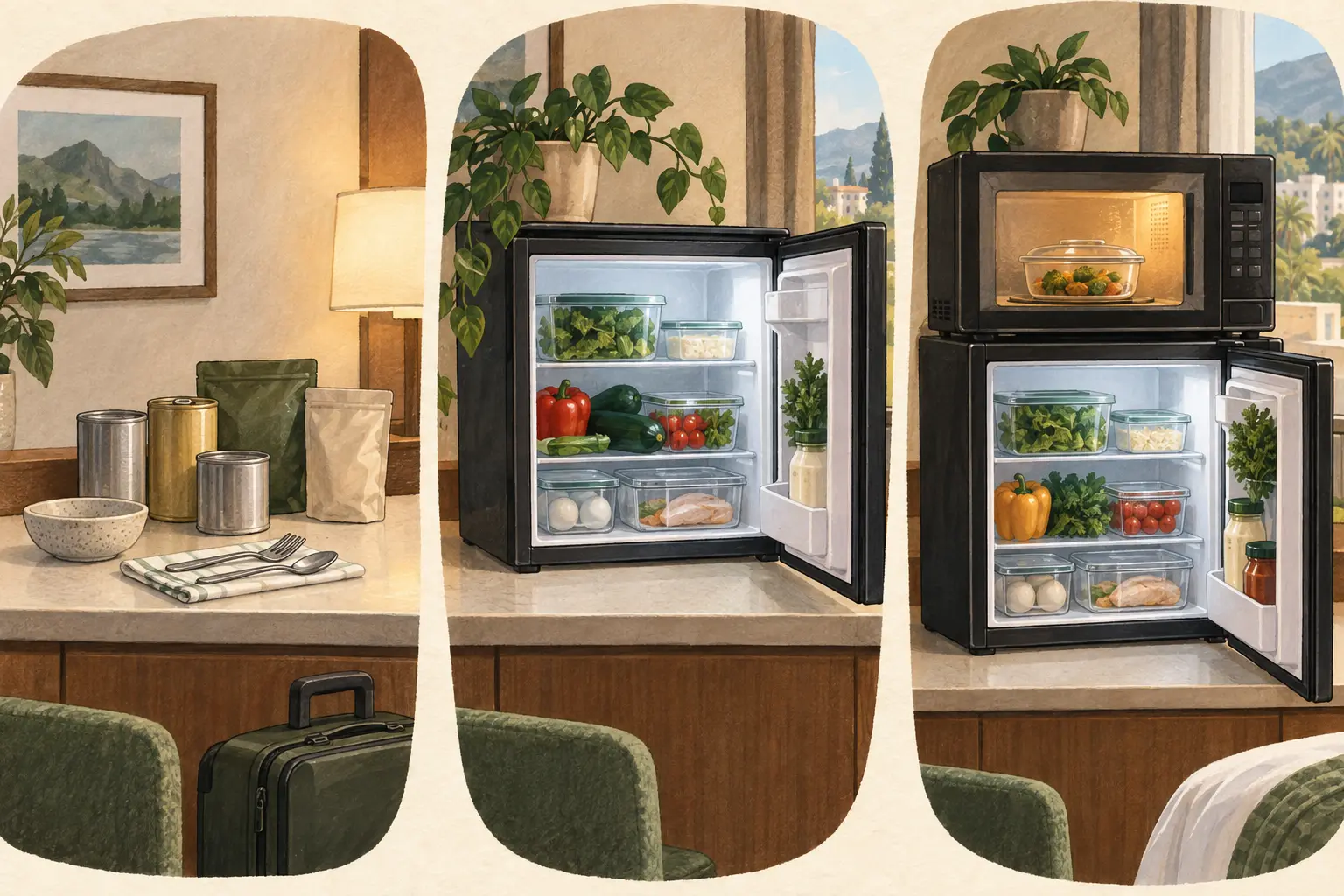
Start With the Room, Not the Grocery List
Equipment descriptions in hotel listings vary a lot — "kitchenette" can mean a microwave and a sink, or it can mean a mini-fridge and two burners — so confirm directly rather than assuming from the listing. Call ahead or check your confirmation email, and when you check in, actually open the fridge (if there is one) and check its temperature with a thermometer, or ask the front desk for one. A refrigerator only helps you if it holds food at 40°F or below, and a minibar stocked with drinks and snacks isn't automatically built or set to do that — measure it before you treat it like a food refrigerator for raw meat, dairy, or leftovers 1. Once you know what the room offers, you're choosing one of three paths, and the path decides your shopping list, not the other way around.
Path 1: No Fridge, No Microwave
This path runs on unopened, shelf-stable food and meals you eat the same day you get them, not food you're storing in the room. Good options: single-serve nut butter packets, canned tuna or chicken pouches, jerky, nuts and seeds, low-carb crackers, olives, and shelf-stable cheese products that don't require refrigeration before opening. Skip anything that needs a fridge to stay safe, including deli meat, milk, soft cheese, and any leftovers.
Example: Say you have two nights with no fridge and no microwave. On the way in, stop at a grocery store near the hotel and pick up nut packets, jerky, canned tuna pouches, and a rotisserie chicken. Treat the chicken like the perishable hot food it is: eat it within two hours of purchase, or within one hour if the surrounding temperature is above 90°F, unless you can keep it safely hot or cold in the meantime — buying it in the morning and planning to eat it "that evening" doesn't meet that window 2. If you buy hard-boiled eggs and won't eat them right away, treat them like the cold food they are: USDA's packed-lunch guidance calls for an insulated bag with at least two cold sources to keep refrigerated food cold until you eat it, and that applies just as well to a hotel room with no fridge as it does to a lunch box 3. A prepared salad from the same trip follows the same clock — two hours, or one hour if the surrounding temperature is above 90°F — so plan to eat it promptly rather than saving it, and let a nearby restaurant handle the rest of your meals instead of something you're trying to store 2.
Path 2: Fridge Only
Once you've confirmed the fridge actually holds 40°F or below, you can add cold, ready-to-eat foods: deli meat, cheese, pre-washed salad greens, cut vegetables, and yogurt. If you bring home a restaurant leftover you want to save, get it into the fridge within two hours of pickup, or within one hour if the surrounding temperature is above 90°F, since a fridge without a microwave still runs on the same clock 2. Without a way to reheat, plan to eat that leftover cold or find another heat source at the property, like a lobby microwave, rather than letting it sit past its window.
Path 3: Fridge Plus Microwave
This is the most flexible path. You can add canned soups meant to be heated and last night's dinner as tomorrow's lunch. A frozen entree can work too, but a mini-fridge isn't a freezer — buy it right before you plan to cook it rather than expecting it to stay frozen for days, and otherwise stick to items whose label says they're fine refrigerated or at room temperature 1. The microwave doesn't replace safe cold storage, either — it only matters once food has actually stayed cold. When you reheat leftovers, heat them until they reach 165°F throughout; other packaged products follow their own label's cooking or reheating instructions instead of that number 2. Either way, stir or rotate partway through since microwaves heat unevenly, and check for cold spots with a thermometer rather than assuming the middle matches the edges 2 1. Skip any temptation to improvise cooking with the room's kettle, iron, or coffee maker; those aren't built or tested for handling raw food safely.
Example: Picture a four-night stay with a fridge you've verified at 40°F or below. Your grocery stop can be more ambitious: string cheese, deli meat, a bag of salad greens, and a couple of cans of soup, plus a frozen entree you pick up on your way back to the room the night you plan to microwave it. When dinner makes more than you'll eat, split the extra into shallow containers and refrigerate within two hours so it cools quickly rather than sitting out, and plan to finish it within three to four days of cooking it — not three to four days of the trip 2. If the soup can says "keep refrigerated," the leftover portion follows the fridge, not the pantry shelf, the moment you open it 4.
The Small Grocery Run That Fits Your Path
| Room has | Shop for | Leave off the list |
|---|---|---|
| Neither fridge nor microwave | Unopened shelf-stable food; restaurant or grocery meals eaten within the safe window (two hours, or one hour above 90°F) | Deli meat, milk, soft cheese, any leftovers |
| Fridge only (verified 40°F or below) | Shelf-stable staples plus cold, ready-to-eat foods | Anything that needs reheating to be safe or appealing |
| Fridge and microwave | A wider range, including canned soups, planned leftovers, and a frozen entree bought right before cooking | Anything cooked in a kettle, iron, or coffee maker |
Breakfast, Buffets, and Restaurant Meals
Hotel breakfast buffets involve shared serving spoons and shared surfaces, which is a real path for allergen cross-contact if anyone in your group has a food allergy — a separate gluten-free or nut-free item sitting nearby doesn't cancel out a spoon that touched both dishes 5 6. If someone traveling with you has an allergy, ask staff about ingredients and serving practices rather than guessing from the label on the chafing dish. And if you're traveling with people who aren't eating low-carb, that's fine — nobody else in the room needs to follow the same plan just because you are.
If you or someone traveling with you has questions about how a low-carb approach fits with a medication or medical condition, that's a conversation for a clinician, not a packing list; the site's keto appropriateness guide walks through what to bring up.
A Checkout Plan That Doesn’t Leave Food Behind
Buy only as much as your path can actually store and finish. On checkout morning, don't assume you can transport an opened can, deli meat, or last night's leftovers home safely without a cooler and cold source of your own — if you can't keep it at 40°F or below for the drive, the safer call is to finish it, or leave it, rather than gamble on the ride home 2 1. A little planning on day one — knowing your path, shopping to match it, and not overbuying — means checkout is just packing your bag, not deciding what to do with food you can no longer store.
Sources
Article history
- First published
Your learning guide