One Dinner, Different Plates: A Mixed-Diet Household Plan
You don't need to cook two dinners to feed a household where people eat differently. Build one shared main, then let a few separate sides do the flexing, so everyone still sits down to the same table.
Start with the conversation, not the compromise
Before you plan a single ingredient, talk about what "dinner together" actually needs to cover. One person eating low-carb doesn't mean the rest of the household has to. The goal isn't to convert every plate — it's to find a shared center that works for the way each person eats, so nobody is cooking, or eating, alone.
A quick household check-in can cover:
- Who needs which foods off the table entirely (allergies, medical needs) versus who's just choosing to skip carbs tonight.
- Whether anyone's guidance comes from a clinician, which matters more than a shared meal plan. If someone in the house is managing a medical condition or medication alongside a low-carb way of eating, that's a conversation for their care team — the appropriateness guide is a starting point for that person, not a rulebook for the household.
- Which nights are worth the extra step of a separate side, and which nights everyone's happy eating the same plate.
Build a shared plate: main, vegetable, sauce, optional side
Most dinners break down into pieces you can prepare once and pieces you split at the end. Treat the protein, a vegetable, and a sauce as the shared core of the meal, made once for every plate. Treat starchy sides like rice, bread, pasta, or potatoes as their own dish, cooked in their own pot on its own timeline, and served in separate bowls at the table rather than stirred into the shared main.
| Component | Prepare once, for everyone | Add separately, per plate |
|---|---|---|
| Main protein | Same dish, same seasoning | — |
| Vegetable | Same preparation | — |
| Sauce or topping | Same batch, served on the side | — |
| Starch | Cooked separately, its own pot and timing | Rice, bread, or tortillas for some plates; a vegetable-based side for others |
Sauces, seasoning blends, and any packaged sides can carry more carbohydrate — or a different allergen profile — than they look like. Check the label instead of assuming a sauce or side is automatically low-carb or allergen-free just because it's served alongside a low-carb main.
The trick is keeping the flexible part genuinely separate — its own bowl, its own serving spoon — so one dinner produces plates that look intentional for everyone, without anyone feeling like they got the "edited" version.
Two shared-dinner assembly concepts
These are planning ideas to illustrate the shared-main approach, not tested recipes with fixed amounts, cook times, or nutrition numbers. They start from a protein that's already fully cooked, since the point here is assembly and timing, not cooking instructions.
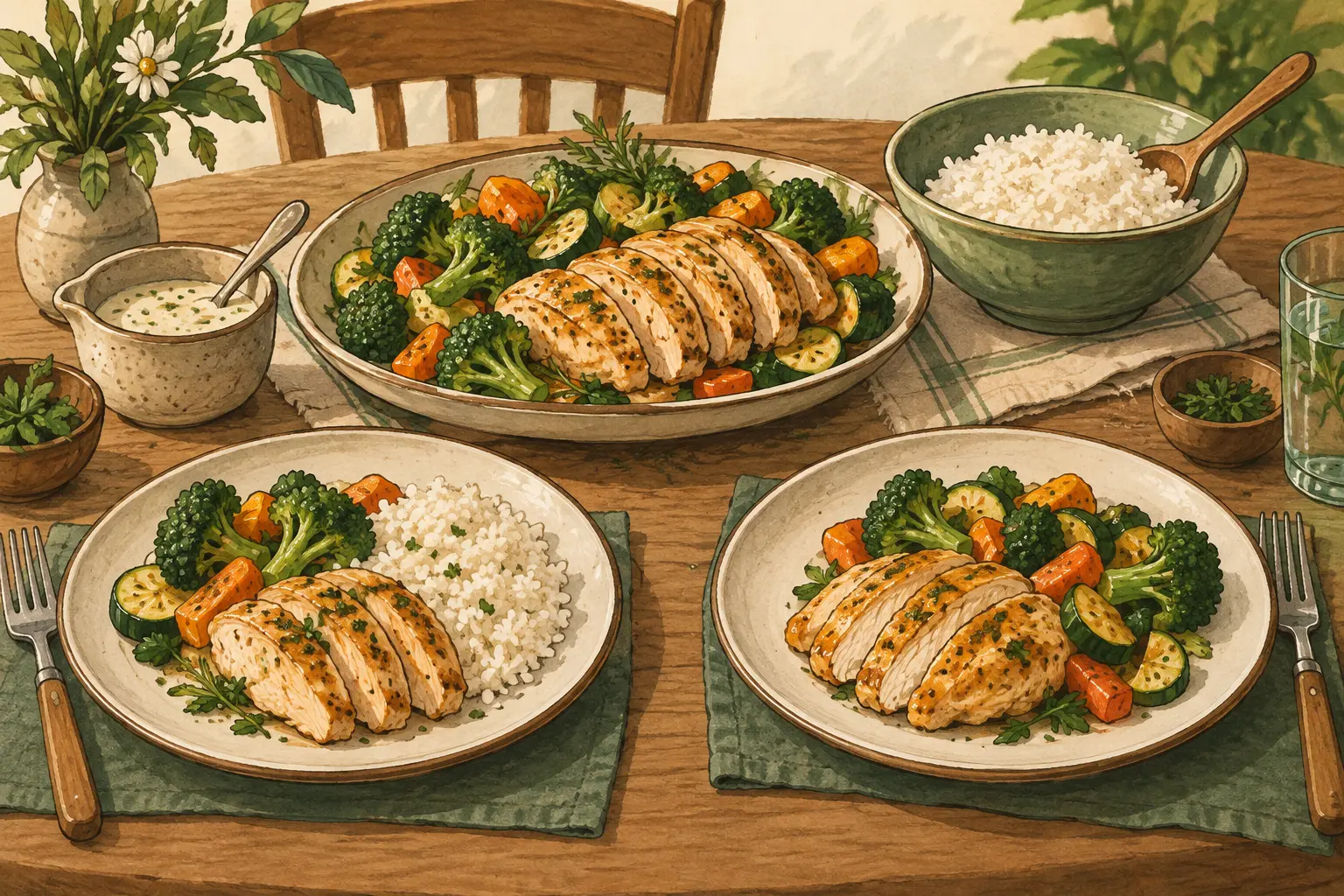
A cooked chicken and vegetable base, finished with a separate starch. Start from a chicken and vegetable main that's already cooked through — a dish you made ahead, a store-bought cooked chicken, or dinner from earlier in the week — and warm it to serving temperature, using the same leftover-reheating habit as anything else pulled from the fridge 1. Spoon on a sauce you've made or chosen separately, checking the label if it's store-bought. Meanwhile, cook rice or another starch in its own pot on its own timeline for anyone who wants it, and set out extra vegetables or a lower-carb side for anyone skipping it. Every plate gets the same chicken, vegetables, and sauce; the starch is a separate dish added at the table.
A seasoned ground meat and vegetable base, split at serving. Start from a ground turkey and vegetable mixture that's already cooked through — reheated the same way you'd reheat any other leftover, to steaming hot throughout 1 — then split it before serving: spoon some alongside warm tortillas or rice prepared separately for anyone who wants that, and spoon the rest over greens or into lettuce wraps for anyone going low-carb that night. Check the label on any seasoning blend, salsa, or sauce for both carbohydrate content and allergens rather than assuming a default low-carb verdict.
Both are assembly concepts for organizing a shared dinner around already-cooked components — not tested recipes, and not a guarantee that every resulting plate is nutritionally equivalent or suited to every diet or health need.
If you want a fixed formula to cook before building the plates, the beanless beef chili or creamy chicken soup can be the shared base. Cauliflower with cheese sauce is a separate vegetable side. All three are untested editorial formulas; follow their food-safety instructions, and keep any household starch in its own pot and serving bowl.
Keep the optional pieces genuinely separate
Separate doesn't just mean a different bowl on the same serving spoon — cross-contact is a real concern, not something a side dish automatically solves. If anyone at the table has a food allergy, check ingredient labels on anything store-bought going into the meal, and use clean cutting boards, utensils, and serving spoons for that person's food rather than reusing ones that touched the allergen 23. A rinsed spoon or a "just a little" garnish isn't the same as keeping that plate genuinely separate.
The same separation habit helps with raw prep more broadly: keep vegetables that will be eaten raw away from raw meat, poultry, seafood, and anything those touched, including cutting boards and utensils, until everything is properly cleaned 4.
Turning tonight’s dinner into tomorrow’s lunch
A shared dinner usually means shared leftovers, and those follow the same rules regardless of which plate they came from. Get perishable food into the refrigerator within two hours of cooking (one hour if the room is above 90°F), and split large batches into shallow containers so they cool quickly and evenly. Keep the refrigerator at 40°F or below, use refrigerated leftovers within three to four days, and when you reheat a portion, bring it to 165°F all the way through, checking for cold spots if you're using a microwave 1.
Store extra rice, bread, or tortillas separately from the vegetable or protein components rather than pre-combining full plates, so tomorrow's lunch can mix and match the same way tonight's dinner did.
A shopping and conversation checklist
Before the next mixed-diet dinner, run through:
- What's the shared main, vegetable, and sauce for the week, and does it work prepared one way for everyone?
- Which starches or extras need their own pot, their own bowl, and a spot on the shopping list?
- Have you checked labels on sauces, seasoning blends, or packaged sides for carbohydrate content and allergens, rather than assuming a default verdict?
- Does anyone at the table have an allergy that needs its own cutting board, utensils, and label check, not just a different side 23?
- Who's storing and reheating the leftovers, and do they know the shallow-container and 165°F reheating habit 1?
A few minutes of this planning up front is what lets one dinner actually work for a household that doesn't all eat the same way — no second stove, no separate meal, just a shared plate with room for everyone's version of it.
Sources
Article history
- First published
Your learning guide