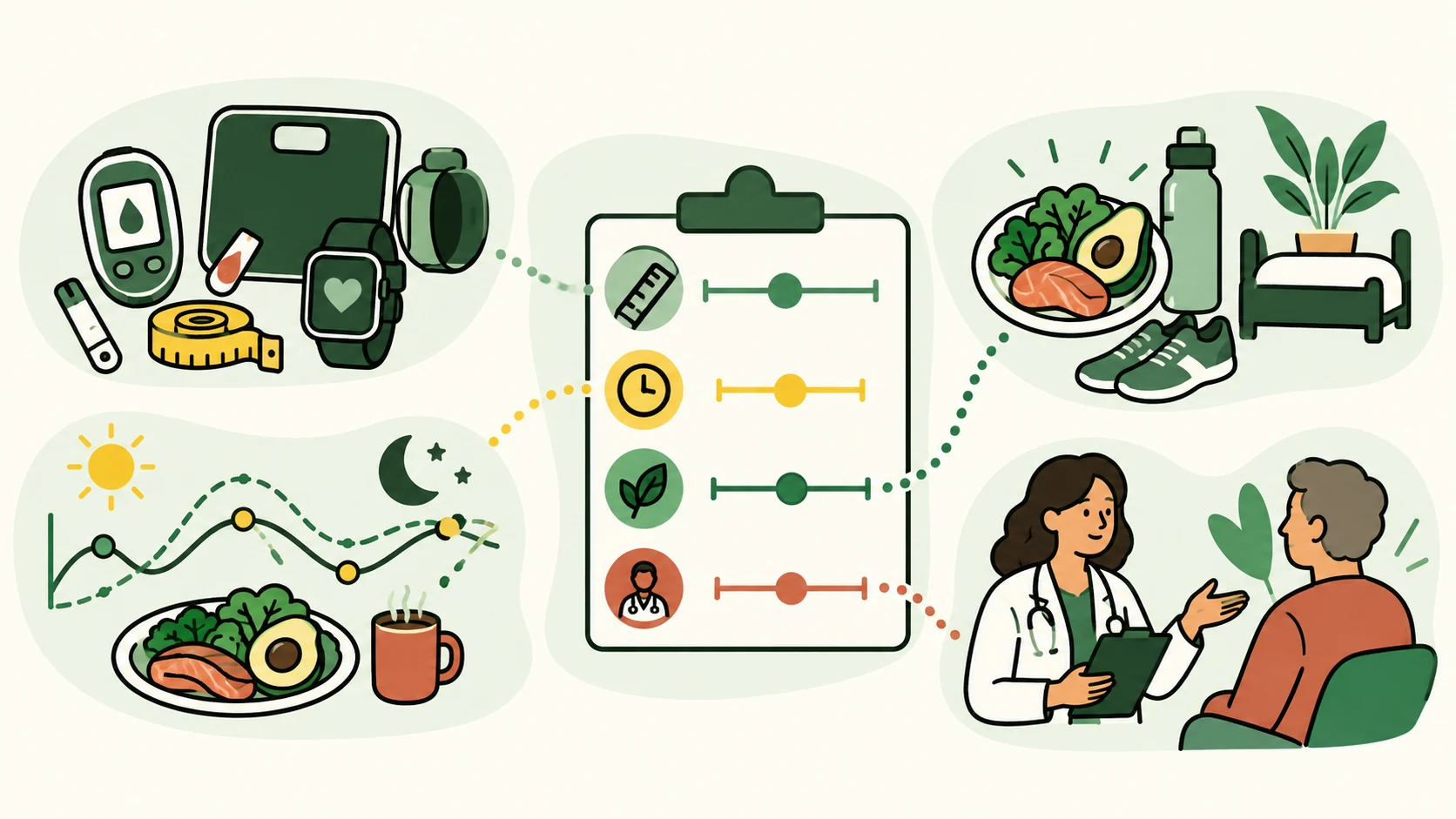
Why You're Not Losing Weight on Keto: How to Break a Plateau

A keto weight loss plateau is a period of 3 or more weeks with no change on the scale or in your measurements, and it's almost always caused by an energy-balance or tracking issue rather than a metabolic failure. The most common culprits, in order of likelihood, are eating more calories than you realize, hidden carbs pushing you out of ketosis, protein or meal-timing imbalances, poor sleep, and reduced daily activity. A smaller share of stalls trace back to medications, alcohol, or an underlying health condition.

You are doing everything right and the scale still won't move — that's frustrating, and it's also incredibly common. Almost everyone who sticks with keto long enough hits at least one stall.1 This guide walks through the real, ranked reasons weight loss slows or stops on keto, and gives you a step-by-step plan to start it moving again, in the order most likely to actually work.

Is It Really a Keto Weight Loss Plateau?

A true plateau means 3 to 4 or more weeks of no downward trend in weight, waist measurement, or how your clothes fit — not a single flat week. Day-to-day weight swings of 2 to 5 lb from sodium, water, glycogen, and hormones are normal and don't mean fat loss has stopped. Before troubleshooting anything, confirm you're looking at a real stall and not normal noise.

The scale is a poor short-term tool because it can't tell water from fat. Glycogen (stored carbohydrate) is bound to roughly 3 g of water per gram, so refeeds, high-sodium meals, and the menstrual cycle can shift the number by several pounds in either direction without any change in body fat.1 Instead of watching the scale alone, track a weekly average weight, a waist measurement, progress photos, and how your clothes fit. If those are all flat for 3 to 4 straight weeks, you likely have a genuine plateau.

It also helps to know the difference between two normal phases: the fast initial drop (mostly water and glycogen, in the first 1 to 2 weeks) and the slower, steadier fat-loss phase that follows. Expecting week-4 results to match week-1 results sets up a false alarm.

Why Am I Not Losing Weight on Keto? The Top Causes, Ranked

Ranked by how often they actually explain a stall: (1) unlogged calorie creep, (2) hidden or creeping carbs, (3) protein or meal-timing imbalances, (4) poor sleep and chronic stress, (5) lower daily activity, and (6) medications, alcohol, or an underlying health condition. The first three account for the large majority of stalls people can fix themselves within a few weeks.

Use this list as a checklist: work through it top to bottom, since the earlier items are both more common and easier to test than the later ones.

Are You Eating More Calories Than You Think?

Keto is not calorie-free — fat loss still requires burning more energy than you consume, and calorie-dense keto staples make it easy to eat more than you think. In controlled feeding studies, people lose body fat in proportion to their calorie deficit regardless of whether the diet is low-carb or low-fat, which is why an energy deficit stays the non-negotiable requirement for weight loss on keto.2

Nuts, cheese, nut butters, fat bombs, heavy cream, and "just a splash" of MCT oil are calorically dense: a tablespoon of oil alone is around 120 calories, and a handful of nuts can run 150 to 200. None of that shows up as a "cheat" the way sugar does, so it's easy to eat a maintenance-level of calories while still feeling strict. Liquid calories are the same trap — bulletproof coffee, heavy cream in multiple cups of coffee, and full-fat keto sodas add up fast and don't register as "food."

For 3 days, weigh and log everything, including cooking fat, coffee additions and bites while cooking. The record can reveal omissions without assuming a particular number of hidden calories. If the plan needs review, work through how to calculate your macros using current measurements and activity assumptions; the site's arithmetic worksheet does not recalculate targets.

Are Hidden Carbs Knocking You Out of Ketosis?

Sauces, salad dressings, "keto" packaged snacks, and sugar-free products with poorly labeled sugar alcohols are the most common source of hidden carbs, and even small amounts can push a carb-sensitive person out of ketosis. Portions also creep: "a handful of almonds" or "a splash of dressing" tends to grow over months, quietly raising net carbs even when nothing on the plan has technically changed.

Net carbs — total carbohydrates minus fiber and non-impact sugar alcohols like erythritol — are what count toward ketosis, and some sugar alcohols (maltitol, sorbitol) do raise blood sugar and should be counted more like real carbs.3 Your personal threshold for staying in ketosis may also be lower than the standard 20 to 50 g range if you're insulin resistant or have lost a significant amount of weight.4

Check suspect foods against the keto food list and their actual labels. For one packaged-food label, the net-carb estimate calculator can apply only the deductions you select; it cannot analyze a food or predict ketosis. If you're unsure whether you're actually in ketosis, blood beta-hydroxybutyrate testing is more direct than carbohydrate arithmetic, although no single reading establishes whether a diet is safe or effective.3

Is Your Protein Intake Too High or Too Low?

Too little protein, not too much, is the more common stall-causing mistake — low protein accelerates muscle loss and lowers metabolic rate, while the popular fear that "excess protein turns into sugar" and stalls ketosis is overstated for most dieters. Gluconeogenesis, the process that makes glucose from protein, is driven by your body's demand for glucose, not simply by how much protein is available — eating more protein does not automatically flood your bloodstream with glucose.3

What protein reliably does is help you stay in a deficit without losing muscle: in controlled studies, women eating higher-protein reduced-calorie diets lost less lean mass and reported better satiety than those eating standard amounts of protein at the same calorie level.5 Less muscle loss means your resting metabolic rate holds up better as the scale moves, which keeps future weight loss from stalling as hard.

A reasonable target is roughly 0.7 to 1 g of protein per pound of lean body mass, reassessed as your weight changes — the same calculation used in our macros guide. If you've been eating minimal protein to maximize fat, raising it toward that range is one of the highest-leverage changes you can make.

Could Snacking and Meal Timing Be Stalling You?

Constant grazing keeps insulin elevated throughout the day, which can blunt the metabolic benefits of keto, while structured meals or a defined eating window let insulin and appetite settle between meals. Time-restricted eating — compressing meals into a shorter daily window — produces meaningful reductions in body fat, fat mass, and waist circumference in randomized trials, on top of whatever calorie or carb changes you're already making.6

Keto's natural appetite suppression is one of its biggest advantages here: ketones and stable blood sugar tend to reduce hunger between meals, so most people can move from 4 to 5 small meals and snacks down to 2 to 3 structured meals without much struggle. A simple reset to try for 1 to 2 weeks: stop snacking between meals, eat until satisfied (not full) at each sitting, and see whether the extra hours of stable insulin move the scale.

Building meals around a repeatable structure also makes it easier to spot problems. Our 7-day keto meal plan is a useful template if grazing and improvised meals are part of what's driving the stall.

Are Stress, Sleep, or Water Retention Hiding Your Progress?

Poor sleep and chronic stress raise cortisol and shift appetite hormones in a direction that increases hunger and promotes fat storage, and both can also cause water retention that masks real fat loss on the scale. In sleep-restriction studies, people sleeping around 5 hours a night had roughly 15% lower leptin (the hormone that signals fullness) and about 15% higher ghrelin (the hormone that signals hunger) than people sleeping 8 hours — a hormonal profile that predicts more hunger and slower fat loss.7

Water retention from stress, sodium, and hormonal fluctuations is also a frequent cause of a stall that isn't really a stall — the fat loss is happening, but water is masking it on the scale for a week or two. If you're also dealing with muscle cramps, fatigue, or headaches alongside a stall, check whether under-hydration or low electrolytes are compounding the picture; our keto electrolytes guide covers the sodium, potassium, and magnesium targets that help with both symptoms and water-weight swings.

Practical fixes that move the needle: aim for 7 to 9 hours of sleep, keep a consistent sleep and wake time, and add a short daily stress-reduction habit (a walk, breathing exercises, or simply protecting wind-down time before bed).

Has Your Activity or Muscle Mass Changed?

A drop in incidental daily movement (NEAT) — taking the elevator instead of stairs, sitting more, fidgeting less — can quietly erase hundreds of calories of deficit per day, and losing muscle mass instead of fat lowers the number of calories you burn at rest. Both are common as weight loss progresses and people unconsciously move less.

Resistance training is the most effective countermeasure: it preserves lean mass during a calorie deficit and helps protect resting metabolic rate from the slowdown that otherwise accompanies weight loss.8 If the scale has stalled but your waist is still shrinking or your clothes fit looser, you may be in body recomposition — losing fat while gaining or holding muscle — which is a good outcome the scale simply can't see. More cardio isn't automatically the answer; two to three resistance-training sessions a week, plus rebuilding some of the walking or standing you may have dropped, is usually more effective than adding more low-intensity cardio on top of an already tight deficit.

Could a Medication, Health Condition, or Alcohol Be the Cause?

A minority of stalls are driven by factors outside diet and exercise: certain medications, thyroid dysfunction, PCOS, perimenopause and menopause, and alcohol can all slow or mask fat loss, and these are worth ruling out with a doctor if the earlier steps don't work. None of this is self-diagnosable from symptoms alone — blood work is the only way to know.

Hypothyroidism lowers basal metabolic rate directly, since thyroid hormone is a major driver of how many calories your body burns at rest.9 More than half of women with polycystic ovary syndrome (PCOS) have insulin resistance, which independently makes weight loss harder regardless of diet composition.10 During the menopause transition, falling estrogen is linked to lower energy expenditure and a shift toward abdominal fat storage, on top of the muscle loss that comes with aging.11 Certain medications — including some antidepressants, beta-blockers, and steroids — are also associated with weight gain or water retention as a side effect.

Alcohol has its own direct mechanism: in a controlled metabolic-ward study, adding alcohol to the diet cut 24-hour fat oxidation by over a third while it was being metabolized, meaning the body burns alcohol for fuel first and pauses fat burning until it's cleared.12 Even "keto-friendly" spirits aren't calorie- or consequence-free on a stall.

If you suspect any of the above, that's a conversation for your doctor, not a reason to guess at a fix — ask about a thyroid panel (TSH), fasting insulin or HOMA-IR, and a review of your current medications.

How Do You Break a Keto Weight Loss Plateau? A Step-by-Step Plan

Work through these steps in order over 2 to 4 weeks, changing one variable at a time so you know what actually worked: verify and track first, then tighten calories, then cut hidden carbs, then adjust protein and training, then fix sleep and stress. Jumping straight to a drastic reset without tracking first is the most common reason people quit before finding the actual cause.

  1. Track and verify for 3 to 7 days before changing anything. Weigh and log every bite, including oils, sauces, and drinks. Confirm you're actually looking at a plateau (3 to 4+ flat weeks) and not normal fluctuation.
  2. Review the assumptions behind the current plan. Body weight, intake and activity can change over time. Use the guide to calculating keto macros to inspect the math, and seek qualified help before deliberately tightening intake when medical conditions or an eating-disorder history are relevant.
  3. Audit packaged foods and portions. Recheck serving sizes and labels, especially for low-carbohydrate snacks and sugar-alcohol products. The net-carb estimate calculator can document selected deductions from one label; the keto food list provides broader examples.
  4. Add protein, resistance training, and a meal-timing change. Move protein toward 0.7 to 1 g per pound of lean mass, add 2 to 3 resistance sessions a week, and try condensing meals into a shorter eating window.
  5. Fix sleep and stress, then reassess in 3 to 4 weeks. Prioritize 7 to 9 hours of sleep and a short daily stress-reduction habit before judging whether the other changes worked.

A few resets come up often and deserve a caution: a short fat fast or egg fast may produce a quick drop, mostly from lower calories and water, but neither is well studied and both are hard to sustain past a few days. A planned carb refeed (a single higher-carb day) doesn't "reset your metabolism," but it can temporarily replenish glycogen and water weight, which some people find helps with training performance and adherence. None of these substitute for the five steps above.

How Long Does a Keto Weight Loss Plateau Last, and When Is It Your New Set Point?

Most stalls that respond to the steps above start moving again within 2 to 4 weeks; if weight, waist, and photos are still flat after 6 to 8 weeks of a genuinely tightened plan, it's worth considering that you may have reached a stable, healthy set point rather than a problem to fix. Patience matters — under-eating further or adding more cardio on top of an already tight plan usually backfires.

SignalSuggests a fixable stallSuggests a set point
Duration3 to 6 weeks, no changes tried yet6+ weeks after honestly tightening tracking, carbs, and sleep
Hunger and energyNormal or improvingLow hunger, stable energy, good sleep
Health markersUnchanged or worseningBlood pressure, labs, and fitness all improved
Body compositionWaist and photos flat tooWaist/photos flat but body feels leaner or more toned
Response to changesScale moves once you fix 1 to 2 variablesNo response even after 3 to 4 weeks of real changes

If your labs, energy, waist measurement, and how you feel are all trending well even though the scale has stopped, that's frequently a sign your body has settled at a sustainable weight — not a failure. Shifting the goal from "make the number go down" to "maintain this and protect my health markers" is often the more useful next step than chasing another 10 lb through further restriction.

Frequently Asked Questions

Can you be in ketosis and still not lose weight?
Yes. Ketosis is a metabolic state, not a calorie deficit. You can produce ketones while eating at or above maintenance calories, which is why tracking ketones alone won't tell you whether you're losing fat — you also need an honest calorie count.
Will a cheat day or carb refeed break a stall or ruin progress?
A single planned higher-carb day mostly adds temporary water weight from restored glycogen and won't erase weeks of fat loss. It doesn't reliably break a stall either, since the underlying cause — usually calories or hidden carbs — is still there afterward.
How many net carbs should I eat to break a plateau?
There's no universal number, but tightening from the upper end of the 20 to 50 g range down toward 20 g for 2 weeks, while verifying with a net-carb calculator, is a reasonable first test before changing anything else.
Does a fat fast or egg fast really work for a keto stall?
They can produce a quick short-term drop, mostly from a sharp calorie cut and water loss, but neither is well studied, both are hard to sustain, and neither addresses the underlying cause of the stall the way tracking and macro adjustments do.
Why am I gaining weight on keto?
Weight gain (not just a stall) is usually explained by eating above maintenance calories despite being in ketosis, new water retention from sodium or hormones, or, less often, a medication or health condition like hypothyroidism. Track for a week before assuming it's fat gain.
How do I know if it's a stall or my new set point?
A stall that responds within 2 to 4 weeks of tightening tracking, carbs, protein, and sleep was fixable. If weight, waist, and photos stay flat for 6 to 8 weeks despite real changes, and your energy, hunger, and health markers all look good, you've likely reached a sustainable set point.

Works cited

  1. Getting past a weight-loss plateau — Mayo ClinicAugust 19, 2026 https://www.mayoclinic.org/healthy-lifestyle/weight-loss/in-depth/weight-loss-plateau/art-20044615
  2. Calorie for Calorie, Dietary Fat Restriction Results in More Body Fat Loss than Carbohydrate Restriction in People with Obesity — PubMedAugust 19, 2026 https://pubmed.ncbi.nlm.nih.gov/26278052/
  3. The Ketogenic Diet: Clinical Applications, Evidence-based Indications, and Implementation — StatPearls, NCBI BookshelfAugust 19, 2026 https://www.ncbi.nlm.nih.gov/books/NBK499830/
  4. Diet Review: Ketogenic Diet for Weight Loss — Harvard T.H. Chan School of Public Health, Nutrition SourceAugust 19, 2026 https://nutritionsource.hsph.harvard.edu/healthy-weight/diet-reviews/ketogenic-diet/
  5. Higher protein intake preserves lean mass and satiety with weight loss in pre-obese and obese women — PubMedAugust 19, 2026 https://pubmed.ncbi.nlm.nih.gov/17299116/

Article history

  1. Updated
  2. First published

Your learning guide

Loading reading status…