Microwave Almond-Flour Bread
This page gives a weighed, single-mug almond-flour bread formula, with the safety notes to read before you heat anything, including the 165°F (74°C) microwave endpoint. 247-Keto has not kitchen-tested this recipe, so the quantities and the high-power microwave setting are proposals, not measured results, and no thermometer reading has been observed.
Preparation notes
Weigh each ingredient on the scale and build the batter in the mug with the small whisk. The flour is Bob's Red Mill superfine blanched almond flour, which the manufacturer describes as finely ground blanched almonds; do not swap in almond meal with skins Bob's Red Mill almond flour information. Use double-acting baking powder as listed, since baking powder and baking soda are not interchangeable in equal amounts King Arthur baking powder and soda guidance.
Use a 350–400 mL mug without metal decoration and keep the batter well below the rim. The mug will be hot, so use an oven mitt.
Microwave food safety
FoodSafety.gov advises thoroughly microwaving food to 165°F (74°C) or above, and that is the endpoint for this formula's microwave method FoodSafety.gov microwave safety guidance. The high-power setting itself is a proposed method, not a measured result.
Three habits help the heat reach the whole mug FoodSafety.gov microwave safety guidance:
- Stir early. Stir the batter during early heating, while it is still fluid.
- Let it stand off heat. Standing lets heat spread from hotter areas to colder ones.
- Check several points. Use the thin-tip thermometer at the center and at several surrounding points. If any point reads below 165°F (74°C), continue heating, let the mug stand, and check again.
This page gives no heating or standing duration, because none has been tested or measured. Microwaves and mugs vary, so rely on the thermometer checks rather than a clock.
Raw egg and allergens
Shell eggs can contain Salmonella. Do not taste the raw batter, wash hands, utensils and surfaces after contact with raw egg, and cook egg-containing dishes thoroughly FDA egg safety guidance.
This recipe contains egg, milk (in the butter) and almonds, a tree nut. Read current ingredient and allergen labels on every product, including the baking powder and salt FDA food allergy guidance.
Storage and reheating
Keep perishable leftovers at 40°F (4°C) or below, and refrigerate within two hours, or within one hour if the room is above 90°F (32°C) FoodSafety.gov food handling guidance. Reheat leftover egg dishes to 165°F (74°C) FDA egg safety guidance; when reheating in a microwave, stir if you can and let the food stand before checking FoodSafety.gov microwave safety guidance.
247-Keto has not kitchen-tested this formula, so timing, finished yield, taste, texture and storage quality are unknown.
Related reading
Browse more formulas in keto recipes, or look up ingredients in the food database.
Ingredients
- 50 g raw whole egg, shell removed
- 24 g Bob's Red Mill superfine blanched almond flour
- 14 g unsalted butter, melted
- 2 g double-acting baking powder
- 0.5 g fine salt
Equipment
- Digital scale
- 350–400 mL microwave-safe mug without metal decoration
- Small whisk
- Microwave
- Thin-tip thermometer
- Oven mitt
Method
- Check that the mug is microwave-safe and that its maker permits the intended heating. Whisk the weighed egg and melted butter in the mug.
- Mix in the almond flour, baking powder and salt until the dry ingredients are incorporated. Keep the mug unsealed and leave space above the batter.
- Microwave on high in short checking intervals suited to your appliance. Stop during early heating and stir the batter while it is still fluid, then continue heating; there is no validated duration or wattage-specific schedule.
- Continue heating until no wet raw batter remains. Let the mug stand off heat so heat can spread from hotter areas to colder areas, then use a thin-tip thermometer to check the center and several surrounding points for at least 165°F (74°C), keeping the probe clear of the mug. Continue heating and repeat the standing and checks if any checked point is below 165°F (74°C). Do not taste raw batter.
- Remove using an oven mitt and allow the mug to cool enough to handle before loosening the bread with a utensil. Do not assume it will release intact or make a particular number of slices.
Article history
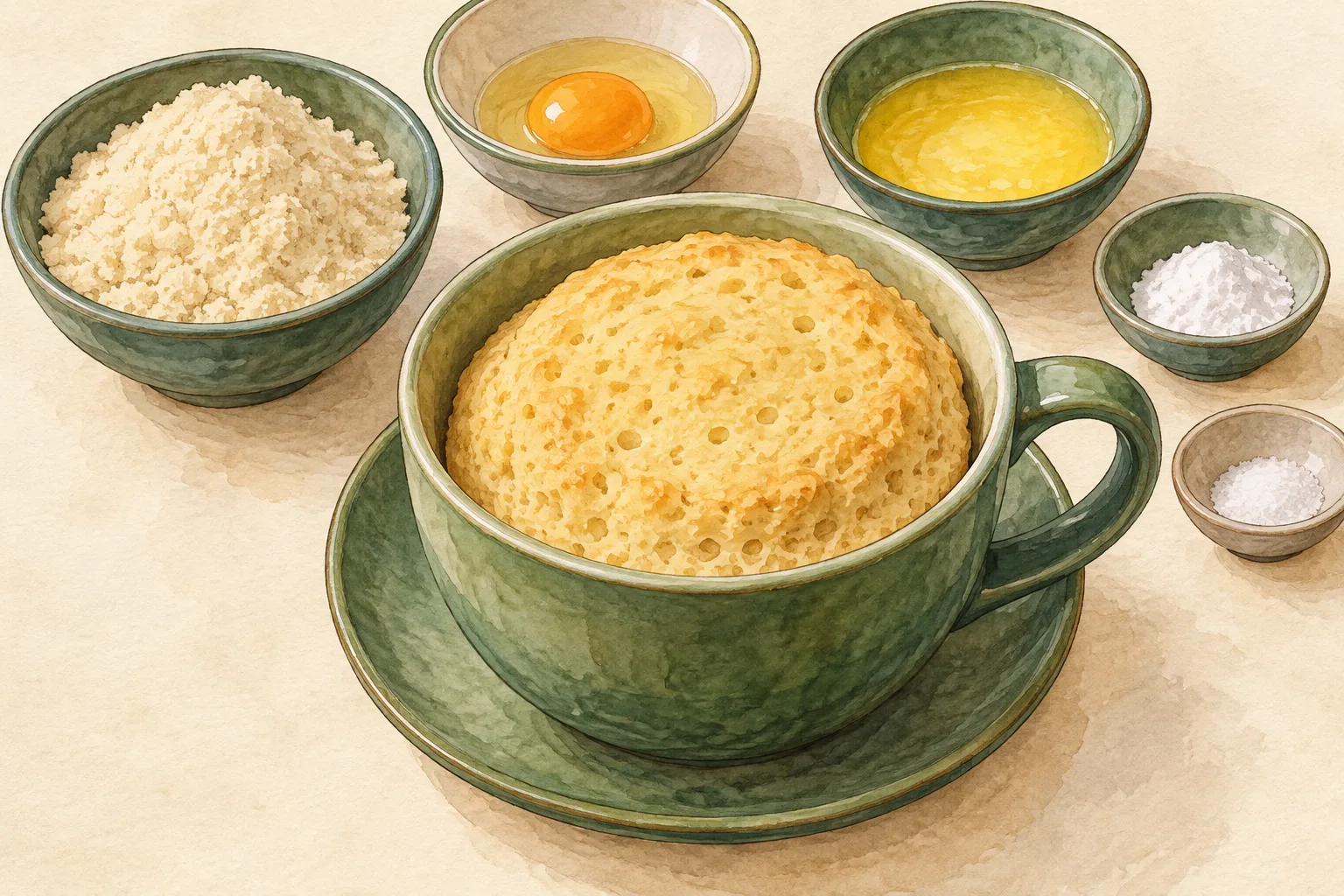
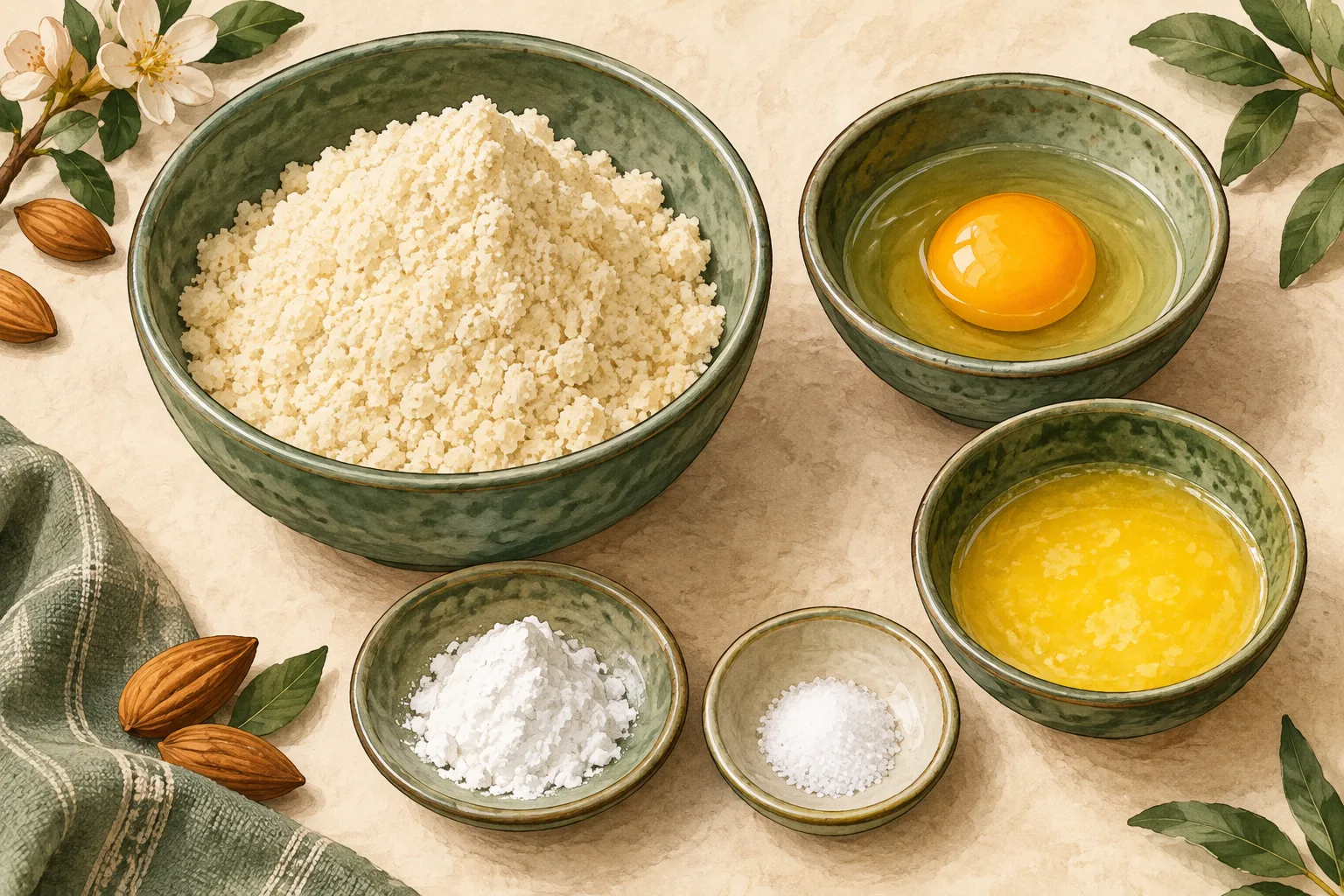
- Recipe formulas restored with source and food-safety review. These pages are not kitchen-tested and list no measured results or nutrition values. Concept art is illustrative only.
- First published
Your learning guide