Keto Bread: The Complete Guide to Recipes, Brands & Flours
Keto bread is a broad label for loaves formulated to contain less carbohydrate than a conventional counterpart. The ingredients, serving size, and manufacturer calculation still differ by product. This guide explains label checks, common flours and binders, the evidence status of our homemade recipes, and what four exact store-bought pages supported on September 9, 2026.
Check allergy information before choosing a recipe or loaf. Almond flour is a tree-nut ingredient, and neither coconut flour nor a packaged “nut-free” description establishes that another product is safe for a particular person. Check the complete current ingredient and allergen information, consider cross-contact, and follow the person's allergy plan.2
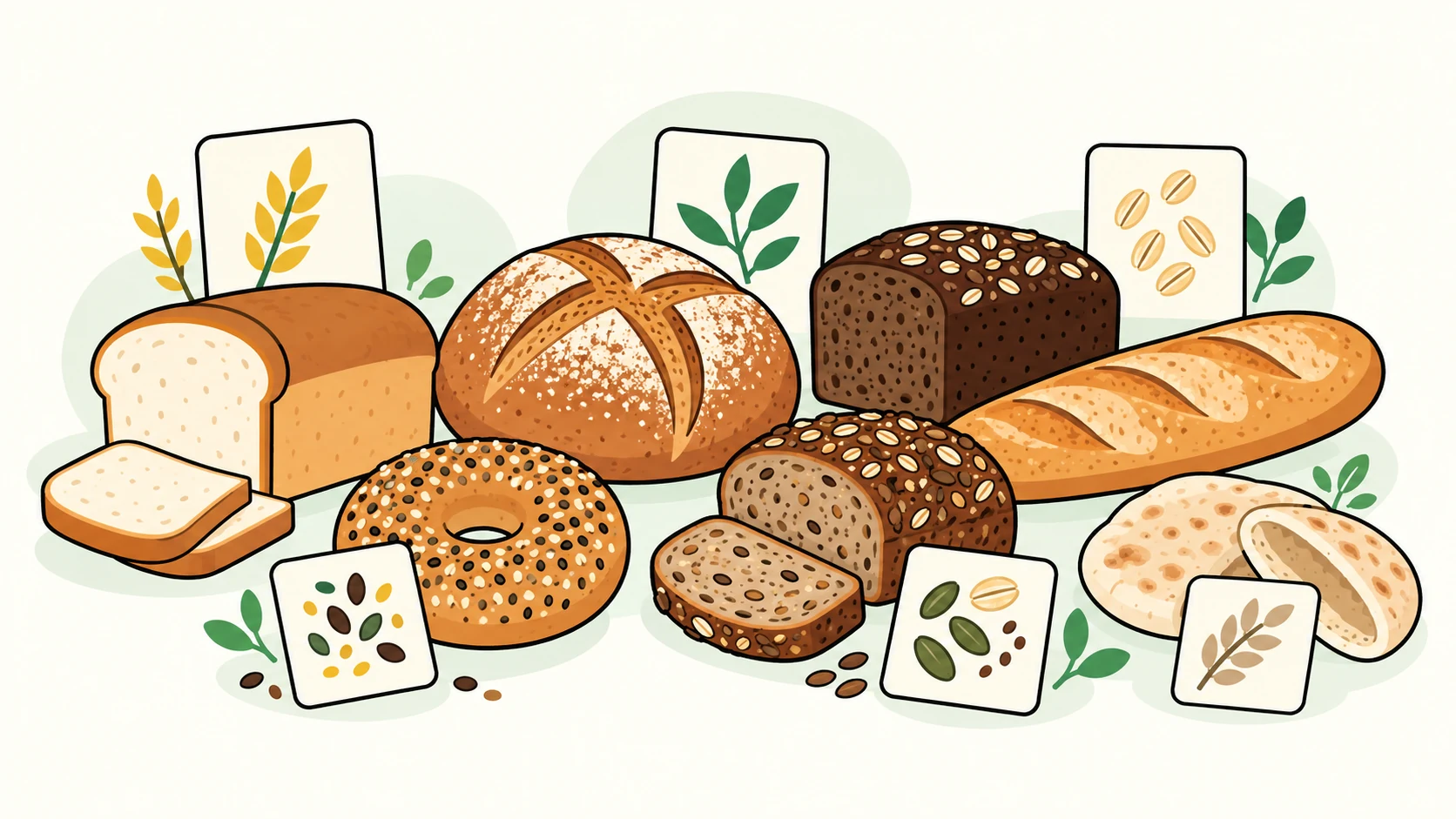
Bread replacements include packaged loaves and recipes built around ingredients such as almond, coconut, or lupin flour. Their formulas are not interchangeable, so compare an exact product label or a documented recipe calculation rather than assigning one category-wide number.
Compare label systems carefully
- US label
- Declared total carbohydrate
- EU / UK label
- Use the package in hand
How do bread labels compare?
The words “keto” and “low carb” do not establish one composition. On the product pages checked for the store-bought guide, ThinSlim Foods reported 7 g total carbohydrate and 7 g dietary fiber per slice and claimed 0 g net carbs; Sola claimed 1 g net carbs and reported 7 g dietary fiber per slice. Base Culture and ALDI presented their nutrition panels as images, so this comparison does not transcribe their values.
| Exact product page | What was readable on September 9, 2026 | Evidence limit |
|---|---|---|
| ThinSlim Zero Net Carb Plain Bread | Per slice: 7 g total carbohydrate, 7 g dietary fiber, and a manufacturer claim of 0 g net carbs | Applies only to this named product and dated page |
| Sola Golden Wheat Bread | Per slice: 7 g dietary fiber and a manufacturer claim of 1 g net carbs | The brand store showed sold out on the check date; that does not establish availability elsewhere |
| Base Culture Original Keto Bread | The ingredient list and egg and almond allergens were readable | The nutrition image was not transcribed |
| ALDI L'Oven Fresh Keto Friendly White Bread | The exact 14 oz product identity and the brand's low-carb and vegan attributes were readable | The nutrition image was not transcribed |
See the full store-bought low-carb bread source check for ingredients, allergens, and the evidence limits. The net-carb calculator can apply explicit deductions to values from the package in hand; it does not decide whether the food fits an individual plan.
What does the word “keto” establish on bread?
The word alone establishes neither a standard formula nor a personal dietary result. Packaged loaves and homemade recipes can use different flours, fibers, proteins, binders, eggs, and serving sizes. For a packaged product, use the current label. For a homemade loaf, calculate the documented ingredients and finished yield.
USDA FoodData Central can support a comparison for a named ingredient and form, but one database record does not define every flour or finished bread.1 The keto flours guide explains how to check almond, coconut, lupin, seed flours, and binders without assigning category-wide values or universal substitution ratios.
What happened to the homemade bread recipes?
The two homemade bread pages are temporarily unlisted while their kitchen-test and nutrition records are rebuilt. They will return to this guide only after their formulas, finished yields, calculations, and editorial approval are documented.
Which store-bought bread pages did we check?
The refreshed store-bought low-carb bread guide checks four exact US product pages: ThinSlim Zero Net Carb Bread, Base Culture Keto Bread, Sola Golden Wheat Bread, and ALDI L'Oven Fresh Keto Friendly White Bread. It separates readable label facts from manufacturer claims and leaves out numbers that appear only in images we did not transcribe.
That comparison does not rank texture or reproduce prices. It records that Sola's own store showed Golden Wheat Bread as sold out on September 9, 2026, but treats that as a dated source-store observation rather than a claim about availability elsewhere.
How should you choose a flour?
Start with a tested formula written for the exact ingredient. Almond, coconut, lupin, seed flours, oat fiber, psyllium, and other binders are not universal volume-for-volume substitutes. Compare the product label, allergen information, recipe role, finished yield, and complete-recipe calculation.
Our keto flours guide describes those checks and explains why a flour name, ranking, or generic ratio cannot guarantee a nutrition value or baking result.
How should you compare bread with your own plan?
A product label describes the named serving; it does not set a personal carbohydrate target or establish an effect on ketosis. Compare the amount you plan to eat with the package serving and with the plan you selected with any relevant clinician.
To set your own number and see exactly where bread fits:
- Review the assumptions behind a daily carbohydrate amount in our guide to calculating your keto macros. For packaged bread, the net-carb estimate calculator can apply explicit deductions to the values on one label; it does not set the daily amount.
- Check any specific bread — homemade or store-bought — against your remaining budget with the net-carb calculator.
- Use the keto food list to compare other foods without treating the bread's marketing name as a dietary verdict.
Frequently Asked Questions
Is bread ever really keto?
How many net carbs are in keto bread?
How should you choose a flour for keto bread?
Can you buy keto bread instead of making it?
Is keto bread safe for people with nut allergies?
Does keto bread taste like regular bread?
Works cited
Article history
- Aligned four product checks and removed stale commercial details, category averages, universal carb budgets, flour rankings, recipe guarantees, and unsafe allergy substitutions
- First published
Your learning guide