Working Out on Keto: A Practical Evidence Guide
You can exercise on keto, but there is no reliable promise that performance will normalize after one, two, or four weeks. The response depends on the sport, prior diet, training status, energy intake, hydration, medicines, sleep, and how “keto” is defined. Current sports guidance finds athletic performance on ketogenic diets largely neutral or worse than on higher-carbohydrate diets, even though fat oxidation increases.1
Get clinical guidance before combining a major diet change with a new exercise program if you have diabetes, cardiovascular symptoms, kidney or liver disease, pregnancy, a history of disordered eating, or unexplained weakness. Stop and seek urgent care for chest pain, fainting, severe shortness of breath, persistent palpitations, confusion, or symptoms of severe low blood glucose.
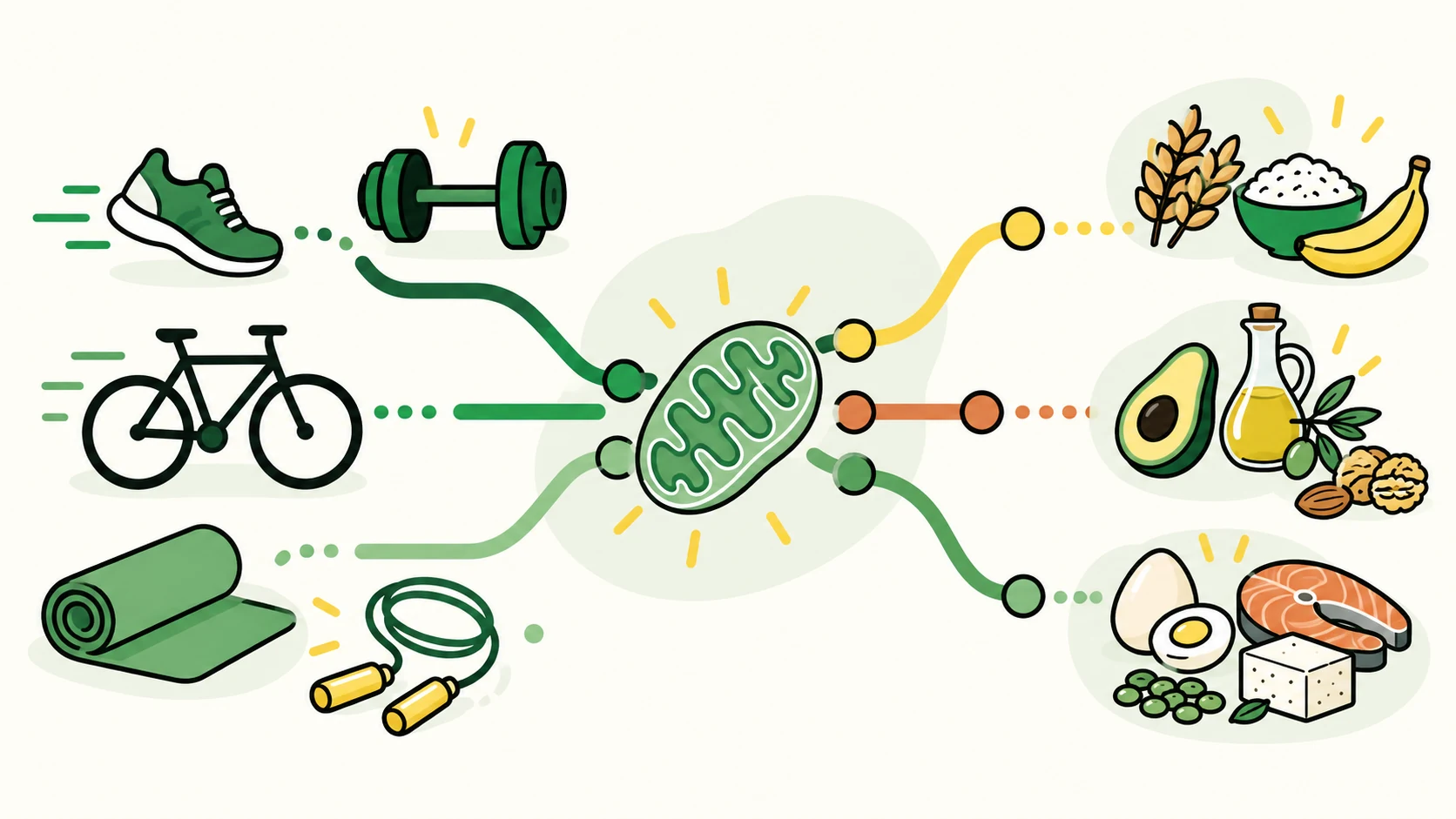
Start below your usual ceiling
During the first sessions after a large carbohydrate reduction, keep enough margin to observe the response. Reduce intensity or volume, extend recovery, and avoid using a race, maximal lift, or unfamiliar workout as the first test. Record the planned session and what you actually completed.
Possible short-term changes include lower scale weight from glycogen-associated water, fatigue, headache, gastrointestinal symptoms, or a loss of repeated high-intensity output. These symptoms do not prove “adaptation,” electrolyte deficiency, or inadequate carbohydrate. Persistent or severe symptoms need assessment rather than a larger supplement dose.
The U.S. Physical Activity Guidelines recommend that adults build toward aerobic activity and muscle-strengthening work, while emphasizing that inactive people can start with smaller amounts and progress over time.2 A ketogenic diet does not change that basic progression principle.
Match the session to the fuel demand
| Session | What keto may change | Practical test |
|---|---|---|
| Easy walk or low-intensity cardio | Often little noticeable change | Time and perceived effort at the same route |
| Longer steady endurance | Fat oxidation rises; efficiency may still change | Pace or power at a fixed heart rate or effort |
| Repeated intervals or team sport | Later efforts may fall as glycolytic demand accumulates | Compare repeat quality, not the best single effort |
| Resistance training | Volume and recovery may change even if one-repetition strength holds | Track load, repetitions, sets, and recovery |
The keto for athletes guide covers the FASTER ultra-endurance comparison and Louise Burke's randomized race-walker trials. Those studies show why increased fat oxidation is not the same outcome as improved performance.
Use protein benchmarks accurately
The adult DRI RDA of 0.8 g/kg/day was designed to meet the needs of about 97-98% of healthy adults.3 The 2025-2030 Dietary Guidelines give a general goal of 1.2-1.6 g/kg/day.4 Sports guidance commonly uses 1.4-2.0 g/kg/day for exercising adults, with training and energy context.5
These are not interchangeable prescriptions. Robert Morton and colleagues estimated a mean breakpoint near 1.62 g/kg/day for additional fat-free-mass gains in energy-sufficient resistance-training studies.6 The analysis does not prove that every athlete has the same ceiling, that fat-free mass is identical to muscle, or that the value applies during a calorie deficit.
Choose the body-weight basis and target with a qualified professional when obesity, kidney disease, cirrhosis, pregnancy, frailty, or a clinical diet is involved. Use the high-protein low-carb guide for those distinctions.
The keto calculator is an input-only macro arithmetic worksheet. It calculates results from values you enter; it does not choose a personalized protein, energy, carbohydrate, or macro target.
Eat around training without invented precision
There is no mandatory pre-workout keto snack or universal post-workout protein serving. Daily intake, training goal, session duration, tolerance, and the time since the previous meal matter.
- Before training, choose a normal meal or a smaller tolerated snack if hunger or timing calls for it.
- During an ordinary short session, water may be sufficient for a healthy person in a temperate environment.
- For long, hot, or high-sweat sessions, replacement should reflect measured sweat loss, access, and clinical limits.
- After training, eat a meal that contributes to the day's protein, energy, produce, and fluid needs.
Targeted keto adds carbohydrate near training, and cyclical keto adds higher-carbohydrate periods. Neither has one standardized protocol. If strict keto repeatedly reduces training quality, a less restrictive diet may fit the goal better.
Do not self-prescribe electrolytes from a symptom
Sweat contains water and electrolytes, and carbohydrate restriction can change early fluid balance. That does not justify one sodium, potassium, or magnesium dose for everyone. Climate, acclimatization, body size, sweat rate, session length, usual diet, kidney and heart function, blood pressure, and medicines all change the decision.
Avoid potassium supplements or high sodium intake without appropriate guidance when a condition or medicine affects fluid and electrolyte balance. Cramps have multiple causes, and persistent dizziness or palpitations should be assessed.
Review medication risk before hard training
Insulin and insulin secretagogues can cause hypoglycemia during or after exercise, especially when carbohydrate intake changes. Very-low-carbohydrate intake, fasting, dehydration, and illness are ketoacidosis risk factors with SGLT2 inhibitors.7 A prescriber should set glucose monitoring and medication adjustments.
GLP-1 and dual-incretin medicines can also reduce intake and cause gastrointestinal symptoms. The GLP-1 and keto guide covers dehydration, low intake, and symptom escalation.
What about creatine?
Creatine monohydrate has broad evidence in resistance and repeated high-intensity exercise, but direct keto-specific evidence is sparse.8 It may add body water and can raise serum creatinine, complicating interpretation of creatinine-based kidney estimates. It does not correct underfueling, poor programming, sleep loss, or a medication problem. See creatine on keto.
Frequently Asked Questions
How long does exercise adaptation to keto take?
Can you build muscle on keto?
Do you need 20-40 grams of protein immediately after training?
How much sodium should a keto exerciser take?
Does creatine require carbohydrate to work?
Works cited
Article history
- Rebuilt adaptation, protein, training nutrition, electrolyte, medication, and creatine guidance
- First published
Your learning guide