GLP-1 Grocery List: Flexible, Smaller Meals
Shop for several small meals rather than one ideal menu. Include foods you tolerate on an ordinary day, softer options for a low-appetite day, and a few shelf-stable or frozen fallbacks. Keto products and electrolyte powders are optional, and no grocery list can set an individual protein, fluid, sodium, or carbohydrate prescription.
Semaglutide and related medicines can cause nausea, vomiting, constipation, abdominal pain, and other gastrointestinal effects.1 Tirzepatide is a dual GIP/GLP-1 medicine rather than a GLP-1-only agonist. Ask the prescribing team how the medicine, dose-escalation stage, diabetes medicines, kidney or liver function, pregnancy status, allergies, and symptoms should change the shop.
Reading evidence in context
- Observed outcome
- Certainty
- Duration
- What remains unknown
Education is not diagnosis
- General education
- Personal self-check
- Clinician discussion
- Urgent care if needed
A flexible starter list
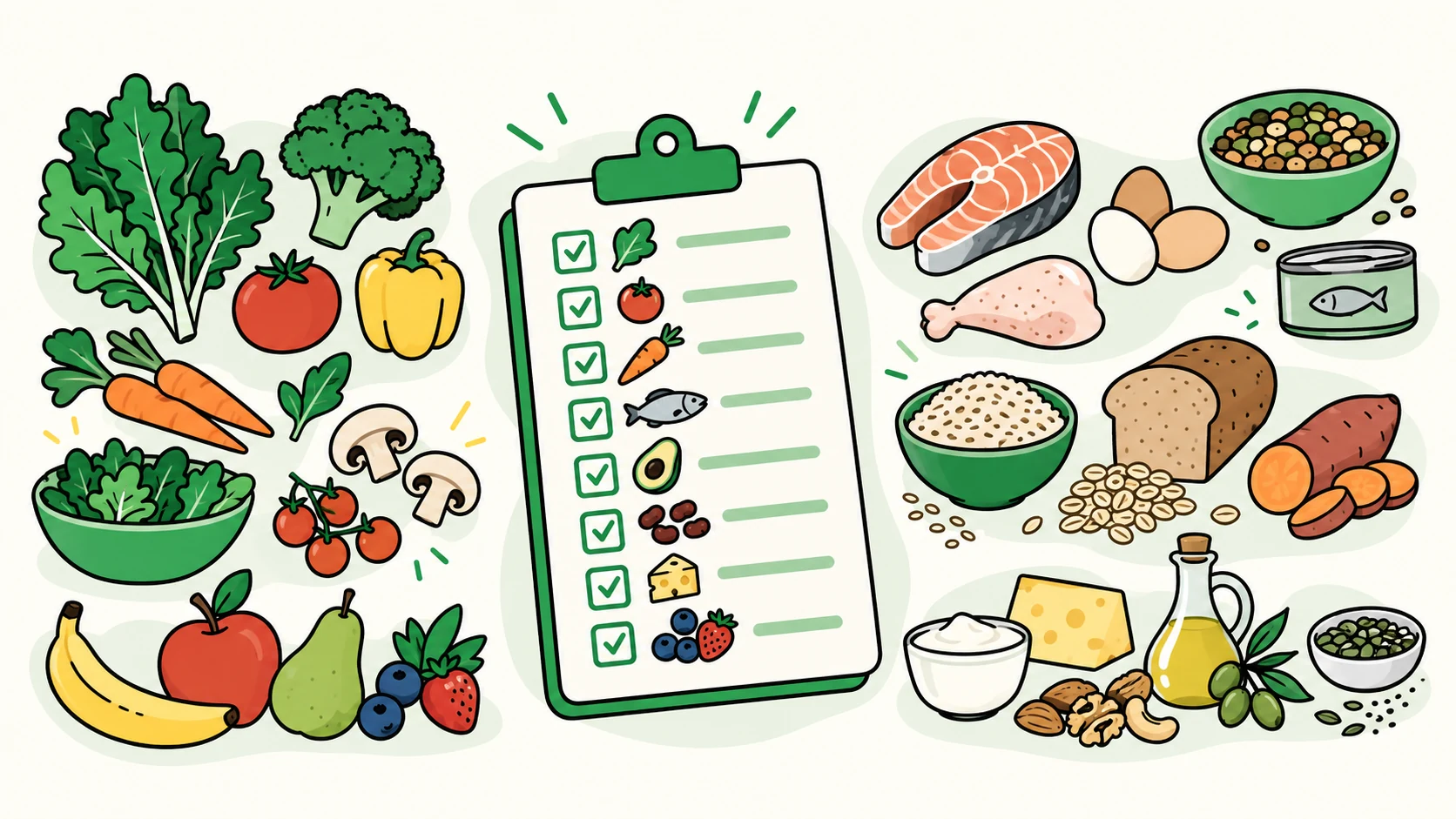
Choose a few foods from each useful role. Buying every item is unnecessary.
Protein foods
- eggs;
- fresh, frozen, or canned fish;
- poultry, lean meat, or meat alternatives;
- plain yogurt, cottage cheese, or another tolerated dairy product;
- tofu, tempeh, edamame, beans, or lentils; and
- a labeled protein drink or powder for an occasional fallback.
Plant foods and dairy may contain carbohydrates, and flavored products can differ sharply in added sugar. Read the exact label. Our low-carb high-protein foods guide explains why reliable comparisons need a product label or a named USDA FoodData Central record, a gram weight, preparation state, and extraction date.
Produce and fiber sources
- cooked or raw vegetables that you tolerate;
- berries or other fruit in portions that fit the plan;
- beans, lentils, nuts, and seeds; and
- whole grains if the plan is not ketogenic.
A strict keto pattern narrows fruit, bean, and grain choices. That can make nutrient and fiber planning more important. Introduce fiber gradually when gastrointestinal symptoms are active.
Compact energy and flavor
- olive oil, avocado, nuts, seeds, or nut butter;
- herbs, spices, and condiments; and
- cheese or another energy-dense food you tolerate.
Added fat can increase calories without much volume, but a high-fat or fried meal can aggravate nausea or fullness for some people. Buy small amounts until you know what works.
Easy fallbacks
- frozen fish, poultry, tofu, or vegetables;
- canned fish or beans;
- shelf-stable soup or broth that fits any sodium limit;
- plain crackers, toast, rice, or another mild carbohydrate if keto is paused during symptoms; and
- a ready-to-drink product with a label you have checked.
A carbohydrate food used to tolerate an illness day is not a treatment failure. Persistent inability to eat or drink needs clinical advice.
Make three versions of the cart
| Situation | Useful characteristics | Examples |
|---|---|---|
| Ordinary appetite | Varied, minimally processed, enough for complete small meals | Fish, tofu, vegetables, yogurt, beans |
| Low appetite | Soft texture, small serving, low preparation burden | Eggs, cottage cheese, soup with protein, labeled drink |
| Nausea or fullness | Mild smell and flavor, lower fat, small portion | Plain poultry or tofu, yogurt if tolerated, toast or rice if needed |
The what to eat on a GLP-1 guide shows how to combine these roles. The nausea and constipation page covers symptom adjustments and red flags.
Use labels instead of generic macro claims
Compare serving size, protein, total carbohydrate, fiber, added sugar, saturated fat, sodium, and allergens on the package. A scoop, cup, pouch, or slice is not standardized across brands. Collagen is not nutritionally interchangeable with a complete protein, and a drink does not replace the variety of a balanced diet.
The current Dietary Guidelines give a general protein goal of 1.2-1.6 g/kg/day, while the National Academies adult RDA remains 0.8 g/kg/day for nearly all healthy adults.23 Neither number tells an individual shopper which body-weight basis to use during obesity treatment. The four-society GLP-1 nutrition advisory says that point lacks consensus.4
The keto calculator is an input-only macro arithmetic worksheet. It calculates results from values you enter; it does not choose a personalized protein or macro target.
Buy only what you can store safely
FoodSafety.gov lists cooked meat or poultry leftovers for refrigerator storage of three to four days and hard-cooked eggs for up to one week when held at 40°F (4°C) or below.5 Freeze portions you will not use in that window. Refrigerate perishable food within two hours, or within one hour when the surrounding temperature is above 90°F (32°C).
USDA safe minimum internal temperatures include 165°F (74°C) for poultry, 160°F (71°C) for ground meats, 145°F (63°C) plus a three-minute rest for whole cuts of beef, pork, lamb, and veal, and 145°F for fish.6 Reheat leftovers to 165°F.
During pregnancy, CDC advises choosing pasteurized dairy, cooking eggs until the yolk and white are firm, and reheating deli meat to 165°F or until steaming hot.7 Avoid premade deli salads unless current clinical guidance says otherwise.
Fluids and electrolyte products
Keep tolerated drinks available, but do not assume every person on keto or a GLP-1 needs an electrolyte supplement. These products vary in sodium, potassium, magnesium, sweeteners, and carbohydrate. Kidney, heart, liver, and endocrine conditions can make generic electrolyte advice unsafe. Follow an individualized fluid or sodium limit when one exists.
For a reusable list interface, use the keto shopping-list tool and add your GLP-1-specific fallbacks. It provides list organization, not medical nutrition targets.
Frequently Asked Questions
Do you need special keto products for a GLP-1 grocery list?
Should everyone buy electrolyte packets?
How long can cooked meal-prep stay refrigerated?
What belongs in a low-appetite fallback kit?
Can this list calculate a weekly protein target?
Works cited
Article history
- Rebuilt the list around labels, appetite states, individualized nutrition, and current food-safety guidance
- First published
Your learning guide