What to Eat on a GLP-1
GLP-1 medicines can make portions unexpectedly small. Use that limited appetite for foods that supply protein, vitamins, minerals, fiber, and enough energy. The best pattern is the one you can tolerate and sustain with your prescriber's guidance. Keto is optional, and direct trials have not established that combining keto with these medicines produces better outcomes than either approach studied separately.
This guide covers GLP-1 receptor agonists such as semaglutide and the dual GIP/GLP-1 medicine tirzepatide. It does not replace the instructions for your specific prescription. See keto while taking a GLP-1 before making a substantial carbohydrate change, especially if you take insulin, a sulfonylurea, a meglitinide, or an SGLT2 inhibitor.
Reading evidence in context
- Observed outcome
- Certainty
- Duration
- What remains unknown
Education is not diagnosis
- General education
- Personal self-check
- Clinician discussion
- Urgent care if needed
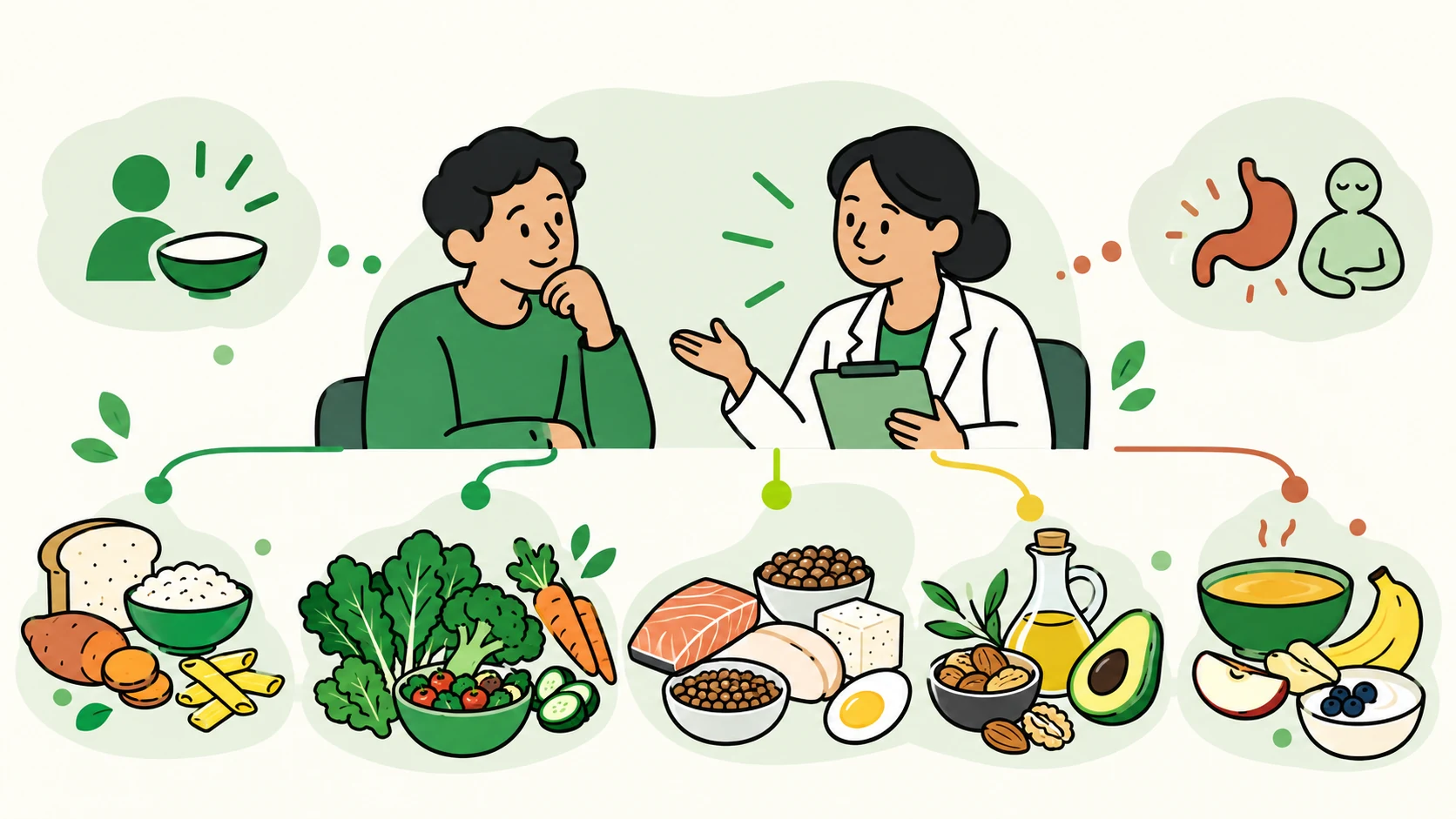
Start with a smaller, complete meal
A practical first serving includes:
- a tolerated protein food, such as eggs, fish, poultry, tofu, yogurt, cottage cheese, beans, or a labeled protein drink;
- vegetables or fruit that fit your eating pattern and current symptoms;
- a source of energy, such as olive oil, avocado, nuts, whole grains, beans, or another carbohydrate food you tolerate; and
- a drink you can sip comfortably, unless your clinician has prescribed a fluid limit.
The 2025-2030 Dietary Guidelines describe a general daily protein goal of 1.2-1.6 grams per kilogram for the public.1 This is distinct from the long-standing adult RDA of 0.8 g/kg, which the National Academies set to cover the needs of nearly all healthy adults.2 The RDA is not accurately described as a mere deficiency threshold.
Neither number automatically becomes an individual GLP-1 prescription. A 2025 joint advisory from four professional organizations notes that suggested weight-loss targets vary and that there is no consensus on whether people with obesity should calculate protein from actual weight, adjusted weight, ideal weight, or fat-free mass.3 Kidney disease, cirrhosis, pregnancy, age, training, total energy intake, and clinical nutrition risk can change the appropriate amount. Ask a clinician or registered dietitian to set the basis when those factors apply.
The keto calculator is an input-only macro arithmetic worksheet. It calculates results from values you enter; it does not choose a personalized protein or macro target.
Match the food to your current appetite
When ordinary meals are comfortable
Build a small meal around a food you already tolerate. Examples include salmon with vegetables and potatoes, chicken with salad and beans, tofu with cooked vegetables and rice, or eggs with toast and fruit. A low-carbohydrate version might use non-starchy vegetables in place of the starch. Carbohydrate restriction is a preference or clinical decision, not a requirement of GLP-1 treatment.
When appetite is very low
Reduce the volume before abandoning the meal. Yogurt, cottage cheese, eggs, soft tofu, flaked fish, soup with protein, or a labeled protein drink may be easier than a large plate. Compare product labels for protein, added sugar, saturated fat, sodium, allergens, and serving size. Powders and drinks are conveniences; they do not reproduce all the nutrients and fiber in a varied diet.
If low intake persists, contact the prescribing team. The joint advisory recommends monitoring for nutritional deficiencies and excessive loss of lean tissue rather than relying on protein alone.3
When nausea, reflux, or fullness is active
Try smaller portions, eat slowly, and stop when comfortably full. High-fat or fried food, alcohol, very spicy food, and a large meal can be harder to tolerate for some people. Choose milder, lower-fat foods temporarily and change one factor at a time. Our nausea and constipation guide separates practical adjustments from symptoms that need medical attention.
When constipation is the main problem
Introduce tolerated fiber gradually and drink enough fluid for your clinical situation. Abruptly adding a large fiber supplement without enough fluid can make symptoms worse. Produce, beans, nuts, seeds, and whole grains are possible sources; a keto pattern narrows that list, so planning matters. A clinician should individualize fluids and electrolytes for heart, kidney, liver, or endocrine conditions.
Protein cannot do the whole job
Body-composition studies measure lean mass, a DXA category that includes water, organs, connective tissue, and muscle. It should not be reported as skeletal muscle alone. Protein supports nutrition, but the professional advisory concludes that protein intake by itself is likely insufficient to preserve muscle without structured resistance training.3 See muscle and lean-mass changes on GLP-1 treatment for the actual semaglutide and tirzepatide substudy results.
Strength work should match health status and training history. New weakness, repeated falls, or a sustained decline in everyday function belongs on the clinical agenda. Scale weight cannot identify which tissue changed.
Shop for options, not a rigid menu
Keep a few choices in each role:
| Role | Examples | What to check |
|---|---|---|
| Protein anchor | Eggs, fish, poultry, tofu, yogurt, beans | Tolerance, allergy, label, preparation |
| Produce | Cooked vegetables, salad, berries, fruit | Fiber tolerance and current symptoms |
| Compact energy | Olive oil, avocado, nuts, nut butter | Portion and nausea tolerance |
| Easy fallback | Soup with protein, yogurt, labeled shake | Sodium, added sugar, allergens |
| Fluids | Water, broth, other tolerated drinks | Any prescribed fluid or sodium limit |
Use the GLP-1 grocery list to turn those roles into a flexible shop. For low-carbohydrate options with deliberately non-exact nutrition claims, see low-carb high-protein foods.
Know when food advice is not enough
The current Wegovy label warns about severe gastrointestinal reactions, pancreatitis, gallbladder disease, and acute kidney injury related to volume depletion. It also says semaglutide is not recommended in severe gastroparesis.4 Contact a clinician promptly for persistent vomiting, inability to keep fluids down, dehydration, severe or persistent abdominal pain, or symptoms of low blood glucose. Emergency symptoms need emergency care.
Do not change the dose or stop treatment from a web article. The exact response can depend on the medicine, dose-escalation stage, other drugs, and diagnosis.
Frequently Asked Questions
Do you have to eat keto while taking a GLP-1 medicine?
Is 1.2-1.6 g/kg the protein prescription for everyone on a GLP-1?
What can you eat when a GLP-1 makes solid food difficult?
Can protein alone prevent lean-mass loss?
When should gastrointestinal symptoms be reported?
Works cited
Article history
- Rebuilt meal guidance, protein context, symptom adjustments, and safety escalation from current guidance
- First published
Your learning guide