Low-Carb High-Protein Foods: A Practical List
Meat, poultry, seafood, eggs, many unsweetened dairy foods, tofu, tempeh, and selected packaged products can supply protein with little carbohydrate. A useful list still needs the serving, preparation, label, food quality, and medical context. This guide groups choices by how they are used instead of ranking foods with unreproducible protein-to-carb scores.
Use the evidence-based protein guide before choosing a target. Chronic kidney disease and cirrhosis require different clinical approaches; pregnancy, diabetes medication, frailty, and food allergies also change the plan.
Why are there no exact macro rankings here?
USDA FoodData Central contains high-quality reference data, but “chicken,” “Greek yogurt,” or “tofu” is not one fixed record. Nutrients change with the cut, brand, fortification, water loss during cooking, drained weight, and serving size. A calculation is reproducible only when it records the FoodData Central ID or package label, grams used, raw or cooked state, extraction date, finished yield, and formula.
The old version of this list supplied precise numbers for underspecified servings. Those values have been removed rather than presented as measurements. Use FoodData Central for a named commodity and the current package label for a brand.1 The net-carb calculator can show transparent label arithmetic, including when the U.S. and EU/UK label systems differ.
Which animal foods are naturally low in carbohydrate?
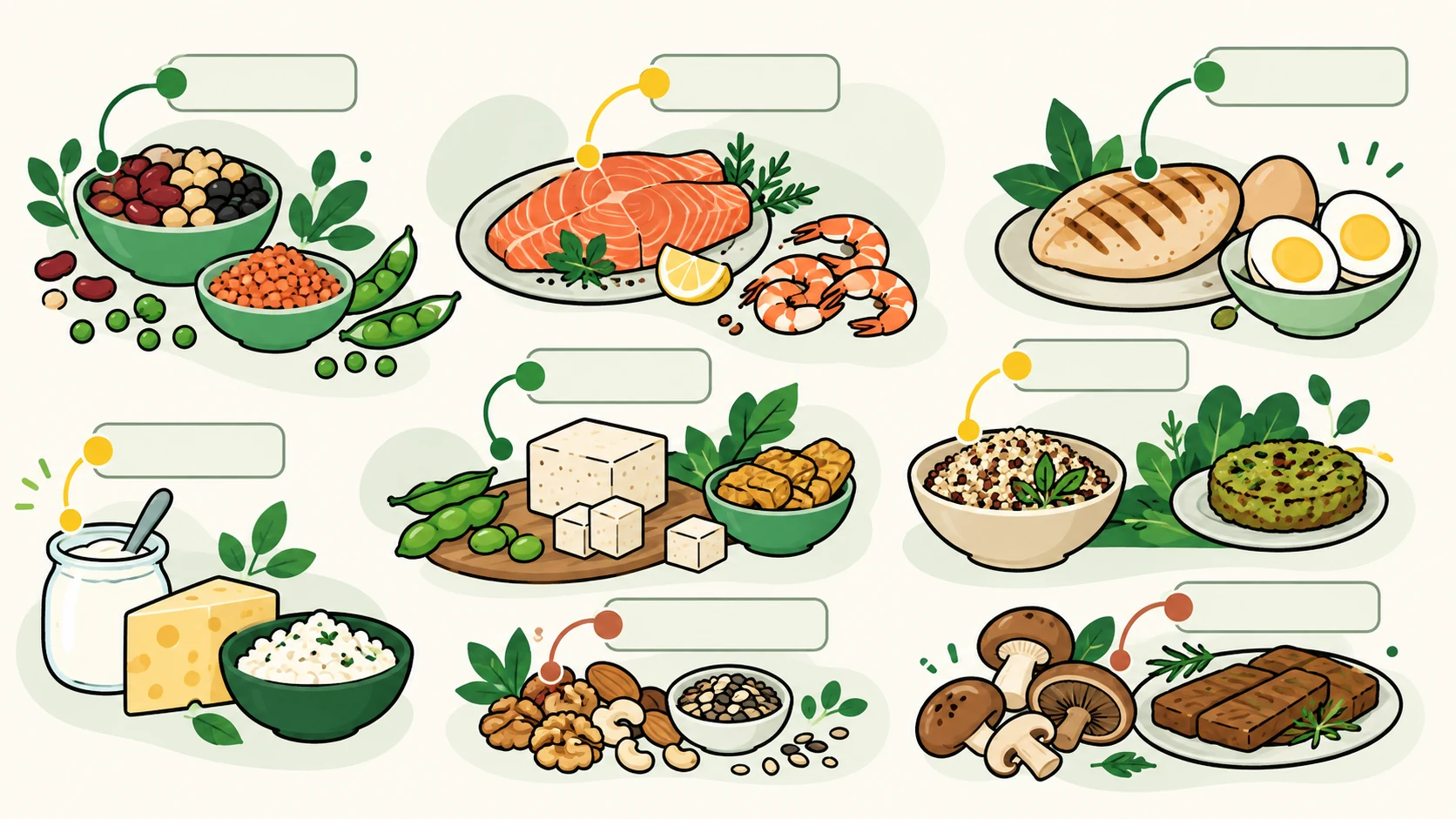
Unbreaded, unglazed meat, poultry, seafood, and eggs generally contain little carbohydrate before sauces or coatings are added.
- chicken or turkey breast and thigh;
- lean ground poultry;
- beef, pork, lamb, and game;
- salmon, trout, sardines, tuna, and cod;
- shrimp, crab, mussels, and other shellfish;
- eggs and pasteurized liquid egg products.
Choose among them by more than carbohydrate. Fish can contribute omega-3 fats; poultry and lean cuts can reduce saturated fat; processed meats can be high in sodium and saturated fat. Breaded fish, sweetened jerky, glazed meat, crab cakes, and deli salads may add carbohydrate and deserve a label check.
Cook poultry to 165°F (73.9°C), ground meat to 160°F (71.1°C), whole cuts of beef, pork, veal, and lamb to 145°F (62.8°C) followed by a three-minute rest, and fish to 145°F (62.8°C). Use a food thermometer, not color.2
Which dairy foods fit?
Plain Greek-style yogurt, cottage cheese, skyr, milk-filtered yogurt, and some cheeses can add protein without a sweet dessert profile. Carbohydrate varies substantially by brand and serving. “No added sugar” does not mean carbohydrate-free because lactose remains.
Check:
- the stated serving size;
- total carbohydrate and dietary fiber;
- added sugars, syrups, fruit preparations, and granola;
- protein per serving;
- saturated fat and sodium;
- whether the product is pasteurized when pregnancy or immune status makes that important.
Cheese can fit a low-carb diet, but it is not always a protein-efficient choice once calories, saturated fat, and sodium are considered. Use it as a food, not an automatic way to make every meal “high protein.”
Which plant proteins work?
Tofu, tempeh, edamame, lupini beans, seitan, nuts, and seeds can contribute protein. Their carbohydrate, fiber, fat, and sodium profiles differ, so they should not be ranked as though one metric defines quality.
Firm tofu and tempeh work as meal anchors. Edamame and lupini beans can fit some low-carb plans in measured portions. Nuts and seeds are useful additions but are energy-dense and usually provide less protein per serving than a main dish. Seitan is concentrated in protein but is unsuitable for celiac disease or wheat allergy.
Plant variety matters. The 2025–2030 Dietary Guidelines encourage nutrient-dense protein foods, while the 2026 American Diabetes Association Standards encourage more plant protein within a varied eating pattern.34 A low-carb plan does not require removing every legume if the portion fits the person's goals and glucose response.
What about powders, bars, shakes, and meat snacks?
These products are convenient, not nutritionally interchangeable.
- Plain protein powder: inspect serving size, protein, carbohydrate, ingredients, and third-party certification if sport testing matters.
- Ready-to-drink shake: check added sugars, sugar alcohols, fiber, and whether it requires refrigeration after opening.
- Protein bar: syrups, dates, grains, and coatings can make a “protein” bar high in carbohydrate.
- Jerky or meat stick: check added sugar and sodium; keep pregnancy and Listeria advice in mind for ready-to-eat meat.
- Tuna or salmon pouch: shelf-stable while sealed, but refrigerate after opening and follow the package instructions.
“Shelf-stable” describes unopened storage under the manufacturer's directions. It does not mean a prepared yogurt bowl, opened pouch, deli roll-up, cooked egg, or shake is safe all day in a warm bag. Perishable food should not remain above 40°F (4.4°C) for more than two hours, or one hour when the ambient temperature is above 90°F (32.2°C).5
How should pregnancy change this list?
Pregnant people have a higher risk of serious illness from Listeria monocytogenes. CDC advises choosing pasteurized dairy, cooking eggs until whites and yolks are firm, and reheating deli meat, cold cuts, hot dogs, and fermented or dry sausages to 165°F or until steaming hot.6 A food can be low in carbohydrate and still be a poor pregnancy choice.
How do you turn the list into meals?
Choose one main protein, at least one non-starchy vegetable, and a source of mostly unsaturated fat. Examples include salmon with green beans and olive oil; tofu with mushrooms and bok choy; chicken with a cabbage slaw; or eggs with spinach and avocado.
Use meal ideas for complete combinations, breakfasts for mornings, and snacks when a meal is not practical.
The keto calculator is an input-only macro arithmetic worksheet. It calculates results from values you enter; it does not choose a personalized protein or macro target.
Frequently Asked Questions
Which foods provide protein with little carbohydrate?
Are protein bars low carb?
Is cheese a high-protein food?
Are plant proteins compatible with low carb?
Can deli meat be a pregnancy-friendly protein?
Works cited
Article history
- Removed unreproducible rankings and added label, storage, and pregnancy guidance
- First published
Your learning guide