Cheese-and-Almond-Flour Burger Buns
This page sets out a proposed formula for burger-style rounds made from melted mozzarella, cream cheese, almond flour and egg. 247-Keto has not kitchen-tested this recipe, so the notes below cover ingredient choices and safety points rather than promising a result.
Food safety and allergens
Shell eggs can carry Salmonella. Wash hands, utensils and surfaces after contact with raw egg, and cook dishes containing eggs thoroughly FDA egg safety guidance. Do not taste the raw batter. Check the thickest part of a round with a thermometer for at least 160°F (71°C), the FoodSafety.gov endpoint for egg dishes FoodSafety.gov minimum internal temperatures, and reheat leftovers to 165°F (74°C) FDA egg safety guidance. Refrigerate leftovers within two hours, or within one hour if the room is above 90°F (32°C), and keep them at 40°F (4°C) or below, using shallow containers for faster chilling FoodSafety.gov food handling guidance. This formula contains milk, egg and almonds; read current ingredient and allergen labels on every product FDA food allergy guidance.
247-Keto has not kitchen-tested this formula, so yield, texture and timing remain unknown.
Preparation notes
Weigh everything on a digital scale, since the formula is written by weight. Grate the Sargento low-moisture part-skim mozzarella block yourself; fresh mozzarella is not a substitute, and pre-shredded products may not share its formulation Sargento mozzarella block ingredients. Use Bob's Red Mill superfine blanched almond flour, which is finely ground blanched almonds rather than almond meal with skins Bob's Red Mill almond flour information. The psyllium is a powder, not an equal-weight swap for whole husks NOW psyllium powder product information, and baking soda is not interchangeable with baking powder in equal amounts King Arthur baking powder and soda guidance.
Keep the bowl above the steaming water rather than in it, and let the melted mixture cool until it is comfortable to handle before adding the egg. Choose your round size when dividing the dough, and leave space between rounds so a thermometer can reach the thickest part of each one.
Ingredients
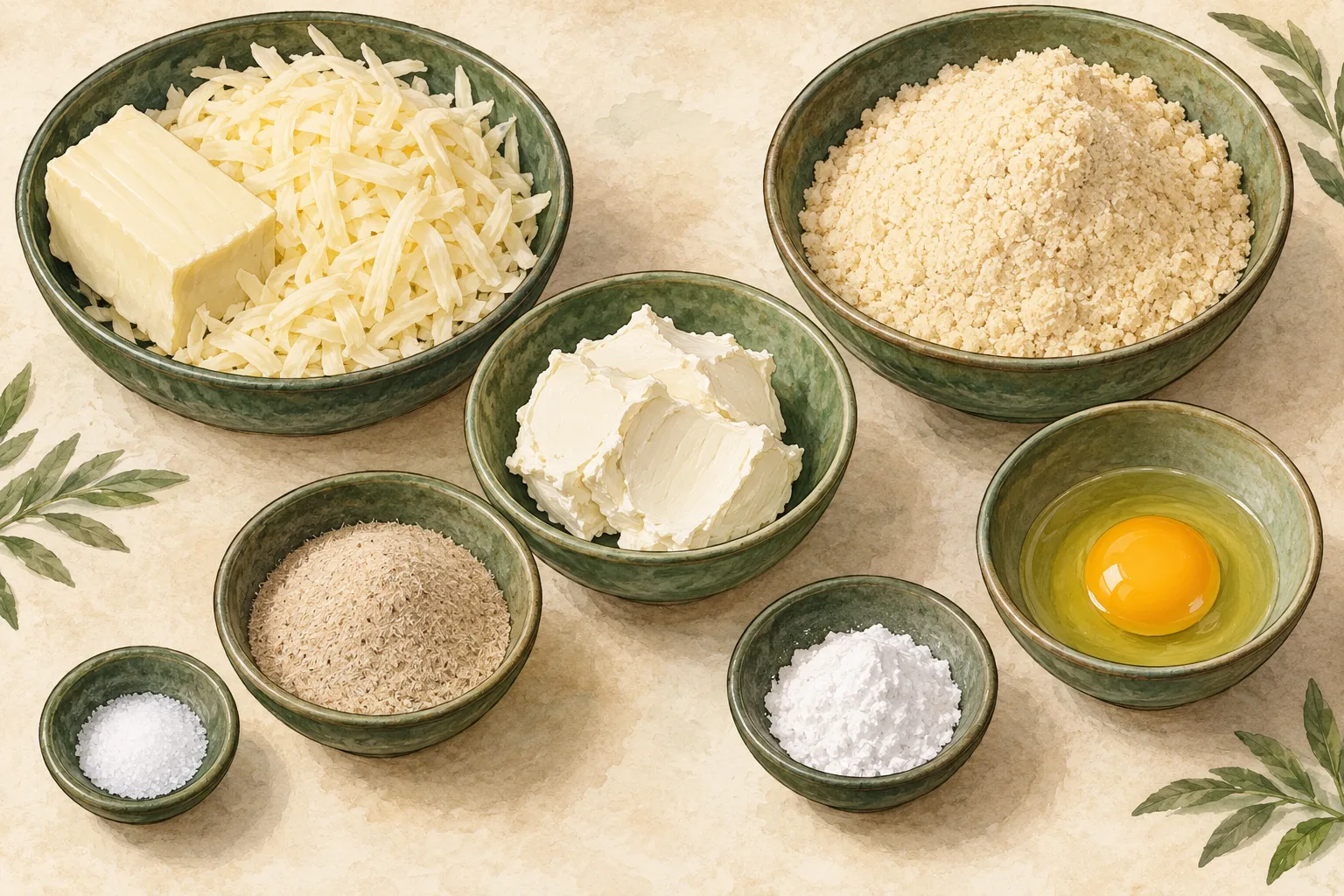
- 224 g Sargento low-moisture part-skim mozzarella block, grated
- 85 g plain full-fat pasteurized cream cheese
- 140 g Bob's Red Mill superfine blanched almond flour
- 16 g NOW Psyllium Husk Powder
- 8 g double-acting baking powder
- 100 g raw whole egg, shells removed
- 2 g fine salt
Equipment
- Digital scale
- Grater
- Heat-safe mixing bowl
- Saucepan
- Mixing spoon
- Oven
- Rimmed baking sheet
- Parchment
- Oven mitts
- Thin-tip thermometer
Method
- Preheat the oven to 350°F (175°C) and line a baking sheet with parchment rated for this setting.
- Put the weighed mozzarella and cream cheese in a heat-safe bowl over a saucepan of gently steaming water, with the bowl above the water. Stir until the cheeses can be mixed; use mitts and keep steam away from your hands.
- Remove the bowl from the heat. Allow the mixture to cool enough to handle without burns, then stir in the weighed egg, almond flour and remaining dry ingredients until incorporated.
- Divide the dough into the size of rounds you want and shape into bun-like rounds with space between them on the sheet. This is a shaping choice, not a measured finished bun count.
- Bake until the egg-and-cheese dough is set through the center with no wet raw batter; check the thickest part with a thin-tip thermometer for at least 160°F (71°C). Do not taste raw dough.
- Remove with oven mitts and cool enough to handle. Refrigerate perishable leftovers promptly; the shaping instructions are proposed and do not establish finished yield or texture.
Article history
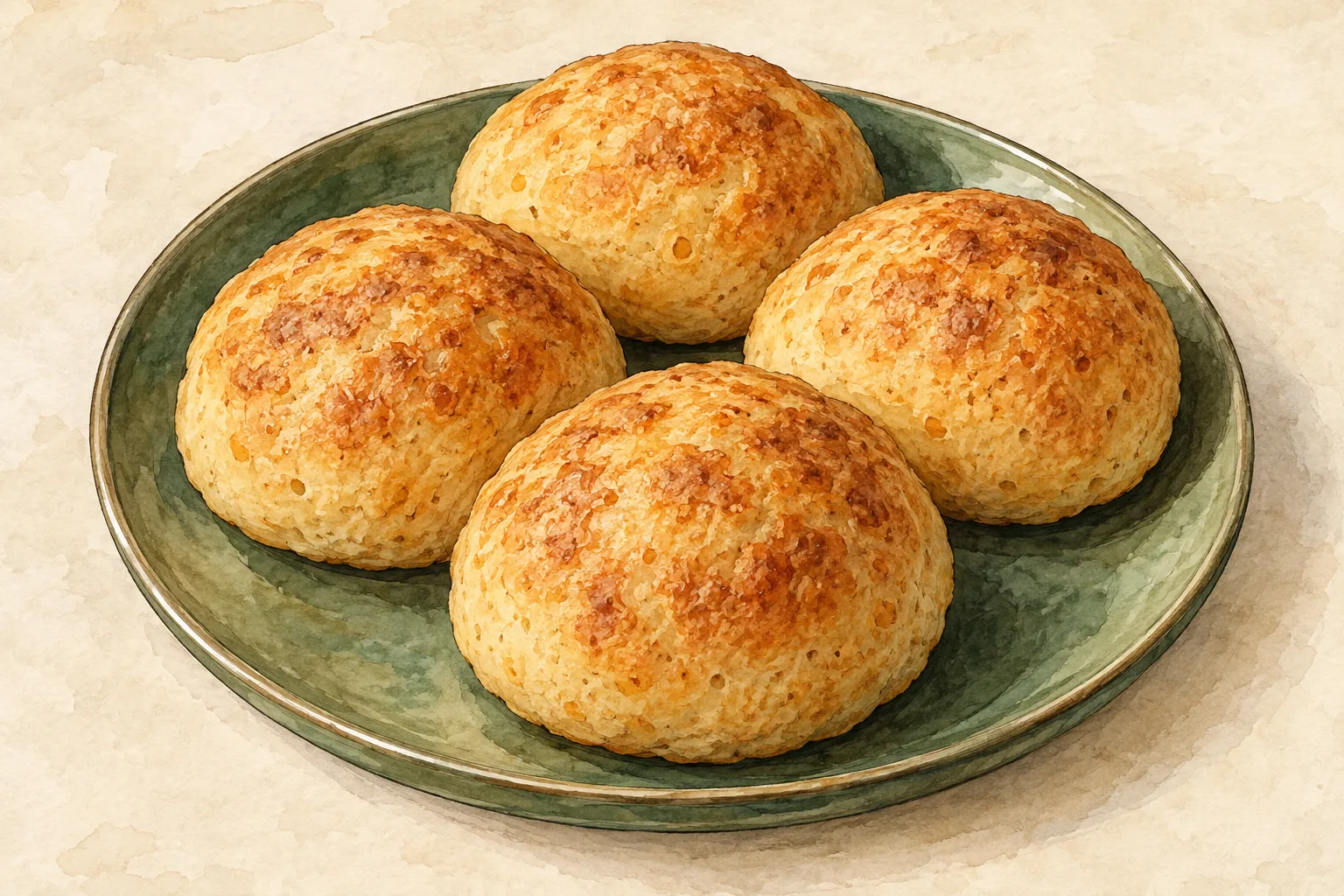
- Recipe formulas restored with source and food-safety review. These pages are not kitchen-tested and list no measured results or nutrition values. Concept art is illustrative only.
- First published
Your learning guide