The Keto Jello / Gelatin Trick

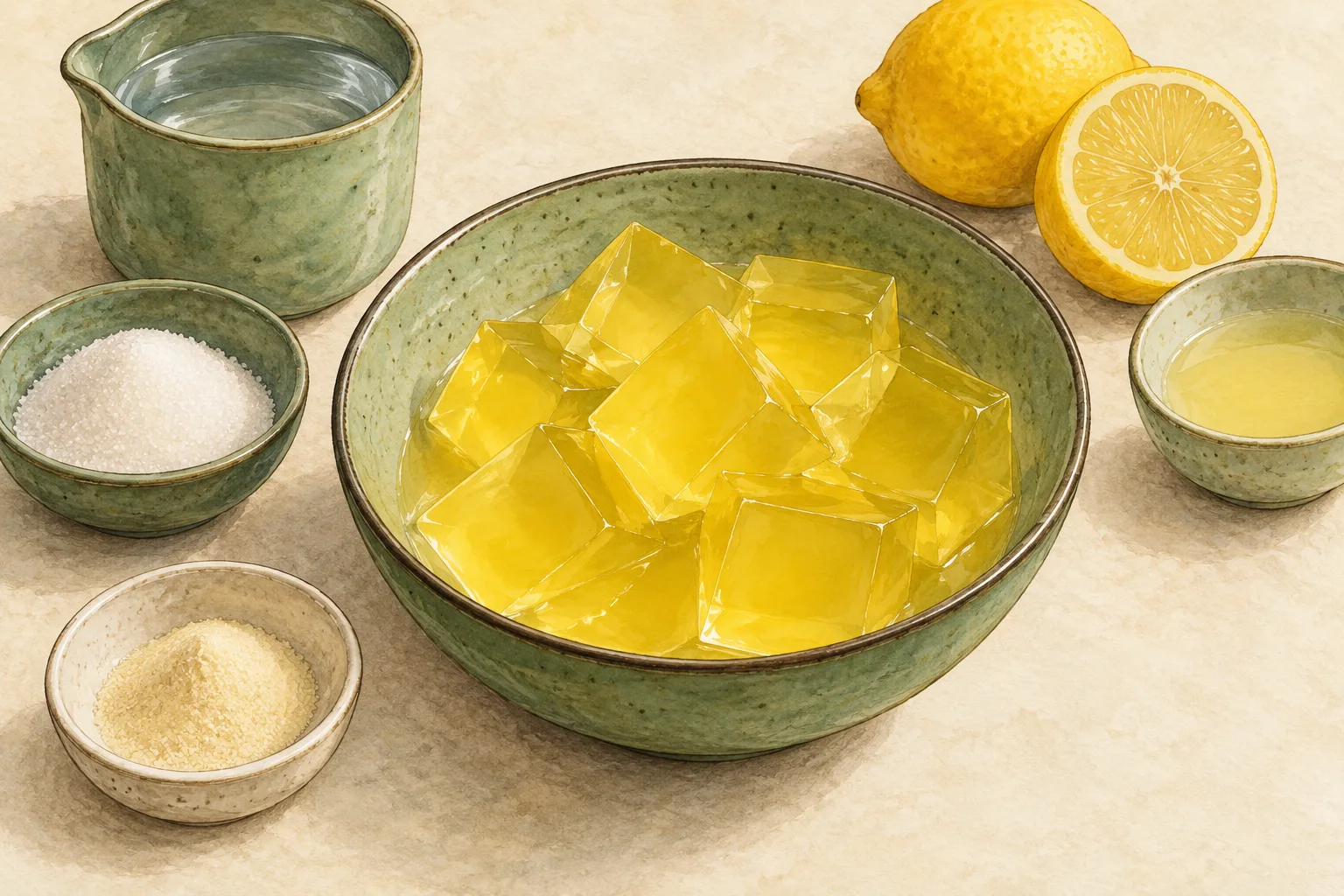
The keto gelatin trick is a 3-ingredient jello made from unflavored gelatin, water, and a sugar-free sweetener. Each serving has about 3 g protein and takes about 2 hours 15 minutes, mostly hands-off chilling. The allulose version has 8 g total carbohydrate per serving and counts as 0 g net only under the convention explained below. It may take the edge off hunger, but it will not "melt fat."

If you've scrolled past this on social video in the last year, you've seen some version of it: plain gelatin dissolved in hot water, poured into a cup, and chilled into a wobbly snack. The claims range from reasonable ("it adds a little protein") to overreaching ("it burns belly fat"). Here is what the recipe provides and what the evidence does not show.

What is the "gelatin trick"?

The "gelatin trick" is a viral snack made by dissolving plain unflavored gelatin in hot water, sweetening it, and chilling it into a firm jello. This recipe uses more gelatin than many boxed mixes, but each serving still provides only about 3 g protein.

It's built on the same gelling protein used in bone broth, marshmallows, and gummy vitamins: collagen that's been processed into a soluble powder. What's new is the ratio and the marketing, not the ingredient.

Does the gelatin trick actually work?

It depends on what "work" means: this serving is low in calories and supplies about 3 g protein, but there is no good evidence it burns fat, "detoxes" anything, or speeds up metabolism. Treat it as a small gelatin snack, not a shortcut to weight loss.

Protein in general does tend to be more filling per calorie than carbs or fat, which is a plausible reason a gelatin snack might take the edge off hunger between meals.1 But that's a general protein effect, not something unique to gelatin, and one small cup of jello with 3 g of protein is not going to meaningfully change your metabolism on its own.

What ingredients do you need for the 3-ingredient gelatin trick?

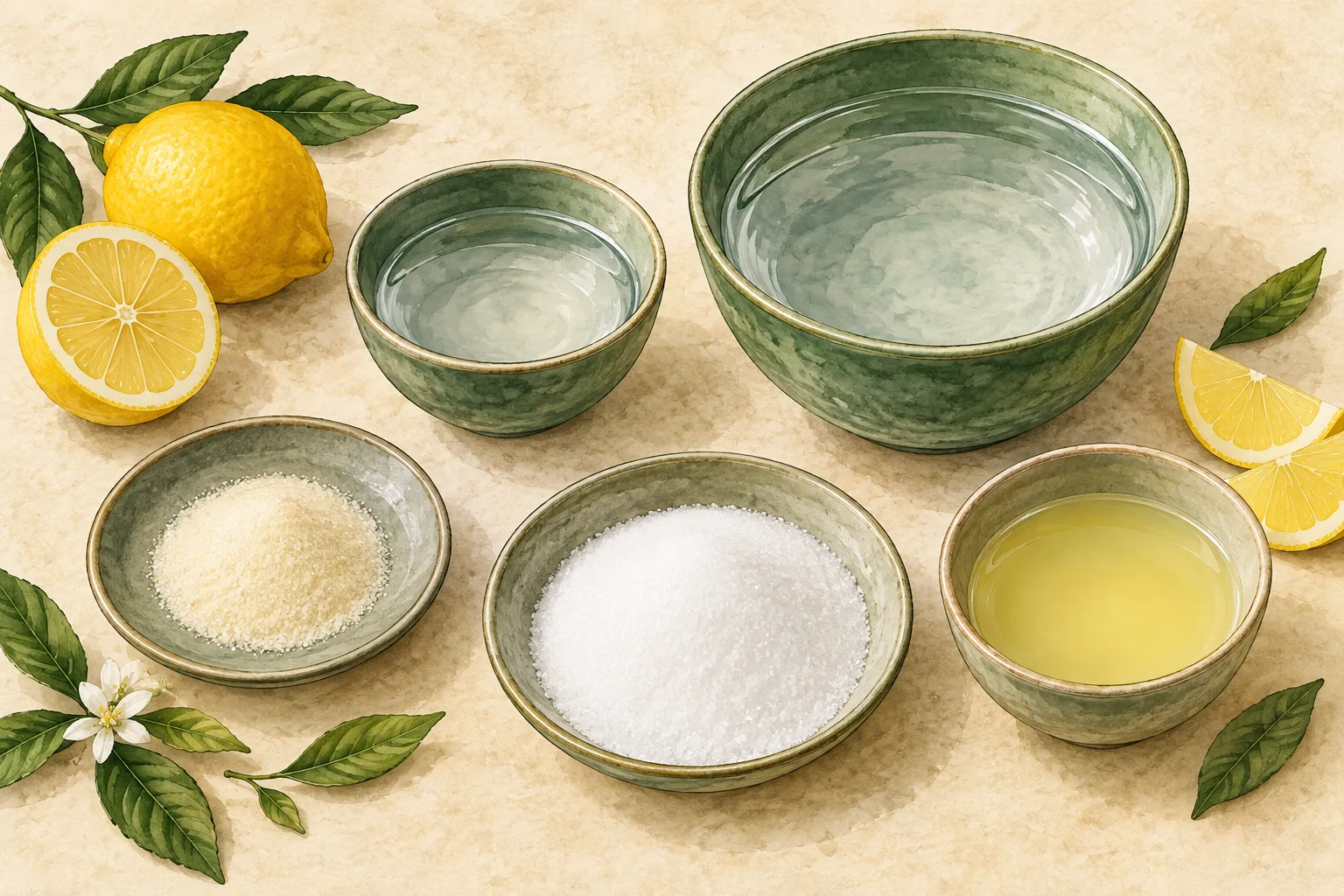
Just three base ingredients: unflavored gelatin powder, water, and a low-carbohydrate sweetener — a splash of lemon extract or juice is optional.

  • 2 tablespoons (2 envelopes, about 14 g) unflavored gelatin powder
  • 1 cup cold water, divided
  • 1 cup boiling water
  • 2 to 3 tablespoons granulated allulose, or a 1:1 erythritol-monk fruit blend, to taste
  • 1/2 teaspoon lemon extract (or 2 tablespoons fresh lemon juice for a brighter, slightly higher-carb version)
  • Pinch of fine sea salt (optional)

Plain unflavored gelatin is the whole point here. Check the product label, especially if you substitute a flavored mix or a sweetener blend. For more low-carb pantry staples, see the full keto food list.

How do you make the keto gelatin trick jello?

Bloom the gelatin in cold water for 5 minutes, dissolve it with hot water, stir in your sweetener and flavoring, then chill for at least 2 hours until firm. The blooming step is what keeps it smooth instead of clumpy.

  1. Bloom the gelatin. Sprinkle the gelatin powder evenly over 1/2 cup cold water in a heatproof bowl and let it sit undisturbed for 5 minutes, until it swells into a soft, applesauce-like mass.
  2. Dissolve with hot water. Pour in the 1 cup of boiling water and whisk for about a minute, until the gelatin is fully dissolved and the liquid runs clear with no grainy bits.
  3. Sweeten and flavor. Whisk in the allulose, lemon extract, remaining 1/2 cup cold water, and salt until the sweetener is fully dissolved.
  4. Pour and chill. Divide the liquid between 4 small cups or a shallow dish and refrigerate uncovered for at least 2 hours, until fully set and jiggly-firm.
  5. Serve. Eat it straight from the cup with a spoon, or run a knife around the edge to unmold it onto a plate.

Skip raw pineapple, kiwi, or papaya if you want to experiment with add-ins — their enzymes break down gelatin's proteins and will keep it from setting at all.

What benefits do people claim, and what does the evidence actually say?

Some of the claims around the gelatin trick hold up better than others — appetite and low-carb value are reasonable, "fat burning" and "detox" are not. Here's a straight comparison:

ClaimWhat the evidence actually says
"Melts fat" / "boosts metabolism"Not supported. There's no mechanism by which eating gelatin burns stored fat.
"Curbs appetite"Plausible in a small way — protein can increase fullness, but this serving provides only about 3 g.
"Improves skin, hair, nails"Preliminary. Small studies on hydrolyzed collagen suggest modest effects, but large-scale trials have not confirmed the marketing claims, and one serving of jello is not the same intervention.2
"Supports joints"Mixed. Some research uses gram-scale collagen doses over months; a single gelatin snack isn't the same intervention.
"Heals the gut lining"No strong human evidence yet.

If skin, joint, or gut health is your actual goal, talk to your healthcare provider about whether a dedicated collagen or gelatin supplement dose (and realistic expectations) makes sense — this recipe is a food, not a treatment.

How many net carbs and calories are in the gelatin trick?

For the version made with allulose, one 1/2-cup serving has about 15 calories, 3 g protein, 8 g total carbohydrate, and 0 g net carbs only under this recipe's stated convention. FDA guidance allows manufacturers to exclude allulose from Total Sugars and Added Sugars, but allulose remains part of Total Carbohydrate.3 A different sweetener changes the estimate.

NutrientPer serving (1/2 cup)
Calories15 kcal
Total fat0 g
Total carbohydrate8 g
Fiber0 g
Allulose8 g
Net carbs0 g
Protein3 g

The snack is low in calories, but the allulose version still contains total carbohydrate. Use your chosen ingredients and tracking convention in the net-carb calculator, or see the full method in our guide to calculating your keto macros. For more ready-to-eat options, browse the keto snacks roundup, or see the full keto recipes by type hub.

Frequently Asked Questions

Does the gelatin trick actually help you lose weight?
Not directly. It is a low-calorie snack with about 3 g protein per serving, but no study shows that gelatin itself burns fat or causes weight loss.
Is gelatin keto-friendly?
Yes. Plain unflavored gelatin has 0 g carbs and is almost pure protein, so it fits any keto or low-carb plan.
What's the difference between this and regular sugar-free Jell-O?
Boxed sugar-free jello uses far less gelatin plus added sweeteners, dyes, and artificial flavoring; this recipe uses roughly double the gelatin for extra protein and lets you control every ingredient.
Why isn't my gelatin trick jello setting?
The two most common causes are skipping the cold-water bloom step and using raw pineapple, kiwi, or papaya, whose enzymes break down gelatin's proteins and stop it from firming up.
Can gelatin really improve skin, hair, or joints?
The evidence is limited. Small studies on hydrolyzed collagen suggest modest benefits, but typically at doses higher than a single serving of jello, and results vary a lot between people.
How much protein is in one serving?
About 3 g per 1/2-cup serving, since the batch's 12 g of gelatin protein is split across 4 servings. Eating multiple servings scales the protein up proportionally.

Works cited

  1. Dhillon J, Craig BA, Leidy HJ, et al. The Effects of Increased Protein Intake on Fullness: A Meta-Analysis and Its Limitations — Journal of the Academy of Nutrition and Dietetics, 2016August 24, 2026 https://pubmed.ncbi.nlm.nih.gov/26947338/
  2. Golen T. Do Collagen Supplements Fulfill Their Promises? — Harvard Health Publishing, Harvard Medical School, June 1, 2025August 24, 2026 https://www.health.harvard.edu/healthy-aging-and-longevity/do-collagen-supplements-fulfill-their-promises
  3. Sugars That Are Metabolized Differently Than Traditional Sugars — U.S. Food and Drug AdministrationAugust 24, 2026 https://www.fda.gov/food/food-additives-petitions/sugars-are-metabolized-differently-traditional-sugars

Article history

  1. Corrected protein, collagen, and allulose-label claims
  2. First published

Your learning guide

Loading reading status…