High-Protein Low-Carb Meal Ideas
Choosing lunch or dinner protein often comes down to what you're working with, not a chart of ideal foods. A stovetop and a fridge nearby open up fresh options; a desk, a car, or a shared kitchen with limited space push toward things that travel well and don't need last-minute cooking. Reliable cold holding matters for perishable food — even a good ingredient can become unsafe after too long at the wrong temperature. Match the format to your real day: pan-cooked if you're home and can eat right away, packed cold if you're heading out, reheated leftovers if that's what's in the container, or simple assembly if a stove isn't part of the picture. Appetite and any food allergies belong in the decision too — a plan that ignores either one doesn't survive contact with an actual mealtime.
Before deciding purely on convenience, a quick safety check matters. Perishable proteins need to stay at 40°F or below, with no more than 2 hours unrefrigerated (1 hour if it's 90°F or warmer outside) — a rule that applies whether you're eating at a desk, in a car, or at a picnic table. Cooked poultry should reach 165°F, and FoodSafety.gov lists hard-cooked eggs for up to one week and cooked meat or poultry leftovers for 3–4 days refrigerated at 40°F or below. If you're pregnant, managing diabetes medication, or dealing with CKD, cirrhosis, or a reduced appetite, generic protein or carb guidance may not fit your situation — check with your care team before changing how you eat day to day.
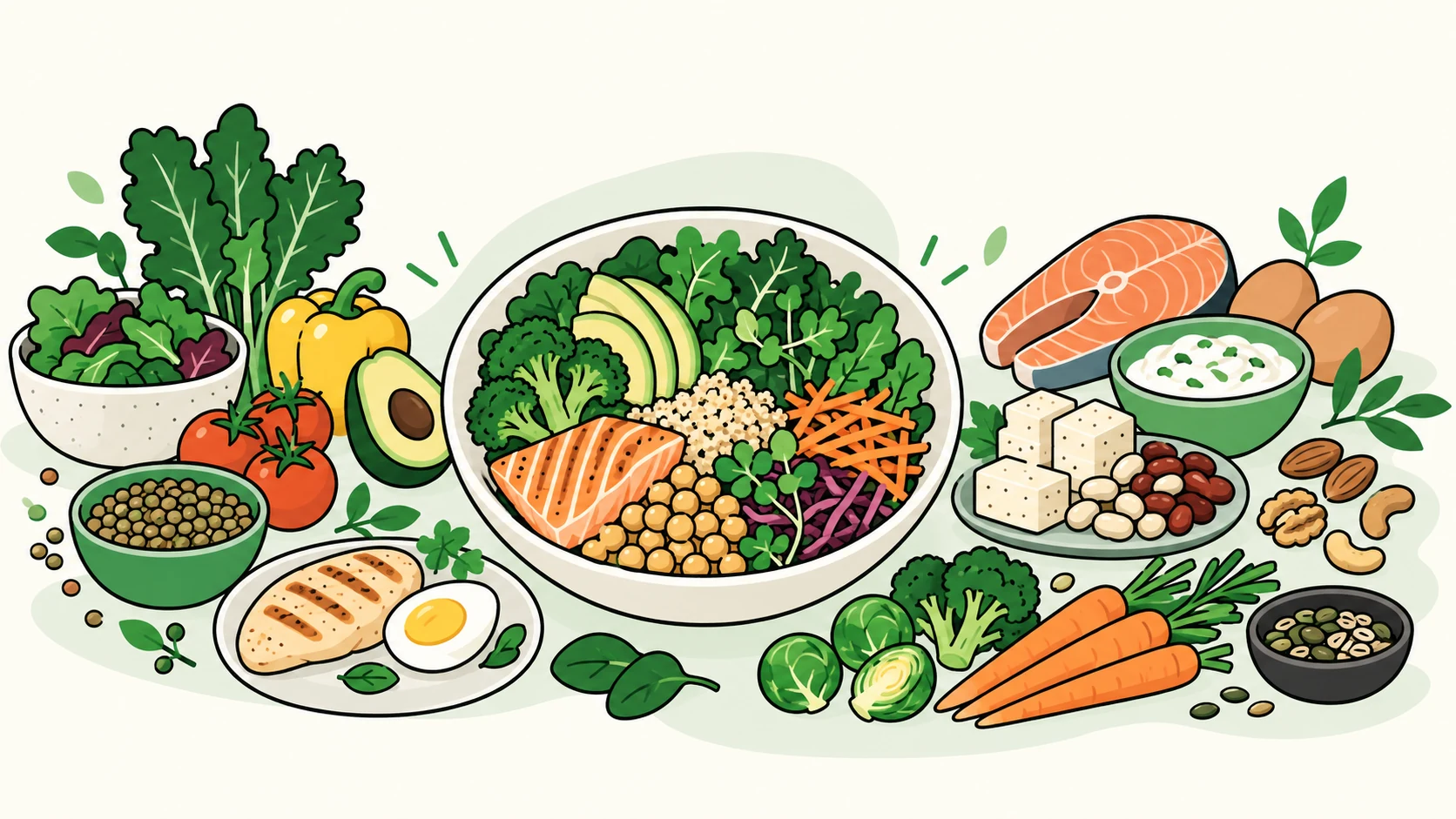
Match the meal format to the day
| Format | What it fits | One practical check |
|---|---|---|
| Fresh pan or tray | Home kitchen, eating soon after cooking | Poultry should reach 165°F internally before serving |
| Cold packed | Desk, commute, travel, no reheating planned | Keep at 40°F or below; discard after 2 hours unrefrigerated (1 hour at 90°F+) |
| Cooked leftovers | Batch-cooked earlier in the week | Cooked meat and poultry hold safely about 3–4 days refrigerated at 40°F or below |
| Limited-kitchen assembly | No stove, minimal equipment, shared or small space | Use labeled shelf-stable items or keep precooked perishables reliably cold |
Two exact comparisons illustrate how protein and carbohydrate content can differ by food form, not by meal: 120 g of baked, broiled, or roasted chicken breast with skin not eaten, from raw carries 36.2 g protein and 0 g total carbohydrate, while 50 g of whole boiled or poached egg carries 6.2 g protein and 0.5 g total carbohydrate. These are USDA FNDDS records for a single exact food form and gram amount — not a finished meal's nutrition. Bread, vegetables, sauces, or dairy added alongside either one will change the totals; neither figure is a portion recommendation.
What is the basic meal template?
Use four decisions:
- Main protein: fish, eggs, poultry, lean meat, tofu, tempeh, unsweetened dairy, or another suitable choice.
- Vegetables: leafy greens, cruciferous vegetables, mushrooms, zucchini, peppers, green beans, or another non-starchy option.
- Fat and flavor: olive oil, avocado, nuts, seeds, tahini, herbs, spices, citrus, or a lower-sugar sauce.
- Carbohydrate level: keep the portion and ingredients inside the plan you chose; low-carb does not always need to mean ketogenic.
This structure leaves room for food quality. A plate of fish, vegetables, and olive oil differs from processed meat, cheese, and butter even when both are low in carbohydrate.
Breakfast meal ideas
- scrambled eggs or tofu with spinach, mushrooms, and avocado;
- a vegetable omelet with a side of plain Greek-style yogurt;
- cottage cheese or skyr with chia, walnuts, and a small portion of berries;
- smoked salmon with eggs, cucumber, and tomatoes;
- leftover chicken with sautéed greens;
- an unsweetened protein smoothie made from a labeled powder, milk or unsweetened alternative, and spinach.
See the breakfast guide for ingredient swaps, egg safety, and make-ahead options.
Lunch and meal-prep ideas
- chicken, cabbage, cucumber, herbs, and an olive-oil dressing;
- tuna or salmon mixed at home and served in lettuce cups;
- tofu, bok choy, mushrooms, and sesame;
- turkey or beef meatballs with zucchini and tomato sauce without added sugar;
- taco-seasoned ground meat or crumbled tofu over cauliflower rice and greens;
- lentil or edamame salad in a portion that fits a moderate low-carb plan;
- a leftovers bowl with cooked protein, vegetables, and avocado.
If the meal is packed, use an insulated bag with enough cold packs to keep perishable food at 40°F (4.4°C) or below. “Meal prep” does not make cooked meat, dairy, eggs, or opened fish pouches shelf-stable.
The chicken Cobb salad is one fixed cold-lunch formula, not kitchen-tested. Cook and chill its chicken and eggs as instructed, then keep the assembled perishable meal at 40°F or below until serving.
Dinner ideas
- salmon, trout, or cod with asparagus and olive oil;
- chicken with roasted Brussels sprouts and a yogurt-herb sauce;
- pork tenderloin with cabbage and mustard;
- steak with mushrooms and a large green salad;
- shrimp with zucchini, garlic, and herbs;
- tofu or tempeh with broccoli and a lower-sugar stir-fry sauce;
- turkey-stuffed peppers without rice;
- sheet-pan poultry with cauliflower and peppers.
Sauce and preparation determine more of the carbohydrate than the unbreaded protein. Check bottled marinades, teriyaki sauce, barbecue sauce, breading, and glazes.
For a one-pot starting point, see the beanless beef chili or creamy chicken soup. These are untested editorial formulas with fixed ingredients and safety endpoints, not measured nutrition or serving promises.
What works when appetite is small?
GLP-1 and dual incretin medicines can reduce appetite and cause nausea, fullness, constipation, or vomiting. Direct evidence does not establish a single ketogenic meal plan for people taking these medicines. The 2025 joint nutrition advisory emphasizes nutrient adequacy, individualized protein, and structured strength training.1
Try a smaller portion of:
- plain yogurt or cottage cheese with seeds;
- egg or tofu scramble;
- flaked fish with soft cooked vegetables;
- chicken or tofu soup;
- a smoothie or shake that has been reviewed for ingredients and serving size.
Eat slowly and stop when comfortably full. High-fat fried food and a very large meal can worsen symptoms for some people. Persistent vomiting, inability to keep fluids down, severe abdominal pain, or signs of dehydration require medical advice. Use what to eat on a GLP-1 and the nausea and constipation guide for medication-specific detail.
How can vegetarian meals supply enough protein?
Use tofu, tempeh, seitan if gluten is safe, edamame, unsweetened dairy or eggs if included, and measured portions of legumes, nuts, and seeds. A vegetarian low-carb pattern usually needs more attention to fiber, iron, vitamin B12, calcium, and total energy than a list of net-carb counts reveals.
Pair complementary foods across the day rather than forcing every nutrient into one dish. A registered dietitian can help when vegan eating, low appetite, or a restrictive carbohydrate target narrows the options too far.
How should you cook and store these meals?
USDA minimum internal temperatures are 165°F (74°C) for all poultry, 160°F (71.1°C) for ground meat, 145°F (62.8°C) plus a three-minute rest for whole cuts of beef, pork, veal, and lamb, and 145°F for fish.2 Reheat leftovers to 165°F.
Refrigerate perishable food within two hours, or within one hour above 90°F (32.2°C). Cooked meat and poultry leftovers are generally listed for three to four refrigerated days at 40°F or below.3 Freeze extra portions promptly instead of assuming every meal-prep batch lasts a full week.
Pregnant people, adults 65 or older, and people with weakened immunity should also follow CDC Listeria precautions. Heat deli meat to 165°F or until steaming hot, choose pasteurized dairy, and avoid premade deli salads.4
How do you make the nutrition numbers reproducible?
Record the exact ingredient, FoodData Central ID or package label, gram weight, raw or cooked state, extraction date, and edible yield. Add nutrients for all ingredients, then divide by the measured number of servings. Do not attach Recipe or NutritionInformation schema to an idea that lacks tested instructions and a reproducible yield.
The food guide explains label checks, and the meal template builder can filter ideas without pretending to prescribe portions.
The keto calculator is an input-only macro arithmetic worksheet. It calculates results from values you enter; it does not choose a personalized protein or macro target.
Where you're eating shapes which format above makes sense. Heading out the door with food in tow? See low-carb packed lunches for cold-holding logistics beyond what's covered here. Traveling with limited kitchen access? Low-carb hotel meals covers assembly-style eating when a stove isn't available. Cooking for a household with mixed preferences or needs? Mixed-diet household meals addresses that overlap. Cooking just for yourself and want to right-size effort and leftovers? Low-carb cooking for one is the companion piece. And if this guide has you thinking about the first meal of the day rather than lunch or dinner, high-protein, low-carb breakfast picks up that thread.
Frequently Asked Questions
How much protein makes a meal high protein?
Are these complete recipes with verified macros?
How long do meal-prep proteins last in the refrigerator?
What poultry temperature is safe?
Can these meals work during GLP-1 treatment?
Works cited
Your learning guide