High-Protein Low-Carb Breakfast Ideas
Some mornings you have twenty minutes and a working stovetop. Others you're eating standing up before a school run, or you're stuck in a hotel room with nothing but a mini-fridge. High-protein, low-carb breakfasts work best when you pick the format for the morning you're actually having — no-cook and grab-from-the-fridge on rushed days, reheated on batch-cook days, freshly cooked when you have both time and appetite. Equipment matters too: a microwave changes what "reheated" can mean, and no fridge access rules out anything that needs to stay cold overnight.
Before you settle into a routine, a few safety checks are worth a beat of attention. During pregnancy, cook eggs until whites and yolks are firm and choose pasteurized dairy. If you are pregnant, have weakened immunity, take diabetes medication, or manage CKD, cirrhosis, or low appetite from illness or medication, generic protein or carb guidance may not match your care plan. Reheated leftovers should reach 165°F internally before eating. If you're prepping breakfast the night before, get perishable components into the fridge within two hours of cooking.
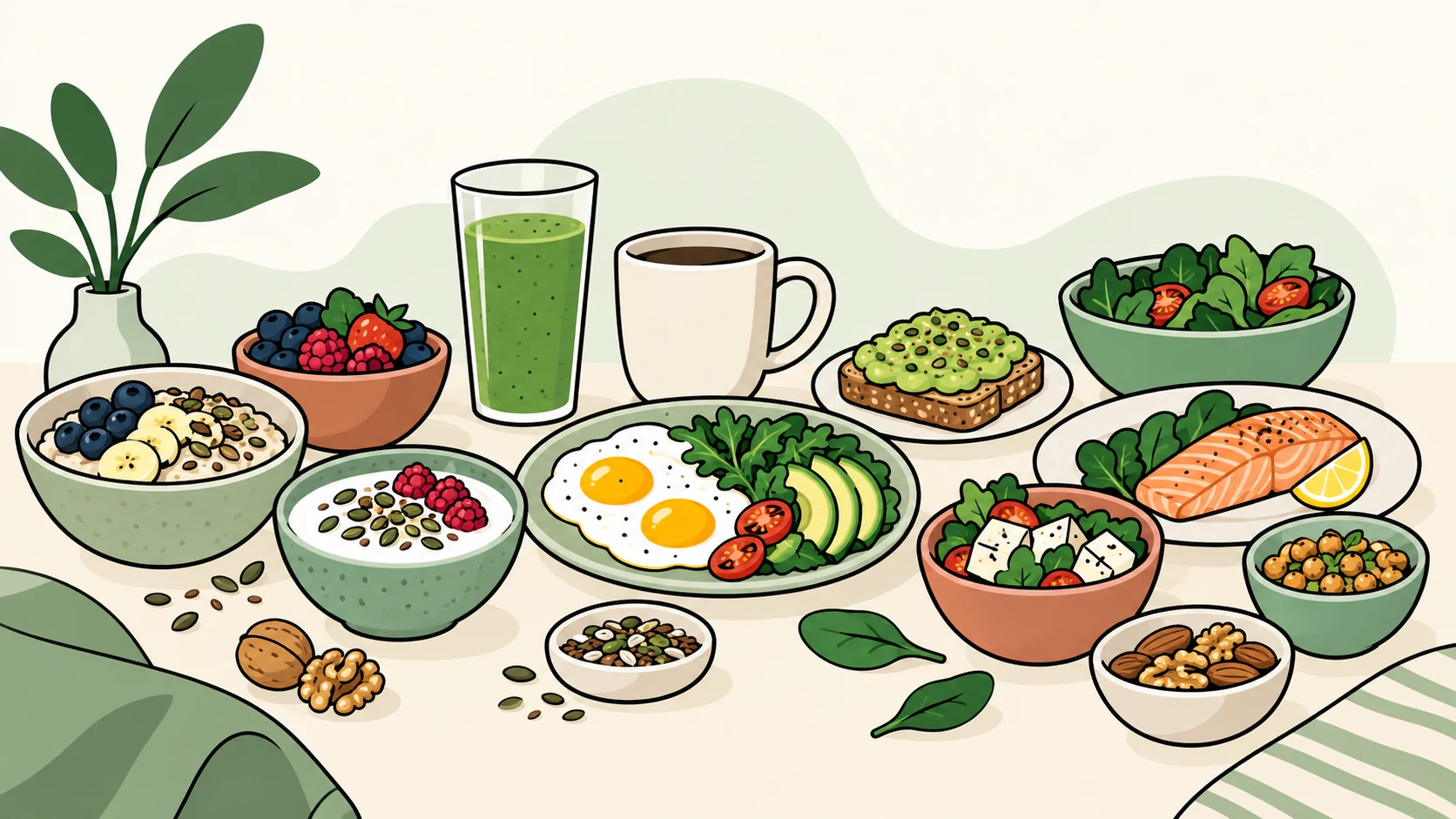
Choose a format for the morning
| Format | Example | Equipment/storage check |
|---|---|---|
| No-cook, refrigerated | Plain yogurt, cottage cheese, or hard-cooked eggs | Keep at 40°F or below; FoodSafety.gov lists hard-cooked eggs for up to one refrigerated week |
| Reheated | Cooked egg or meat leftovers from the fridge | Reheat to 165°F; use within 3–4 days of cooking, stored at 40°F or below (FoodSafety.gov) |
| Freshly cooked | Boiled or poached eggs, made to order | For pregnancy precautions, cook whites and yolks until firm |
One simple assembly idea: set out plain nonfat Greek yogurt with a hard-cooked egg on the side. Add what suits your appetite and food plan. This is an idea to adapt, not a measured recipe.
For a sense of scale, 150 g of plain nonfat Greek yogurt provides about 15.5 g protein and 5.5 g total carbohydrate (food data), while a 50 g whole boiled or poached egg provides about 6.2 g protein and 0.5 g total carbohydrate (food data). These are USDA records for a single exact food form at that gram amount — not a finished meal, and toppings, product brands, or a different portion size will change the numbers.
If you're traveling with breakfast components, remember perishable food needs to stay at 40°F or below, and shouldn't sit unrefrigerated more than two hours (one hour if it's 90°F or hotter) — a real constraint for road trips or picnics, not just a kitchen one.
How do you build a protein-forward breakfast?
Choose one main protein, add produce, then add fat or another energy source as needed.
| Part | Options | Check |
|---|---|---|
| Main protein | Eggs, tofu, tempeh, salmon, poultry, plain Greek-style yogurt, cottage cheese, skyr | Portion, allergies, pasteurization, sodium |
| Produce | Spinach, mushrooms, peppers, tomatoes, avocado, berries | Personal carbohydrate target and tolerance |
| Flavor and fat | Olive oil, nuts, seeds, herbs, spices, tahini | Saturated fat, sodium, total energy |
| Packaged addition | Protein powder, shake, meat alternative | Current label, serving size, added sugars, certification |
Breakfast does not need a special macro percentage. The adult RDA, current Dietary Guidelines goal, sports guidance, and clinical targets describe different contexts. Distribute the chosen daily amount in a way that is practical rather than forcing a universal 30 g breakfast.
Egg and tofu ideas
- eggs scrambled with spinach and mushrooms;
- an omelet with peppers, herbs, and a modest amount of cheese;
- eggs with smoked salmon, cucumber, and tomato;
- tofu scramble with turmeric, greens, and avocado;
- tofu and leftover vegetables in a breakfast bowl;
- hard-cooked eggs with a side of plain yogurt or edamame.
Egg-white products can increase protein with less fat, but whole eggs contribute other nutrients and can be combined with whites. Pasteurized liquid egg products are useful when a preparation may not become fully cooked.
For a fixed egg-and-cheese method, the savory chaffles are an editorial formula, not kitchen-tested. Their thermometer endpoint matters more than a promised waffle count or cooking time.
Plain dairy ideas
- plain Greek-style yogurt with chia, walnuts, and a small berry portion;
- cottage cheese with cucumber, tomato, herbs, and olive oil;
- skyr with pumpkin seeds and cinnamon;
- a yogurt bowl blended with a labeled protein powder;
- cottage cheese alongside eggs or smoked fish.
Compare labels because the same product name can conceal different serving sizes, added sugars, thickeners, and protein totals. Flavored yogurt, granola, honey, and fruit purée can move a bowl out of a low-carbohydrate plan quickly.
Fish, poultry, and leftover ideas
- salmon with eggs and sautéed greens;
- leftover chicken with avocado and cabbage;
- turkey patties with mushrooms and spinach;
- tuna mixed at home and served with cucumber;
- leftover steak with peppers and a fried egg.
Processed breakfast sausage, bacon, deli meat, and smoked fish can be high in sodium. They may be occasional options, but a low carbohydrate count does not make them the default protein source.
Plant-based ideas
- tofu scramble with vegetables;
- tempeh with cabbage and sesame;
- unsweetened soy yogurt with seeds and nuts;
- edamame and avocado over greens;
- a smoothie using unsweetened soy milk and a protein powder whose label fits the plan.
Plant-based low-carb breakfasts may need deliberate planning for protein, vitamin B12, iron, calcium, iodine, fiber, and energy. Seitan is an option only when gluten is safe.
What works for meal prep?
Prepare egg-and-vegetable cups, tofu scramble, cooked poultry patties, or plain yogurt jars in small batches. Store components separately when that preserves texture and lets portions change with appetite.
The bacon, spinach, and cheddar egg muffins give one fixed formula for egg cups. They are not kitchen-tested; check the stated center temperature and do not assume an exact finished count or storage quality.
USDA lists hard-cooked eggs for up to one week refrigerated, while many cooked leftovers are generally three to four days at 40°F (4.4°C) or below.1 Refrigerate perishable food within two hours, or one hour when the temperature is above 90°F (32.2°C). Freeze extra cooked portions early rather than stretching a refrigerated batch through the week.
What changes during pregnancy?
CDC advises pregnant people to choose pasteurized milk and dairy, cook eggs until the whites and yolks are firm, and heat deli meat, cold cuts, hot dogs, and fermented or dry sausages to 165°F or until steaming hot.2 Refrigerated smoked seafood should be avoided unless it is cooked in a dish; shelf-stable smoked seafood is a different product.
These precautions also matter for adults 65 or older and people with weakened immune systems. “Keto-friendly” is not a food-safety category.
How do smaller appetites change breakfast?
People taking GLP-1 or dual incretin medicines may tolerate a small yogurt, egg, tofu, or smoothie portion better than a large, fatty breakfast. The 2025 joint advisory emphasizes nutrient density and enough protein, but it also says the best weight basis and protein target are unsettled for people with obesity.3
Eat slowly and stop when comfortably full. Persistent vomiting, inability to keep fluids down, or severe abdominal pain needs medical review. See what to eat on a GLP-1 rather than treating this breakfast list as a medication plan.
For other meals, use the meal templates, food guide, and snack guide.
The keto calculator is an input-only macro arithmetic worksheet. It calculates results from values you enter; it does not choose a personalized protein or macro target.
For the fuller picture on building high-protein, low-carb meals beyond breakfast, see our high-protein low-carb guide. If you want more breakfast-specific ideas to rotate through, our keto breakfast ideas page has more formats to try, and high-protein keto snacks can help bridge the gap if breakfast doesn't hold you until lunch. Cooking for just yourself? Low-carb cooking for one covers portioning and storage when batch recipes make too much.
Frequently Asked Questions
How much protein should breakfast contain?
Is plain Greek yogurt always low carb?
Are egg whites better than whole eggs for protein?
How long are hard-cooked eggs safe in the refrigerator?
Can pregnant people eat deli meat at breakfast?
Works cited
Your learning guide