Exogenous Ketones and BHB Supplements: Do They Actually Work?

Exogenous ketones are beta-hydroxybutyrate (BHB) salts or esters you drink or swallow to raise blood ketone levels directly, without carbohydrate restriction. Research shows they reliably elevate blood BHB for a few hours and may curb appetite or ease keto-flu symptoms, but no controlled study shows they cause fat loss on their own — they support a ketogenic diet, they don't replace one.

Search "exogenous ketones" and you'll land on product pages promising "instant ketosis" and rapid fat burning. Those claims outrun the science. This guide separates marketing from what peer-reviewed research actually shows: what exogenous ketones are, which forms exist, where they genuinely help, and where the evidence stops. If you're deciding whether to buy a tub of BHB salts or a bottle of ketone ester, read this first.

What are exogenous ketones?

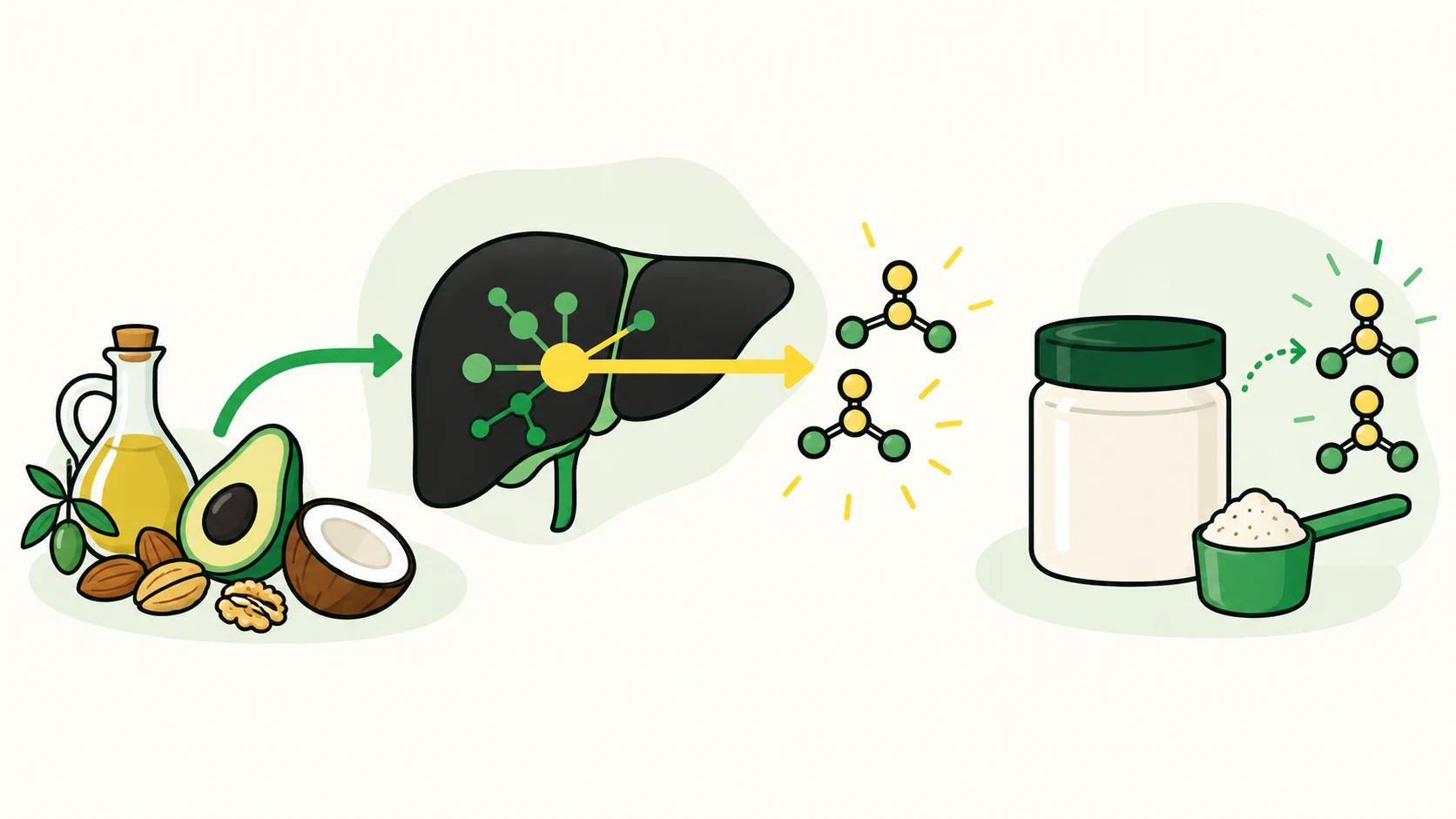
Exogenous ketones are supplemental forms of beta-hydroxybutyrate (BHB) — the same ketone body your liver makes naturally — taken to raise blood ketone levels from outside the body ("exo-") rather than through diet. They differ fundamentally from the "endogenous" ketones you produce by restricting carbs and depleting glycogen: a supplement spikes your blood BHB directly, while your body has produced no fat-derived energy shift to go with it.

BHB is the ketone body supplement makers focus on because it's the most abundant and most stable ketone in blood, easier to bind into a salt or ester than acetoacetate or acetone. You can read more about how your body makes all three ketone bodies naturally.

That distinction matters. Being "in ketosis" by diet means your metabolism has shifted toward fat oxidation — insulin is low, fatty-acid release is up, and ketones are a byproduct of that shift. Drinking an exogenous ketone raises the blood BHB number on a meter without necessarily changing any of that underlying metabolism, which is the core reason the marketing claim "instant ketosis" is misleading.

What are the main types of exogenous ketone supplements?

The two real forms of exogenous ketones are ketone salts (BHB bound to sodium, potassium, calcium, or magnesium) and ketone esters (BHB bound to an alcohol, cleaved apart in the gut); MCT oil is a ketone precursor, not a true exogenous ketone, and raspberry ketones are an unrelated compound with no meaningful connection to BHB.

TypeWhat it isBlood BHB effectTaste/costEvidence strengthBest use case
Ketone saltsBHB bound to Na/K/Ca/MgModerate rise (~0.5–1 mmol/L), 1–3 hoursSalty, mildly bitter; low-moderate costLimited human data; most studies use estersConvenience, occasional use
Ketone estersBHB bound to an ester (R-1,3-butanediol)Larger rise (2–6 mmol/L), 1–3 hoursStrong, unpleasant taste; very high costMost-studied form; used in Cox 2016, Stubbs 2018Research protocols, serious athletes
MCT oil / C8Medium-chain fat metabolized quickly to ketonesSmall-moderate rise, delayed (30–90 min)Neutral to mild; low-moderate costWell-supported as a ketone precursorDaily use alongside a keto diet
Raspberry ketonesAromatic compound from raspberries (unrelated to BHB)None — doesn't raise blood ketonesCapsule form; low costOne rodent study; no credible human weight-loss evidence1Not recommended for ketosis or weight loss

A few distinctions worth calling out directly:

Ketone salts pair BHB with a mineral so it's stable as a powder. Most commercial "BHB powder" tubs are this form. The mineral load means a serving can carry a meaningful amount of sodium or potassium, which matters for people managing blood pressure or kidney function.

Ketone esters are the form used in nearly all of the controlled human research, including the landmark Cox et al. cycling study and the Stubbs et al. appetite study cited below.23 They produce a larger, more predictable rise in blood BHB than salts, but they're expensive, and most people describe the taste as unpleasant.

MCT oil (including isolated C8/C10 oil) doesn't contain ketones — it's a fat that your liver converts into ketones unusually quickly compared with long-chain fats. That makes it a genuine, well-supported way to nudge ketone production up, but it's technically a precursor, not an exogenous ketone.

Raspberry ketones are a common source of confusion because the name sounds identical to "ketone" supplements. They are chemically unrelated to BHB — a compound (4-(4-hydroxyphenyl)butan-2-one) that gives raspberries their aroma. The only evidence for a metabolic effect is a single 2005 study in mice given extremely high doses; there is no credible human evidence that raspberry ketones cause weight loss or raise blood ketones at all.1

Do exogenous ketones actually raise ketones?

Yes — both ketone salts and ketone esters reliably raise blood BHB within 30 to 60 minutes, with esters producing a larger spike (often 2–6 mmol/L) than salts (typically 0.5–1 mmol/L), lasting one to three hours before falling back toward baseline.2 That part of the marketing claim is accurate and well documented.

What the number doesn't tell you is whether anything else changed. A higher blood-ketone reading from a supplement is not the same as the metabolic state of nutritional ketosis. Research on ketone esters has found that raising blood BHB this way can actually suppress your body's own ketone production and reduce circulating free fatty acids for a period — the opposite of what happens when you reach ketosis through carbohydrate restriction, where fat breakdown and ketone production rise together.4 In other words, a supplement can make your ketone meter agree with "ketosis" without your body doing the fat-burning that normally goes with it.

Do exogenous ketones cause weight loss?

No controlled human study has shown that exogenous ketones cause weight or fat loss on their own. The best-supported finding is more modest: in a randomized crossover trial, a ketone ester drink lowered the hunger hormone ghrelin and reduced self-reported appetite for a few hours compared with a placebo drink, without any accompanying fat-loss outcome being tested.3

That's a real, replicated physiological effect — a genuine short-term appetite dampener — but it's a long way from "burns fat" or "instant weight loss." No published trial has taken exogenous ketones head-to-head against a placebo over weeks or months and measured actual body-fat change. Until that trial exists, "exogenous ketones cause weight loss" is a marketing claim, not a research finding. If your goal is fat loss, the evidence points to the ketogenic diet itself and its effect on appetite and calorie intake — not a supplement layered on top of it.

Can exogenous ketones help with exercise or the keto flu?

The evidence here is genuinely mixed: one high-profile study found a ketone ester drink improved cycling time-trial performance in trained athletes, but a broader systematic review of the same research area found inconsistent results, with some studies showing no benefit or even impaired performance.

The 2016 Cox et al. study in Cell Metabolism found that a ketone ester drink combined with carbohydrate improved cycling time-trial performance by roughly 2% compared with carbohydrate or fat drinks alone, in a small group of trained cyclists — a notable result that got the field a lot of attention.2 But a 2020 systematic review in Advances in Nutrition looking across the available performance studies concluded the evidence for a genuine ergogenic (performance-enhancing) effect is inconsistent, with protocol, dose, and timing all affecting whether an effect shows up at all.5 A 2017 physiology review reached a similar "promising but unsettled" conclusion, noting most positive results come from small, short studies that haven't been widely replicated.4

For the keto flu specifically — the headaches, fatigue, and brain fog some people feel in the first week of carb restriction — there's a plausible mechanism (a fast rise in blood ketones could partially offset low glucose availability), but this hasn't been tested in a dedicated clinical trial. If you're in the adaptation phase, our free keto flu symptom checker can review symptom timing, general options, and warning signs without claiming to determine the cause or a mineral need.

What are the side effects and who should avoid them?

The most common side effects are gastrointestinal — nausea, cramping, and diarrhea, especially with ketone esters and at higher doses — plus a real sodium or potassium load from ketone salts that matters for anyone managing blood pressure or kidney function.

  • GI distress. Both salts and esters can cause stomach upset; esters in particular have a strong, often described as chemical or bitter, taste that many people find hard to tolerate even before any GI effect.
  • Electrolyte load. A typical serving of ketone salts can carry several hundred milligrams of sodium (or potassium/calcium/magnesium, depending on the blend) — worth factoring in if you're already watching sodium intake.
  • Cost. Ketone esters, the most-studied and most effective form, are also by far the most expensive per serving of any keto product category.
  • Interactions. People taking insulin or sulfonylurea diabetes medications should talk to their doctor before using exogenous ketones — lowering the demand for glucose-based energy while on glucose-lowering medication raises the risk of hypoglycemia. The same conversation applies if you have kidney disease or high blood pressure, given the sodium/mineral load in salt forms.

None of this makes exogenous ketones dangerous for a healthy adult using them occasionally as directed. It does mean they're not a supplement to add casually if you're on medication or managing a condition — that's exactly the kind of supplement decision to make with your prescriber, not a product label.

How should you evaluate a BHB supplement, if you choose to try one?

If you decide to try one, look for a labeled BHB dose per serving (not a proprietary blend), check whether it's a salt or ester, note the added sodium/potassium, and treat it as an occasional addition to — never a substitute for — an actual ketogenic diet.

A few practical checks:

  • Read the ingredient panel, not the front of the box. "Proprietary blend" hides the actual BHB dose; look for a specific gram amount per serving.
  • Know what you're buying. Salts are cheaper and easier to tolerate; esters raise BHB higher but cost more and taste worse. Neither is "better" in the abstract — it depends on what you're using it for.
  • Don't use it to skip the diet. Exogenous ketones cannot substitute for the carbohydrate restriction that actually drives ketosis or for dialing in your macros. If your goal is weight loss or metabolic changes, the diet is doing the work; the supplement, at best, is a minor assist.
  • Start low. If you want to try one, a smaller starter dose lets you assess GI tolerance before committing to a full serving.

If your goal is reaching or maintaining nutritional ketosis, start by choosing a carbohydrate approach you can follow and checking the values you actually eat. Our guide to how many carbohydrates people use on keto explains the limits of universal thresholds, and the net-carb calculator can apply explicit deductions to a packaged-food label. Neither tool can predict whether you will be in ketosis.

Frequently Asked Questions

Frequently Asked Questions

Can you reach ketosis without doing keto by taking exogenous ketones?
You can raise your blood BHB reading, but that isn't the same as nutritional ketosis. Research shows exogenous ketones can actually suppress your body's own ketone and fat production, so the meter can say 'ketosis' without the underlying fat-burning shift that carb restriction produces.
Will exogenous ketones break a fast?
Most exogenous ketone products contain few or no calories, so they're less disruptive than food, but they are not calorie- and additive-free by definition — check the label. If your fast is for a specific clinical or religious purpose, ask your provider first.
Do exogenous ketones help with the keto flu?
There's a plausible mechanism, but no dedicated clinical trial has tested it. Symptoms alone cannot confirm dehydration or an electrolyte deficiency; our free keto flu symptom checker reviews general options and warning signs without assigning a cause.
Ketone salts or ketone esters — which is better?
Esters raise blood BHB higher and are the form used in most performance and appetite research, but they're expensive and taste unpleasant. Salts are cheaper and easier to take but carry a sodium or mineral load and have less human research behind them.
Are exogenous ketones worth the money?
For most people trying to lose weight, no — the evidence supports the ketogenic diet itself, not the supplement, as the driver of results. They may be worth trying for short-term appetite suppression or as part of an athlete's tested pre-event protocol, at a real financial cost.
Are raspberry ketones the same as exogenous ketones?
No. Raspberry ketones are an unrelated aromatic compound with no meaningful human evidence for weight loss and no ability to raise blood ketone levels. True exogenous ketones are BHB salts or esters.

Works cited

  1. Anti-obese action of raspberry ketone — Morimoto C, et al., Life Sciences, 2005August 19, 2026 https://doi.org/10.1016/j.lfs.2004.12.029
  2. Nutritional Ketosis Alters Fuel Preference and Thereby Endurance Performance in Athletes — Cox PJ, et al., Cell Metabolism, 2016August 19, 2026 https://doi.org/10.1016/j.cmet.2016.07.010
  3. A Ketone Ester Drink Lowers Human Ghrelin and Appetite — Stubbs BJ, et al., Obesity, 2018August 19, 2026 https://doi.org/10.1002/oby.22051
  4. Metabolism of ketone bodies during exercise and training: physiological basis for exogenous supplementation — Evans M, Cogan KE, Egan B, The Journal of Physiology, 2017August 19, 2026 https://doi.org/10.1113/JP273185
  5. Utility of Ketone Supplementation to Enhance Physical Performance: A Systematic Review — Margolis LM, O'Fallon KS, Advances in Nutrition, 2020August 19, 2026 https://doi.org/10.1093/advances/nmz104

Article history

  1. Updated
  2. First published

Your learning guide

Loading reading status…