Ketogenesis: How the Liver Makes Ketones
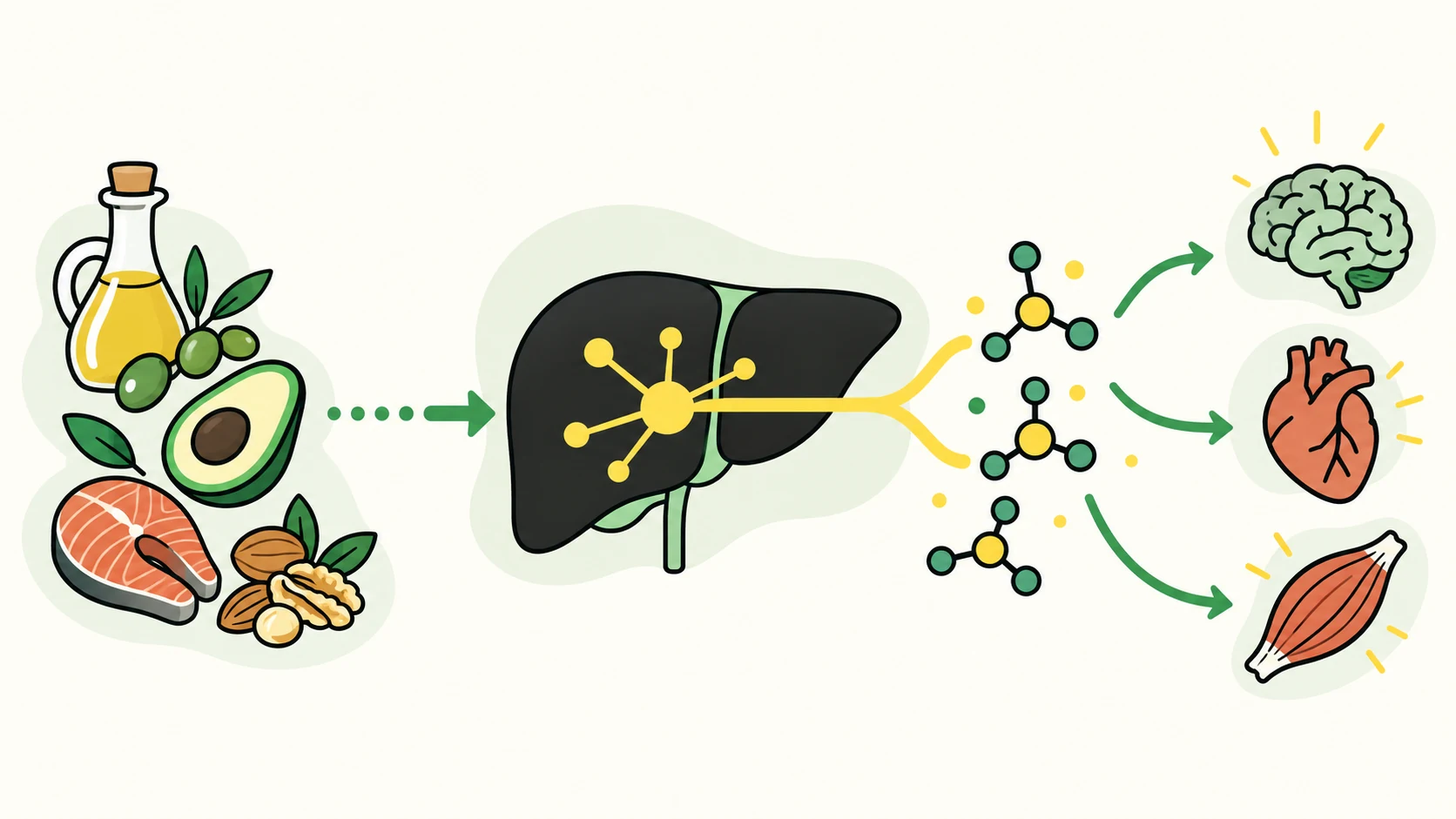
Ketogenesis is the pathway the liver uses to build ketone bodies from acetyl-CoA produced through fatty acid beta-oxidation. It runs mainly in the mitochondria of liver cells, and the acetoacetate and BHB it produces are exported for use elsewhere in the body rather than burned on site.1 Here is how the pathway works, what changes ketone production, and how ketogenesis differs from ketosis and ketoacidosis.
Reading evidence in context
- Observed outcome
- Certainty
- Duration
- What remains unknown
What ketogenesis is
Ketogenesis occurs mainly in liver-cell mitochondria. It uses acetyl-CoA produced through fatty acid beta-oxidation to form acetoacetate. Acetoacetate can be converted to beta-hydroxybutyrate (BHB), while some breaks down spontaneously to acetone.1
One naming quirk is worth knowing: BHB is chemically a hydroxy acid rather than a ketone, but it is conventionally grouped with acetoacetate and acetone as a ketone body. The label is a convention, not a strict chemistry classification.
The liver also sits in an unusual position. Liver cells lack the enzyme SCOT, so they do not oxidize ketone bodies for their own energy. Instead, the liver exports acetoacetate and BHB for use by extrahepatic tissues, the tissues outside the liver.1
How the pathway works
Three processes are related but distinct, and keeping them separate makes the rest of this easier to follow:
- Lipolysis releases fatty acids from stored triglycerides.
- Beta-oxidation breaks fatty acids into acetyl-CoA.
- Ketogenesis converts acetyl-CoA into ketone bodies.
The fatty acids entering this chain may come from dietary fat or from stored fat. Once acetyl-CoA is formed inside liver mitochondria, the pathway builds acetoacetate, which can become BHB or break down to acetone, and the liver exports acetoacetate and BHB to tissues elsewhere in the body.
Ketogenesis is often discussed alongside gluconeogenesis. They are distinct liver pathways that can occur in overlapping physiological settings; neither supplies fixed fuels to fixed tissues, and they do not always rise together.
What changes ketone production
Ketogenesis is regulated as a continuum, not an on/off switch. Insulin and glucagon signaling, fatty-acid supply, substrate availability, energy balance, activity, fasting, illness, and medicines can all affect ketone production. No single trigger runs the pathway, and the body does not have to empty its glycogen first.
Carbohydrate restriction, fasting, and some exercise contexts can be associated with higher ketone production, but there is no universal number of hours or days for glycogen depletion, ketone rise, brain use, nutritional ketosis, or adaptation. Those three routes do not lead to the same outcome for every person.
Ketogenesis, ketosis, and ketoacidosis are different
These three terms get used loosely, so the distinctions matter. Ketogenesis is the biochemical production pathway. Ketosis describes elevated circulating ketones in a given context. Neither term alone establishes dietary adherence, adaptation, body-fat loss, performance, benefit, or safety.
Diabetic ketoacidosis (DKA) is an acute medical emergency involving elevated ketones and metabolic acidosis in a person with diabetes or qualifying hyperglycemia. High glucose is not required in every case: euglycemic DKA can occur with glucose below 200 mg/dL, including in contexts such as SGLT2-inhibitor use, pregnancy, or reduced food intake.23
Certain signs require emergency care: persistent vomiting, severe abdominal pain, deep or difficult breathing, confusion, fainting, or marked drowsiness, especially with known or possible diabetes, pregnancy, or SGLT2-inhibitor use. Do not wait for very high glucose, and do not use a ketone reading alone to rule out DKA.23 The contrast between ketosis and ketoacidosis is worth a closer look on its own.
What a ketone measurement cannot prove
Blood BHB, urine acetoacetate, and breath acetone are different measurements and are not interchangeable. A ketone value cannot by itself establish blood pH, bicarbonate, the cause of symptoms, personal safety, or a clinical outcome. A reading is one measurement of one compound, not a verdict on what is happening in the body. For the compounds themselves, start with what are ketones.
FAQ
Frequently Asked Questions
Is ketogenesis the same as ketosis?
Does the liver run on the ketones it makes?
Is BHB actually a ketone?
How quickly does ketogenesis start?
Can someone have ketoacidosis without very high glucose?
Do blood, urine, and breath ketone tests measure the same thing?
Works cited
Your learning guide