Keto on a Budget: Cost, Waste, and Food-Safety Planning
Keto does not require premium meat, organic produce, MCT oil, ketone products, branded snacks, or substitute bread. A lower-cost plan begins with the meals a household will eat, uses ordinary proteins and vegetables, compares unit price and usable yield, and assigns each perishable item to a meal. Food discarded after a bargain purchase is part of the cost.
This guide was written from current government food, label, and safety guidance plus primary nutrition research papers, rather than retailer promotions, price-list snapshots, or biased interpretations. Prices vary by place, season, package size, access, and date, so it provides a method rather than claiming one universal “cheapest” menu.
Define the budget problem before changing the food
Separate four constraints that are often collapsed into “keto is expensive”:
- Money: the amount available for food and the timing of cash or benefit access.
- Access: which shops, delivery options, transport, refrigeration, freezer space, and cooking equipment are available.
- Time: how many meals can be cooked and which days need a fast backup.
- Diet constraints: allergies, culture, vegetarian or vegan choices, medical instructions, and the carbohydrate-counting method.
A cheaper ingredient that requires equipment, travel, bulk cash, freezer space, or cooking time the household does not have is not a practical saving. USDA's SNAP-Ed resource collection treats meal planning, shopping, and budgeting as connected skills rather than a single list of low-price foods.1
Christopher Colvin and colleagues compared three ingredient-matched, seven-day theoretical menus in 2026. Cost, preparation burden, shelf life, food waste, and diet quality did not move together: each modeled menu made a different tradeoff.8 The menus were not ketogenic and did not observe real households, so the study cannot predict a keto grocery bill. It does support measuring those constraints separately instead of assuming that the cheapest package, least processed menu, or most convenient meal solves all of them.
The general meal-planning guide handles goals, safety, and weekly structure. This page handles cost decisions inside that process. It is not another seven-day menu or a replacement for the keto food list.
Start with inventory and meal slots
Before opening a store app, list:
- meals that will actually be eaten at home;
- food already in the refrigerator, freezer, and pantry;
- the most perishable items that need to be used first;
- one backup meal for a day when cooking fails;
- which dinner can safely become lunch or freezer portions.
USDA MyPlate's budget guidance begins with making a plan, shopping deliberately, and preparing food around the person's schedule.2 The site's interactive shopping list can store a local checklist. Its preloaded items are prompts, not required purchases or current price data.
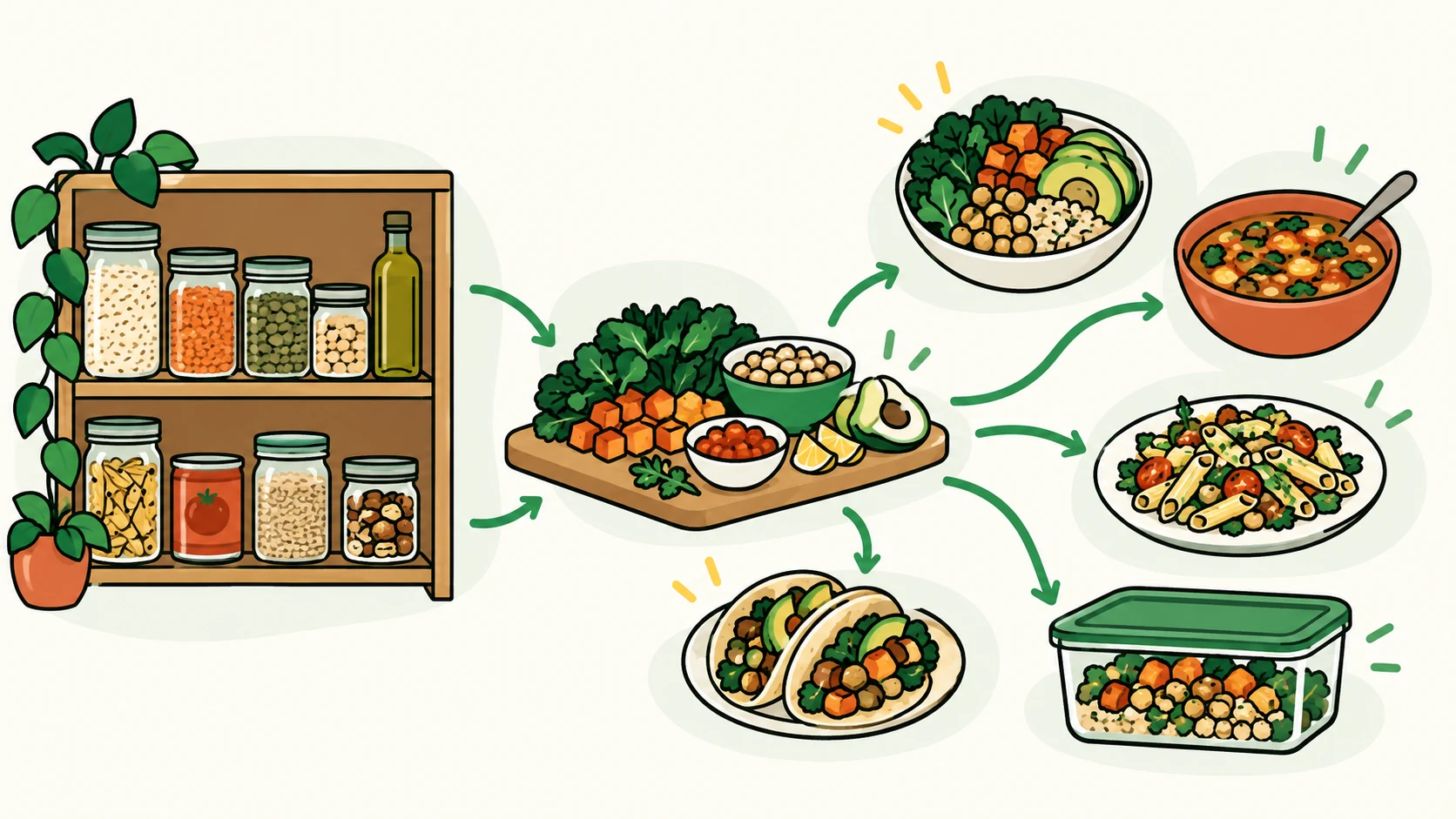
Build two or three repeatable meal structures from shared ingredients. Examples include eggs or tofu with vegetables; a protein with cabbage or frozen broccoli; a salad or cooked-vegetable bowl using the previous night's safely stored protein; or soup built from a measured recipe. These are structures, not fixed servings. The person's energy, protein, carbohydrate, allergy, and clinical needs determine amounts.
Compare the cost of the usable meal
Unit price is useful only when the products are comparable. Record the store's price per ounce, pound, gram, or liter, then ask what portion is edible and how many planned meals will use it.
| Price question | Why shelf price alone can mislead |
|---|---|
| What is the unit price? | Package sizes differ, and a sale tag can hide a higher cost per unit. |
| What is the edible yield? | Bone, skin, shells, liquid, and trimming change the amount that reaches a plate. |
| Is the serving nutritionally comparable? | A bar, cheese portion, tofu serving, and chicken serving do not supply the same protein, fiber, or micronutrients. |
| Will the package be finished safely? | A large package is expensive when part spoils or sits unused. |
| Are membership, shipping, tip, fuel, or minimum-order costs included? | Checkout cost can differ from the advertised item price. |
| Does preparation need extra ingredients or energy? | A mix or meal kit may require oil, eggs, equipment, or a long cooking time. |
Use the Nutrition Facts label to compare products with the same serving context. FDA explains that serving size reflects the amount people typically consume; it is not a recommendation.3 Multiply the nutrients and price when the planned amount is two servings.
Remove specialty products before useful food
The easiest budget cuts are often MCT oil, exogenous ketones, “keto” sweets, bars, powders, branded baking mixes, substitute bread, and drinks. None is required for nutritional ketosis. A food can fit a carbohydrate limit and still provide poor value for protein, fiber, micronutrients, or satiety.
Ordinary candidates depend on diet and local prices:
| Role in a meal | Often-flexible candidates | Check before buying |
|---|---|---|
| Protein | Eggs, tofu, plain dairy if used, canned fish, poultry cuts, ground meat, tempeh, seitan where safe | Unit price, edible yield, protein per planned serving, sodium, allergens |
| Vegetables | Cabbage, frozen plain vegetables, seasonal produce, canned vegetables without sweet sauce | Added sugar or starch, sodium, drained quantity, freezer space |
| Mostly unsaturated fat | Store-brand olive or canola oil, peanuts, sunflower seeds, selected nuts, avocado when economical | Unit price, storage life, allergies, serving size |
| Flavor | Dried herbs, spices, vinegar, mustard, tomato products, unsweetened sauces | Added sugar, starch, sodium, allergens |
| Backup | Eggs, tofu, safely stored frozen portions, canned fish, plain frozen vegetables | Actual shelf or freezer life, preparation access, diet fit |
USDA FoodData Central provides nutrient data for plain foods and distinguishes analytically sampled data from manufacturer-provided branded records.4 Match the form: raw, cooked, drained canned, frozen with sauce, and breaded products are different entries.
Vegetarian households can use the vegetarian keto framework. Fully plant-based planning has a narrower protein and fortified-food set, so use the separate vegan keto guide instead of simply deleting eggs, dairy, meat, and fish from an omnivorous list.
Fresh, frozen, and canned are purchasing formats
Choose the form the household can use before it spoils. Fresh produce may suit meals early in the week. Plain frozen vegetables allow smaller portions without repeated trips. Canned vegetables, fish, or tomato products can provide a shelf-stable backup. Compare the actual label for sodium, sauce, syrup, breading, and drained weight.
Do not pay for a production claim under the assumption that it is required for ketosis. Organic, grass-fed, pasture-raised, and wild-caught products can reflect personal preferences, but they are not prerequisites for a low-carbohydrate meal. Store brands and conventionally produced foods remain valid options.
Use the grocery shopping guide to translate a meal plan into quantities and check US, EU, or UK carbohydrate labels. The net-carb calculator performs arithmetic from a package; it does not confirm the price, ingredient list, or health value.
Plan leftovers with a safety deadline
Write the destination before cooking extra: tomorrow's lunch, another dinner, or a dated freezer portion. “Make double” without a destination can double waste.
USDA Food Safety and Inspection Service advises refrigerating perishable leftovers within two hours, or one hour when the temperature is above 90°F (32°C), and keeping the refrigerator at 40°F (4°C) or below. Refrigerated leftovers are generally used within three to four days or frozen for longer storage.5
Use shallow containers for rapid cooling, label the food and date, and avoid relying on smell or appearance to prove safety. Reheat and handling instructions depend on the food. The freezing and storage guide covers the workflow in more detail.
Account for allergies before bulk buying
Keto substitutes frequently contain concentrated milk, egg, soy, wheat, peanuts, tree nuts, or sesame. FDA recognizes those foods among the nine major US allergens and requires source declarations for major allergens in most packaged foods under its jurisdiction.6
For a diagnosed allergy, a low unit price does not justify a package that conflicts with the person's avoidance and cross-contact plan. Check the current label on every purchase, including a familiar store-brand product. Do not buy a warehouse quantity until the recipe, tolerance, storage, and package information are all suitable.
Know when a service costs less overall
A grocery plan is not always the lowest practical cost after transport, spoilage, equipment, time, and unused ingredients. A prepared-meal or meal-kit service may solve one access problem while adding delivery fees, minimum orders, recurring charges, limited allergen control, and cold-storage demands.
Use the keto meal-delivery evaluation guide to compare the full checkout cost, usable meals, nutrition information, ingredients, cancellation terms, delivery temperature, and storage. It does not rank providers or assume a subscription is cheaper than groceries.
A one-page budget worksheet
For one planning period, record:
| Field | Decision |
|---|---|
| Meals at home | Number and timing, including packed meals and leftovers |
| Inventory first | Perishable, frozen, and shelf-stable food already available |
| Shared ingredients | Foods with a named role in two or more meals |
| Backup meal | A realistic option requiring little time or equipment |
| Price comparison | Unit price, edible yield, servings used, and checkout extras |
| Waste control | Which food is eaten first, refrigerated, or frozen with a date |
| Nutrition checks | Protein anchor, plant variety, label carbohydrate, saturated fat, sodium, fiber |
| Safety and allergies | Storage limit, cross-contact plan, medical instructions |
At the next review, keep receipts and note what was actually eaten, frozen, or discarded. Change the specific failure. Buying less fixes spoilage; changing the meal fixes an ingredient nobody wanted; a different shop may fix unit cost; a less restrictive diet may fix a plan that removes too many affordable staples.
Budget advice does not remove medical limits
Pregnancy, childhood, diabetes medication, kidney disease, food insecurity, and eating-disorder history change the planning problem. The American Diabetes Association's 2026 pregnancy standard cites a pregnancy minimum of 175 g carbohydrate per day and says ketogenic patterns that severely restrict carbohydrate should be avoided.7 Children using a ketogenic diet for epilepsy need a specialist team; this household worksheet is not therapeutic-diet care.
Someone using insulin, a sulfonylurea, or an SGLT2 inhibitor needs a clinician-led plan before sharply reducing carbohydrate. Do not ration prescribed medication or replace medical care to fund specialty food. If restriction increases food anxiety, bingeing, purging, compulsive tracking, or meal skipping, seek appropriate support and prioritize reliable access to adequate food over a ketosis target.
Frequently Asked Questions
Do I need special keto products to follow keto?
How do I compare two foods on price?
Are frozen vegetables acceptable for keto?
How long can keto leftovers stay refrigerated?
Works cited
Article history
- First published
Your learning guide