How to Create a Keto Meal Plan
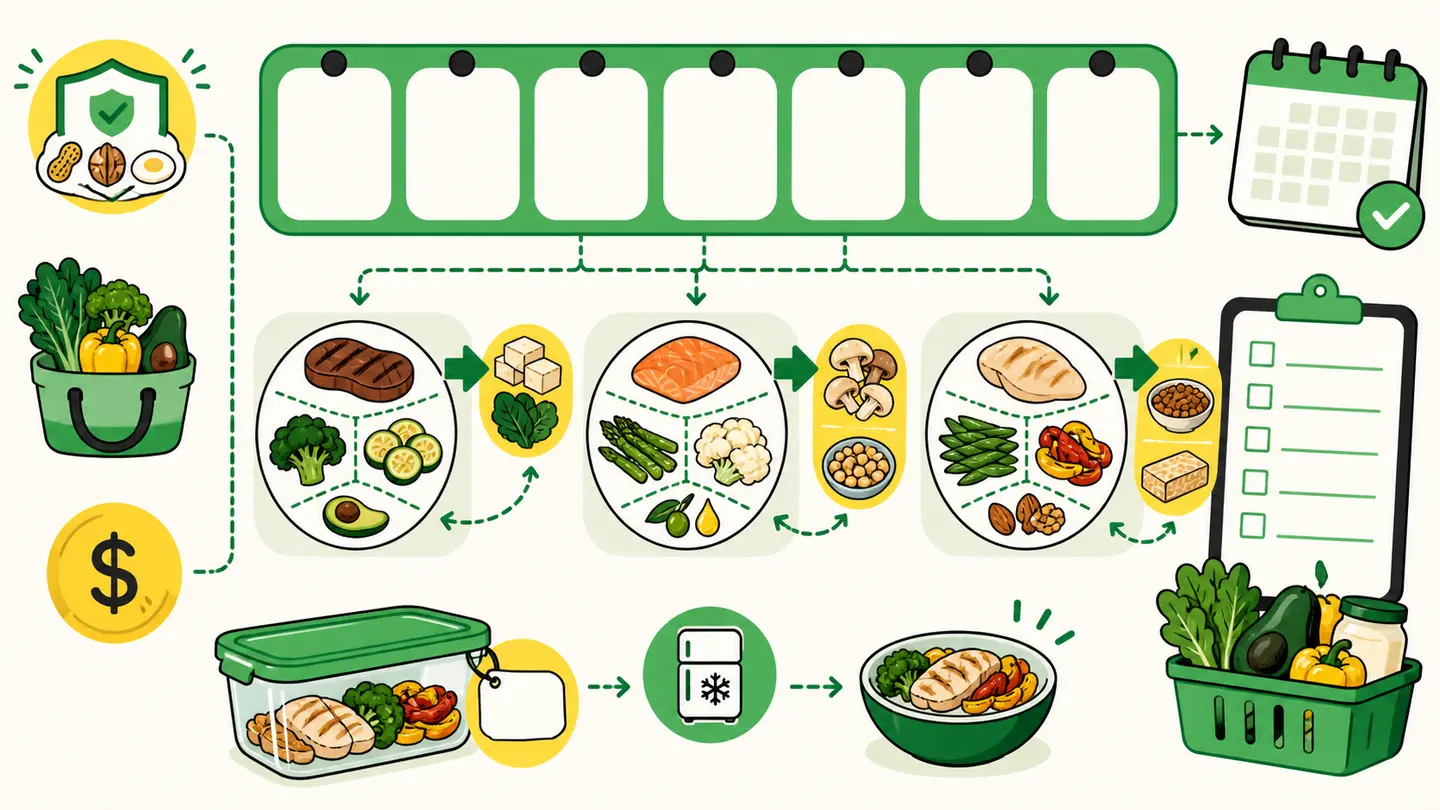
The practical method: screen for medical risks, choose a consistent carbohydrate-counting convention, build meals from varied foods, then plan shopping, leftovers, substitutions, and a review date.
What this does not do: a menu cannot guarantee ketosis, weight loss, symptom relief, or adequate nutrition. A less restrictive eating pattern is a valid choice if it fits your health needs and daily life better.
A useful meal plan answers ordinary questions before hunger, work, or a change in schedule makes them harder: What can I safely eat? What is already in the kitchen? Which ingredients can cover two meals? What will I use when the planned dinner is not practical?
There is no universal ketogenic ratio or carbohydrate allowance. Therapeutic ketogenic diets used for epilepsy have clinical protocols that should not be copied into a self-directed weight-management plan. For general use, start with whether keto is appropriate for you, then treat the first plan as a draft that can be revised.
A flexible planning loop
- Plan
- Shop
- Prepare
- Review and adapt
1. Complete the safety screen first
Resolve any item in this table before cutting carbohydrate sharply. Meal planning can organize clinical instructions, but it cannot supply them.
| Situation | What needs to happen before a keto plan |
|---|---|
| SGLT2 inhibitor use | Contact the prescriber. The American Diabetes Association (ADA) discourages a ketogenic eating pattern with these medicines because diabetic ketoacidosis can occur, sometimes without extremely high glucose.1 |
| Insulin, sulfonylurea, or another glucose-lowering medicine | Agree on glucose monitoring, medication adjustment, and sick-day instructions with the treating clinician. Do not reduce or stop medication on your own. |
| Type 1 diabetes or a history of ketoacidosis | Do not use a consumer meal plan as treatment. Very-low-carbohydrate intake and prolonged fasting can raise ketoacidosis risk in susceptible people.1 |
| Pregnancy, trying to conceive, or breastfeeding | Use a pregnancy- or lactation-qualified clinician and dietitian. ADA's 2026 pregnancy standard advises against eating patterns that severely restrict a macronutrient class, specifically including ketogenic patterns.2 |
| Chronic kidney disease or dialysis | Ask the kidney team to set protein, sodium, potassium, phosphorus, and fluid parameters. These needs change with kidney function and treatment.3 |
| Current or previous eating disorder, restrictive-eating symptoms, or significant food anxiety | Discuss the restriction with an eating-disorder-informed clinician or dietitian. Choose a less restrictive plan if tracking or food rules reactivate symptoms. |
| Childhood, adolescence, seizure treatment, or complex medical disease | Use the relevant specialist team. A general website menu is not a clinical ketogenic-diet protocol. |
Seek urgent medical care for persistent vomiting, severe weakness, confusion, fainting, dehydration, rapid or difficult breathing, or possible severe hypoglycemia. The side-effects guide explains why these should not be dismissed as routine adaptation.
If none of these gates applies, write down the plan's purpose in one sentence. “Prepare weekday lunches without buying takeout” is actionable. “Get healthier” is too broad to tell you whether the plan worked.
2. Record the constraints that shape the menu
List the facts a generic meal plan cannot know:
- the number of people and meals you are feeding;
- available cooking time, equipment, refrigeration, and freezer space;
- food allergies, intolerances, religious practice, and cultural staples;
- foods you already own and foods that need to be used first;
- a grocery budget and the shops you can reach;
- work, school, training, travel, and shared-meal schedules;
- the nutrition or monitoring instructions given by your clinician.
These details determine whether a recipe belongs in the plan. A meal that needs 45 minutes, six specialty ingredients, and a blender is a poor Tuesday dinner for someone with ten minutes and one pan, even if its nutrient totals look suitable.
3. Choose one carbohydrate-counting convention
“Net carbs” is an informal calculation, not a standardized line on every food label. Label rules also differ by market.
- United States: start with Total Carbohydrate on the Nutrition Facts label. Dietary fiber appears beneath it, and sugar alcohol may be declared. If your chosen convention deducts fiber, deduct it once. Do not assume every sugar alcohol can be fully deducted; the ingredient and the purpose of tracking matter.4
- European Union and many UK-style labels: “carbohydrate” generally refers to carbohydrate metabolized by humans, while fibre is declared separately. Subtracting fibre again would double-count the exclusion. EU rules also include polyols within the carbohydrate definition.5
- Every packaged food: check the stated serving size, the number of servings you will actually eat, the ingredient list, and the current package. A front-label “keto” claim does not replace those details.
Use the same convention across recipes, packages, and tracking notes. Our net-carbohydrate calculator makes deductions explicit, and the macro guide explains why a calculator result is an estimate rather than a prescription.
People using mealtime insulin need the carbohydrate-counting method and dose instructions supplied by their diabetes team. Consumer “net carb” arithmetic should not silently replace a clinical method.
4. Build meals from food roles, not a fat percentage
Choose foods that make the restricted pattern nutritionally credible. Christopher Gardner's Keto-Med trial compared a well-formulated ketogenic diet with a Mediterranean-plus diet in adults with prediabetes or type 2 diabetes. HbA1c did not differ after 12 weeks, while the ketogenic phase produced lower fiber and lower intake of folate, vitamin C, and magnesium, as well as higher LDL cholesterol.6 A meal plan should actively check the areas restriction can displace.
Use this framework for each main meal:
| Food role | Practical choices | Planning check |
|---|---|---|
| Protein source | Fish, poultry, eggs, and meat, tofu, tempeh, plain yogurt, cheese, or another food that fits the person's needs | Rotate sources. Do not add protein powders or large meat portions merely to reach an arbitrary ratio. |
| Non-starchy vegetables | Leafy greens, broccoli, cauliflower, cabbage, courgette/zucchini, mushrooms, peppers, aubergine/eggplant, green beans | Vary color and type across the week. Include realistic portions in the recipe calculation. |
| Predominantly unsaturated fat | Olive or rapeseed/canola oil, avocado, olives, seeds, nuts, and oily fish | Use enough for cooking and palatability. Do not force extra butter, coconut oil, cream, or processed meat to make fat totals higher. |
| Fiber and micronutrient contributors | Vegetables, avocado, seeds, nuts, berries where they fit, and lower-carbohydrate plant proteins | Check variety and tolerance. A low carbohydrate number does not show whether fiber and micronutrient needs are met. |
| Flavor and cultural fit | Herbs, spices, citrus, vinegar, chilli, fermented condiments, or customary seasonings | Check sauces and blends for allergens, sodium, and carbohydrate per the current label. Keep familiar flavors when changing staple foods. |
The keto food list can supply options, but it should not turn foods into moral categories. Use the Food Database when a planned ingredient needs a form- and portion-specific starting value. Frozen vegetables, canned fish, conventional produce, and store-brand ingredients can all be useful. Organic, grass-fed, or specialty-branded foods are not requirements for a workable plan.
A repeatable meal template
Instead of collecting seven unrelated recipes, select a few structures that share ingredients:
- eggs or tofu with two vegetables, cooked in olive or canola oil;
- a large salad or vegetable bowl with a protein, seeds, and an unsaturated-fat dressing;
- a tray bake or stir-fry with a protein and two vegetables;
- soup, curry, stew, or braise whose ingredients fit the chosen carbohydrate method;
- an unsweetened dairy or soy option with seeds and a measured portion of berries, if suitable.
Meals and snacks are optional scheduling choices, not ketosis switches. Plan the number and timing that fit hunger, medication instructions, work, sleep, and training. This guide does not recommend adding fasting to a carbohydrate restriction.
5. Write substitutions before you need them
A substitution must solve the same practical problem without introducing a new medical or cultural conflict.
| Constraint | Possible direction | Check before using it |
|---|---|---|
| Dairy-free | Olive oil, avocado, tahini, unsweetened fortified soy products | Sesame or soy allergy; calcium and vitamin D fortification; added sugar |
| Egg-free or nut-free | Fish, poultry, meat, tofu, tempeh, seeds where safe | Shared equipment and advisory allergen statements |
| Vegetarian | Eggs, dairy, tofu, tempeh, seitan where gluten is safe, seeds and nuts | Protein variety, iron, vitamin B12, fiber, saturated fat, and total restriction |
| Vegan | Tofu, tempeh, selected soy foods, seeds, nuts, and appropriate supplements under professional guidance | This combines two restrictive patterns and can leave little room for legumes, fruit, and whole grains. Consider a less carbohydrate-restricted vegan plan. |
| Halal, kosher, or another religious practice | Start with foods and preparation methods already accepted within that practice | Certification, separation rules, fasting periods, and household observance |
| Lower budget | Eggs where suitable, tofu, canned fish, frozen vegetables, cabbage, seasonal produce, store brands | Unit price, edible yield, sodium, allergens, and whether the household will use the quantity |
In the United States, labels must identify the nine major allergens used as ingredients, including sesame. Advisory statements such as “may contain” are voluntary and do not measure the amount or likelihood of cross-contact.7 Someone with a diagnosed allergy should follow their clinical avoidance plan and recheck the label every time a packaged product is purchased.
6. Turn the menu into a shopping and prep map
Start with the refrigerator, freezer, and cupboards. Then convert the menu into amounts you will use, rather than copying every recipe ingredient onto a list.
- Assign perishables first. Put delicate vegetables, opened dairy alternatives, and thawed foods early in the schedule.
- Give each major ingredient a second use. Roast vegetables for dinner and reserve a portion for lunch; cook a protein for one meal and repurpose it once, provided storage remains safe.
- Choose one backup meal. Use shelf-stable or frozen ingredients suitable for the household. This is for the evening when time disappears.
- Compare unit price and usable quantity. A larger package only saves money if it can be eaten or frozen safely.
- Keep substitutions on the list. If courgettes are expensive, the plan should already name cabbage, frozen green beans, or another suitable option.
The grocery-list guide covers label checks in more detail. The seven-day plan can be used for ideas, then changed for serving needs, allergies, access, and budget. When buying prepared meals, use the separate meal-delivery evaluation guide for current labels, allergens, cold-chain safety, full price, and subscription terms.
Store planned leftovers safely
Meal prep increases the amount of food handled and stored, so convenience needs a food-safety step. The US Department of Agriculture advises refrigerating perishable leftovers within two hours, or within one hour when the temperature is above 90°F/32°C. Divide large batches into shallow containers. Refrigerated leftovers are generally used within three to four days; freeze portions that will be kept longer.8
Label containers with the food and date. Keep raw animal foods separate from ready-to-eat ingredients, use a food thermometer, and follow the clean, separate, cook, and chill framework rather than judging safety by smell.9 People who are pregnant, older, immunocompromised, or preparing food for young children need particular care with high-risk foods.
7. Review the plan with a small set of measures
Pick a review date before starting. For a self-directed plan, one or two weeks is often enough to find logistical problems, but it is not a promise about metabolic adaptation or weight change.
Record only information that can change the next plan:
- which meals were prepared, skipped, or replaced;
- hunger, digestive symptoms, energy, and exercise performance;
- produce variety and likely sources of fiber;
- food discarded and the approximate grocery cost;
- whether label arithmetic stayed consistent;
- glucose, blood pressure, laboratory results, or symptoms only when they are part of an agreed clinical plan.
Do not interpret a home ketone number as a grade for the meal plan. More ketones do not establish better nutrition, greater fat loss, or safety.
At review, keep meals that worked and diagnose the specific failure elsewhere. If food was wasted, buy less or schedule it earlier. If the plan depended on expensive specialty products, replace them with ordinary ingredients. If constipation persists, review fluid, fiber, medication, and overall intake rather than automatically taking electrolyte or magnesium products. If LDL cholesterol rises materially, symptoms continue, glucose becomes unsafe, or restriction causes distress, contact the appropriate clinician and reconsider the diet.
A Mediterranean-style, moderately lower-carbohydrate, or other individualized pattern can use the same planning workflow while retaining legumes, whole grains, and more fruit. Choosing that alternative does not make the planning exercise unsuccessful.
A compact planning sheet
Copy these fields into a note or spreadsheet:
| Field | Decision |
|---|---|
| Purpose and review date | What practical or clinical question is this plan testing? |
| Safety instructions | Medication, glucose, allergy, kidney, pregnancy, or other clinician-set requirements |
| Counting convention | Total carbohydrate or a clearly defined net estimate; label region |
| Meal structures | Two breakfasts, two lunches, and three dinners that share ingredients |
| Plant variety | Vegetables, seeds, nuts, berries, or other suitable fiber sources included across the plan |
| Substitutions | Allergen-safe, cultural, vegetarian, budget, and schedule backups |
| Batch plan | What is batch-cooked, how it is cooled, and when it is eaten, refrigerated, or frozen |
| Shopping limit | Inventory used first, quantities, unit-price checks, and maximum spend |
| Review measures | Feasibility, symptoms, waste, cost, and clinician-directed measures |
One hypothetical week, filled in
The week below is an editorial illustration, not a prescription. It gives no nutrient totals or quantities, and your own label checks, allergies, and clinician instructions decide what belongs. Imagine one adult with a sheet pan, one pot, a food thermometer, an insulated lunch bag with cold packs, and a small freezer. The Sunday prep batch supplies several early meals and the rest goes into the freezer instead of being stretched across the week. Other dishes, such as Tuesday's stir-fry and Wednesday's skillet, are cooked separately on their own days.
| Day | Ordinary meal formats | Reuse and storage decision |
|---|---|---|
| Sunday (prep) | Dinner: sheet-pan chicken thighs with broccoli. Also cook one pot of vegetable soup. | Cook extra chicken. Divide the chicken and soup into shallow containers so they cool quickly, then refrigerate or freeze within 2 hours, or within 1 hour when temperatures are above 90°F. Keep the refrigerator at 40°F or below.10 Freeze the soup and part of the chicken right away for later days. |
| Monday | Breakfast: eggs with spinach in olive oil. Lunch: spinach salad with Sunday chicken, seeds, and an olive-oil dressing. Dinner: chicken and broccoli, reheated. | Pack the lunch with at least two cold sources and refrigerate it on arrival if a fridge is available.11 |
| Tuesday | Breakfast: unsweetened yogurt with chia seeds. Lunch: chicken and broccoli bowl. Dinner: tofu and broccoli stir-fry, cooked fresh. | Tofu rotates in as a second protein. If broccoli is pricey, frozen broccoli is the written swap. |
| Wednesday | Breakfast: eggs and spinach. Lunch: salad with the last refrigerated chicken. Dinner: egg-and-vegetable skillet, cooked fresh. | Refrigerated leftovers are generally used within three to four days, so the Sunday chicken is finished here, not saved for Friday.8 |
| Thursday (busy day) | Backup: frozen vegetable soup, reheated at work or at home, plus a protein from the pantry or freezer. | The soup was frozen on Sunday for exactly this evening. Follow the freezing and storing guide for thawing and reheating, and reheat leftovers to 165°F, confirmed with a thermometer.118 |
| Friday | Dinner: the frozen chicken portion, thawed and reheated per the storage guide, served with fresh or frozen vegetables. | The early freezing and storage plan is needed for this late-week chicken meal, since refrigerated leftovers are only generally kept for three to four days.8 Freezing does not make food safe regardless of handling, so thawing, reheating, and storage still follow the freezing and storing keto meals guide. |
| Saturday | Open slot: eating out, a shared household meal, or a fresh-cooked dinner. | Leave one slot unplanned so the week can absorb real life. See mixed-diet household meals. |
Three decisions in this table carry most of the value. The Sunday batch feeds several early meals, while later dishes are cooked separately. The busy-day meal exists before the busy day does. And the storage and reheating checks, a refrigerator at 40°F or below and leftovers reheated to 165°F, rely on a thermometer rather than judgment. Reheating does not rescue food that was stored unsafely, and smell and appearance cannot establish whether food is safe.10 For lunches that travel, see low-carb packed lunches; for a household of one, see low-carb cooking for one.
Review the week's food quality
Before shopping, run the food-role check from section 4 on the draft rather than counting only carbohydrate, and review the variety the plan actually includes. In this sample, chicken, eggs, tofu, and yogurt rotate as protein sources, and several vegetables appear on different days. That fits the general direction of heart-healthy guidance, which favors varied vegetables and proteins and attention to sodium and added sugars on labels.1213 The sample is an illustration, not proof of complete nutrient intake. Compare label choices such as plain yogurt and fresh, frozen, and canned vegetables before locking them in.
For the list itself, start from the keto food list and the grocery-list guide. The interactive shopping checklist has a fixed set of items that includes eggs, spinach, broccoli, chicken thighs, plain Greek yogurt, chia seeds, and extra-virgin olive oil. You can check, uncheck, clear, and print it, but it does not add items, generate quantities, sync with a meal plan, or assess nutrition. Tofu is not an item, so write tofu and amounts in your own note. The daily-routine guide can help fit prep into a real schedule.
For the shorter case for planning, including what it cannot fix, read why meal planning matters on keto.
Sources
Article history
- Added a worked hypothetical week with a Sunday batch plus separate dishes, refrigeration/freezing steps, and a compact meal-quality review; sources checked 2026-10-02.
- First published
Your learning guide