Vegan Keto: A Nutrient-Adequacy Planning Guide
Vegan keto excludes all animal-derived foods and restricts carbohydrate enough to pursue nutritional ketosis. That intersection can leave a narrow set of protein and micronutrient sources. A responsible plan starts with protein and vitamin B12, preserves varied low-carbohydrate plants and mostly unsaturated fats, audits other nutrients, and loosens the carbohydrate limit if the combined restriction cannot meet the person's needs.
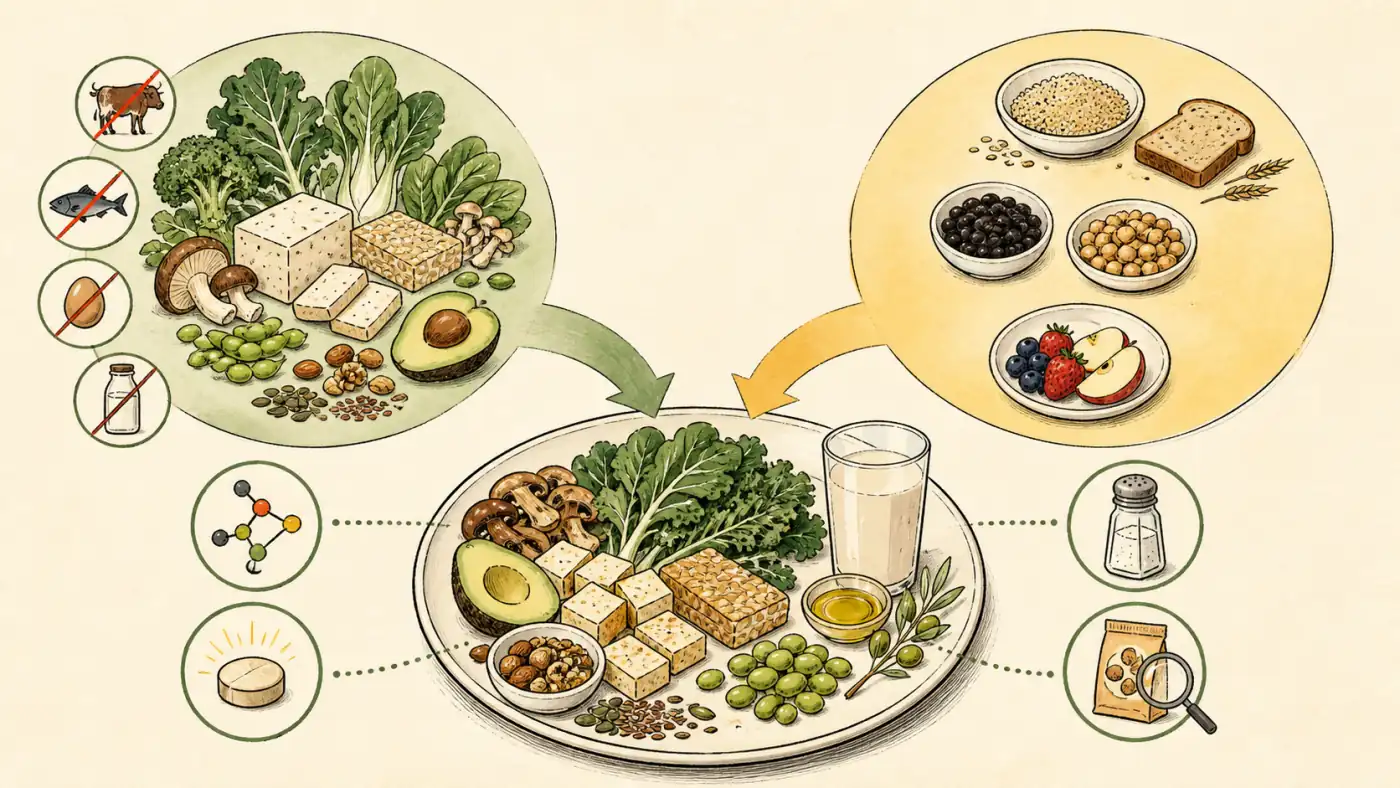
This guide was written from current primary research, systematic reviews, and official nutrition guidance rather than promotional summaries or biased interpretations. It covers self-directed food planning for nonpregnant adults. Therapeutic ketogenic diets, pregnancy, childhood, and medical conditions require different assessment.
Reading evidence in context
- Observed outcome
- Certainty
- Duration
- What remains unknown
Vegan and ketogenic are separate claims
The 2025 Academy of Nutrition and Dietetics position paper by Sudha Raj and colleagues says appropriately planned vegetarian and vegan patterns can be nutritionally adequate for nonpregnant, nonlactating adults. It does not evaluate every highly restrictive variation, and it does not establish that a vegan ketogenic diet is adequate by default.1
“Vegan” describes which food sources are excluded. “Ketogenic” describes a metabolic aim usually pursued through marked carbohydrate restriction. Neither term reveals the person's energy intake, protein intake, micronutrient coverage, fat quality, fiber intake, medications, laboratory results, or relationship with food.
The vegetarian keto guide covers patterns that may include eggs or dairy. The net-carb explainer covers label arithmetic. This page focuses on the adequacy problems created when both exclusions apply at once.
What does the direct research show?
The evidence base mixes plant-based low-carbohydrate diets with genuinely ketogenic interventions. A 2026 systematic review by Giuseppe Mazzola, Mariangela Rondanelli, Cristina Cabrini, and Simone Perna included seven randomized trials with 976 adults over 4 to 52 weeks. Participants generally had overweight, obesity, insulin resistance, hyperlipidemia, or type 2 diabetes. Diets differed in carbohydrate level, energy restriction, food provision, and the degree to which animal foods were removed.2
The authors reported short-term improvements in weight and metabolic markers, with stronger adherence in controlled settings and weaker long-term adherence when structure was removed. Those findings are not proof that an unsupervised, ad-libitum vegan keto pattern is nutritionally complete. Some interventions were moderate plant-based low-carbohydrate diets; one short very-low-calorie ketogenic protocol supplied standardized protein products under supervision.
In a three-month trial led by David Jenkins, 164 adults with type 2 diabetes received advice for either a low-carbohydrate vegan diet or a moderate-carbohydrate vegetarian diet. Both groups were prescribed substantial energy restriction. Changes in weight, glycated hemoglobin, and blood pressure occurred in both groups; estimated greenhouse-gas emissions were the only highlighted outcome with a significant between-group difference.3 The trial does not show that carbohydrate must be reduced to ketogenic levels, and it should not be used to adjust diabetes medication without clinical care.
Choose protein before discretionary fat
A vegan meal can be low in carbohydrate yet too low in protein or energy. Start with a substantial source such as tofu, tempeh, seitan where gluten is safe, edamame, a verified unsweetened soy product, or a suitable combination. Nuts and seeds contribute protein, but a practical serving often works better beside another anchor than as its sole replacement.
| Candidate | What it can contribute | What needs checking |
|---|---|---|
| Plain tofu | Protein; calcium when made with a calcium salt | Package serving, calcium line, carbohydrate, sodium, soy allergy |
| Tempeh | Protein and a fermented whole-soy format | Added grains or sweet sauce, total carbohydrate, soy allergy |
| Seitan | Concentrated wheat protein | Wheat allergy, celiac disease, sodium, added starch |
| Edamame or another legume | Protein, fiber, minerals | The measured portion's total carbohydrate and gastrointestinal tolerance |
| Unsweetened soy beverage | Protein and nutrients when fortified | Calcium, vitamin D, vitamin B12, iodine, serving, settling instructions |
| Vegan protein powder | Concentrated protein | Full ingredient list, sweeteners, carbohydrate, third-party testing claims, allergens |
| Nuts and seeds | Unsaturated fat, minerals, fiber, some protein | Serving size, total energy, sodium, nut or sesame allergy |
USDA FoodData Central can help with plain-food composition; a current package controls for branded foods.4 The plant-protein food reference compares the food form and listed portion behind a record. It is a lookup aid, not an assessment of nutrient adequacy or a prescription for what or how much to eat. Protein targets vary with body size, age, energy intake, training, health, and clinical purpose. The site's macro guide explains estimate limits without turning a formula into a prescription.
Vitamin B12 needs a reliable plan
Unfortified plant foods are not dependable vitamin B12 sources. NIH's Office of Dietary Supplements states that natural B12 sources are limited to animal foods and that fortified foods or supplements can substantially reduce deficiency risk for vegetarians and vegans.5
For vegan keto, identify the exact fortified food or supplement, amount per serving, frequency, expiration date, and any medication or absorption issue that changes the plan. Nutritional yeast is useful only when the label says it is fortified and shows vitamin B12. Fermented vegetables, mushrooms, spirulina, and an unlabeled “whole-food” powder should not be treated as a verified substitute.
This article does not give a universal supplement dose. Age, pregnancy, laboratory status, gastrointestinal surgery, pernicious anemia, metformin, and acid-suppressing medicine can change assessment and treatment. Neurologic injury from deficiency can occur before a casual menu review catches it.
Audit the nutrients squeezed by both restrictions
Nicole Neufingerl and Ans Eilander synthesized 141 adult studies. Compared with meat-eating groups, plant-based groups generally had lower intake or status for vitamin B12, vitamin D, iron, zinc, iodine, calcium, EPA, and DHA, while often consuming more fiber, folate, vitamin C, vitamin E, magnesium, and polyunsaturated fat. Vegans had the lowest average B12, calcium, and iodine intakes. The authors also found inadequacies in omnivorous diets, so the implication is to examine the actual pattern rather than stereotype the person eating it.6
| Nutrient or property | Vegan sources that may fit | Planning limit |
|---|---|---|
| Calcium | Calcium-set tofu, verified fortified plant beverage, selected greens, tahini | Fortification varies; spinach calcium is poorly absorbed; carbohydrate and sesame allergy still matter |
| Vitamin D | Verified fortified foods, supplement when clinically appropriate, sunlight where safe and sufficient | Fortification, skin synthesis, season, latitude, and individual status vary |
| Iron | Tofu, tempeh, seeds, selected legumes, fortified foods | Plant iron is nonheme; do not self-treat suspected deficiency with high doses |
| Zinc | Seeds, nuts, soy foods, selected legumes | Restriction and phytate-rich food choices can affect the plan |
| Iodine | Iodized salt in a measured amount, a verified fortified product | Plant beverages often contain little iodine; seaweed content can be highly variable7 |
| Omega-3 fats | Flax, chia, walnuts, canola oil; algae-derived EPA or DHA where appropriate | ALA conversion does not make these sources interchangeable; supplement suitability varies8 |
| Fiber and variety | Non-starchy vegetables, avocado, seeds, nuts, measured legumes | A low “net carb” display from isolated fiber is not the same as diverse plant food |
Use a food record long enough to include ordinary workdays and weekends, then compare intake with appropriate reference values. If the only way to maintain a chosen carbohydrate ceiling is to omit fortified foods, legumes, vegetables, or enough total food, loosen the ceiling. Nutritional ketosis is not evidence that the menu is complete.
Manual planning check
Vegan keto planning check
Mark an item only after you have checked it for the food and routine you are actually planning. A fully plant-based food pattern needs explicit source and label checks rather than assumptions about fortified foods.
This checklist does not diagnose a deficiency, establish nutrient adequacy, prescribe portions or doses, or save or transmit data. Selections stay only in this page's memory while it is open.
Nothing is saved when you leave or reload this page.
Keep fat quality visible
Vegan does not automatically mean low in saturated fat. Coconut oil, coconut cream, cocoa butter, palm oil, and several plant-based cheeses can make a vegan menu high in saturated fat. Prefer olive, canola, soybean, sunflower, safflower, peanut, or avocado oil; nuts; seeds; olives; and avocado for most added fat.
Packaged “keto vegan” foods can also concentrate sodium, isolated fiber, sweeteners, and refined fats. Read the serving size and full Nutrition Facts panel. A front label can describe an ingredient philosophy while leaving the nutrient tradeoffs to the back of the package.
Labels and allergies can sharply narrow the menu
Soy, wheat, peanuts, tree nuts, and sesame are common vegan protein or flour sources. FDA lists them among the nine major US allergens and distinguishes required allergen declarations from voluntary advisory statements about possible cross-contact.9 “Vegan,” “plant based,” and “gluten free” are not equivalent allergen claims.
With a diagnosed allergy, verify every package, recipe change, shared-equipment statement, and meal-service procedure against the person's care plan. Replacing both animal foods and a major plant protein may make the combined diet impractical. A less carbohydrate-restricted vegan pattern is a valid outcome of that assessment.
Vegan does not change cold-storage rules. Refrigerate opened tofu, tempeh, fortified plant beverages, and cooked food according to the package and applicable food-safety guidance. USDA generally advises refrigerating perishable leftovers within two hours, or one hour above 90°F (32°C), and using refrigerated leftovers within three to four days.12
Construct a day without turning it into a fixed menu
Use a repeatable sequence:
- Assign a real protein anchor to each meal and confirm the planned serving.
- Add varied non-starchy vegetables rather than repeating one salad mix.
- Use mostly unsaturated fats in amounts that fit appetite and energy needs.
- Place the vitamin B12 source on the schedule, then check calcium, vitamin D, iron, zinc, iodine, omega-3 fats, and fiber.
- Count carbohydrate with the correct label jurisdiction and measured servings.
- Check allergies, cost, cooking access, storage, gastrointestinal tolerance, and whether the pattern leaves enough food.
The meal template builder can return vegan ideas and preserve selected exclusions. It is an idea filter, not a nutrient-analysis tool. The grocery guide helps translate the plan to packages, while keto on a budget removes unnecessary specialty products.
Use a stricter safety boundary for special situations
Do not use this consumer framework during pregnancy. The American Diabetes Association's 2026 pregnancy standard cites a minimum of 175 g carbohydrate per day for pregnancy and states that eating patterns severely restricting a macronutrient class, specifically ketogenic patterns, should be avoided.10 Vegan pregnancy already requires individualized review of vitamin B12, iron, iodine, choline, calcium, vitamin D, zinc, and omega-3 fats.
Children and adolescents have growth and development requirements. The 2025 ESPGHAN Nutrition Committee position paper led by Elvira Verduci found the pediatric vegan evidence insufficient to determine whether a strict vegan diet supports normal growth and called for regular dietary counseling, monitoring, and supplementation, especially vitamin B12.11 Adding a ketogenic restriction should only occur as indicated therapy with a specialist team.
Seek individualized medical and nutrition care before trying vegan keto if you take glucose-lowering medication, especially insulin, sulfonylureas, or SGLT2 inhibitors; have kidney, liver, pancreatic, gallbladder, or metabolic disease; have a history of ketoacidosis; are underweight; or have an active or past eating disorder. Stop escalating restriction when it causes persistent symptoms, inadequate intake, compulsive tracking, bingeing, purging, or social withdrawal.
Frequently Asked Questions
Can vegan keto meet nutrient needs?
Is nutritional yeast enough for vitamin B12?
What are the main vegan keto protein foods?
Should every vegan eat keto?
Works cited
Article history
- Added a plant-protein food-reference link and a temporary source-and-label checklist. It records manual checks only and does not establish nutrient adequacy, prescribe portions or doses, or save data.
- First published
Your learning guide