Low-Carb Breadcrumb Alternatives: 6 Options Compared
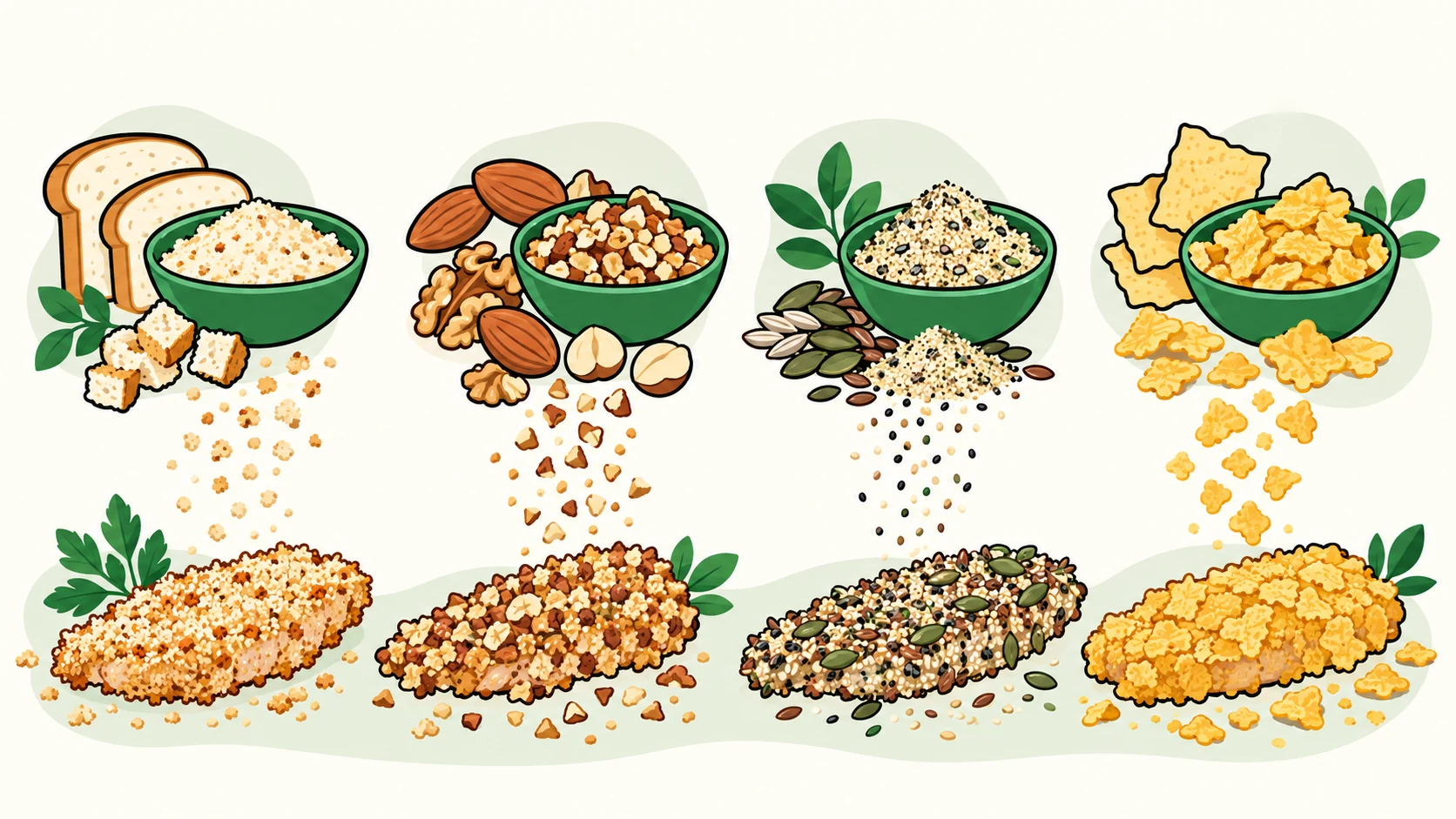
Crushed pork rinds are one practical breadcrumb alternative when their ingredients, pork content, sodium, and flavor suit the dish. The cited serving reports close to 0 g calculated net carbs, but coating behavior depends on grind, binder, thickness, and cooking method. Parmesan, flaxseed meal, crushed nuts, almond flour, and coconut flour behave differently.
Conventional breadcrumb values depend on the exact product or food entry, measured serving, and the rest of the recipe. A serving value does not define a whole day's carbohydrate budget or predict ketosis. This guide compares six alternatives by stated serving and proposed use; any ratio remains a recipe-specific starting trial. For more comparisons, browse the low-carb substitutes hub.
Compare label systems carefully
- US label
- Declared total carbohydrate
- EU / UK label
- Use the package in hand
Choose by cooking function
- Original role
- Texture
- Binding or thickening
- Verify in recipe
Which breadcrumb alternative should you compare first?
Crushed pork rinds, sometimes sold as “pork panko,” are a common starting option. The cited ounce reports 0 g calculated net carbs, but an ounce is not always 1/4 cup after crushing and the ratio is recipe-specific.1 Grated parmesan and ground flaxseed meal have different flavors, allergens, binding, and browning.
Six breadcrumb alternatives compared
Each option below states the cited serving or explains when source units differ, then gives a recipe-specific starting trial and common role. The order is editorial rather than a universal keto or culinary ranking.
1. Pork rind crumbs (pork panko)
The cited pork-rind entry reports roughly 0 g calculated net carbs per ounce; volume after crushing can vary.1 Equal volume can be an initial coating trial, but it is not a universal swap for binders, fillings, or toppings. Check the exact ingredients and sodium, and expect a pork flavor.
2. Grated parmesan cheese
The cited parmesan serving calculates to about 1 g net carbs per 1/4 cup.2 Equal volume or a half-and-half blend with almond flour can be a starting trial, not a guaranteed ratio. Parmesan adds dairy, sodium, and a pronounced flavor and can brown quickly.
3. Ground flaxseed meal
The cited ground-flaxseed serving calculates to about 1 g net carbs per 1/4 cup.3 It has an earthy flavor and darker color than breadcrumbs. Equal volume can be tested as a binder, but liquid and structure still need recipe-specific adjustment.
4. Crushed pecans, almonds, or macadamias
Finely crushed nuts vary by species and grind; use the exact nut entry and measured 1/4 cup. Equal volume is only a coating trial. Nuts introduce major-allergen and cross-contact considerations, while a fine grind can behave differently from coarse pieces.
5. Almond flour
Almond flour has about 3 g net carbs per 1/4 cup.2 It is not a universal 1:1 breadcrumb replacement; liquid, binder, coating thickness, and cooking method need a tested formula. For a deeper ingredient comparison, see the keto flour substitute guide.
6. Coconut flour
The cited coconut-flour serving calculates to about 6 g net carbs per 1/4 cup.4 It absorbs more liquid than breadcrumbs, so a smaller amount can be tested as an initial dredging layer. The useful amount and final texture depend on the complete formula.
How do these substitutes compare by net carbs?
The table below keeps source units, starting ratios, and recipe roles separate. Use the net-carb calculator only with the exact ingredient and measured amount.
| Substitute | Net carbs (per stated 1/4 cup) | Starting ratio | Common role |
|---|---|---|---|
| Pork rind crumbs (pork panko) | Source is per ounce; volume varies | Equal volume as a coating trial | Breading and toppings |
| Grated parmesan cheese | ~1 g | Equal volume or blended trial | Baked toppings, gratins |
| Ground flaxseed meal | ~1 g | Equal volume as a binder trial | Binding meatballs or meatloaf |
| Crushed pecans, almonds, or macadamias | Nut-specific | Equal volume as a coating trial | Crusted fish or chicken |
| Almond flour | ~3 g | Recipe-specific | Baked or pan-fried breading |
| Coconut flour | ~6 g | Start below equal volume | Initial dredging layer |
| Regular breadcrumbs (baseline) | Use exact product or food entry | — | Conventional breading and binding |
Compare the exact ingredient and measured serving with the carbohydrate definition in the plan being followed. A place on this list does not make an ingredient an approved staple or guarantee that it fits a personal target.
How do you bread and fry chicken with pork rind crumbs?
One chicken-coating method is to crush the pork rinds, season them, then dredge each piece through flour, egg, and crumbs before cooking. Grind, coating thickness, and equipment change the result, so treat it as a recipe trial. Poultry must reach 165°F in the thickest part as measured with a food thermometer; crust color is not the safety check.5
- Crush the pork rinds. Pulse plain pork rinds in a food processor, or crush them in a zip-top bag with a rolling pin, until they resemble coarse breadcrumbs.
- Season the crumbs. Stir in garlic powder, onion powder, paprika, dried herbs, and a little grated parmesan for extra flavor and browning.
- Set up a dredging station. Use three shallow bowls: almond flour or coconut flour first, beaten egg second, seasoned pork rind crumbs third.
- Coat the chicken. Dip each piece in flour, then egg, then press it into the crumb mixture; coverage varies with surface moisture and grind.
- Cook and verify temperature. Use a suitable tested method and a food thermometer; the thickest part of the chicken must reach 165°F.5
Frequently Asked Questions
Which breadcrumb alternatives are compared here?
Do pork rinds taste like breadcrumbs?
Can I use almond flour instead of breadcrumbs for meatballs?
Is coconut flour a good breadcrumb substitute?
How can I test whether a coating will hold?
Works cited
Your learning guide