Low-Carb Swaps & Substitutes
A low-carb substitute is an ingredient used in place of a higher-carbohydrate staple, such as cauliflower for rice or almond flour for wheat flour. The comparison should use the exact food, form, and serving. Texture, allergens, and recipe behavior matter too, and no substitute guarantees the same culinary result or a personal ketone outcome.
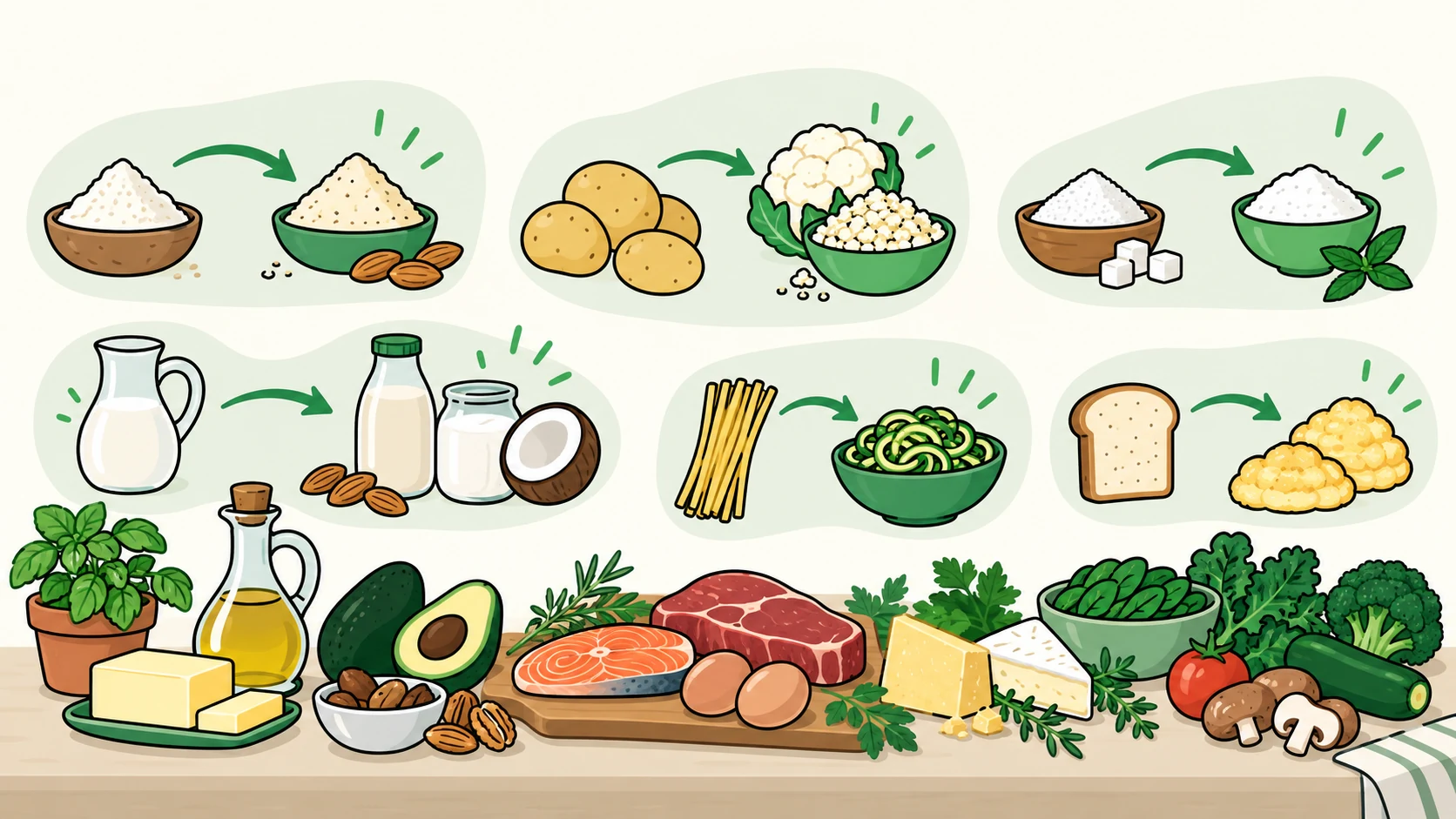
This hub covers alternatives for rice, flour, sugar, pasta, potatoes, bread, breadcrumbs, cornstarch, and beans. Those foods have different serving sizes and carbohydrate values, so they should not be compressed into one universal range.2 The table offers an editorial starting option for each category and links to the detailed guide. For the underlying math and its limits, see net carbs explained and the science of ketosis.
Compare label systems carefully
- US label
- Declared total carbohydrate
- EU / UK label
- Use the package in hand
Choose by cooking function
- Original role
- Texture
- Binding or thickening
- Verify in recipe
What is a low-carb substitute?
A low-carb substitute is an ingredient used for some of the same recipe role as a higher-carbohydrate staple, such as rice, flour, sugar, pasta, potato, bread, breadcrumbs, cornstarch, or beans. Compare the stated serving, taste and texture, cooking behavior, allergens, and any recipe-specific directions rather than assuming the alternative stays close to the original.
“Net carbs” is an informal estimate, and label formats do not all start from the same carbohydrate value. These guides compare the declared carbohydrate, fiber and polyol values rather than assuming every sugar alcohol has the same effect.1 Read how many carbs people use on keto for the limits of daily thresholds. For one packaged-food label, the net-carb estimate calculator applies only the adjustments you select. The keto shopping list is a separate fixed checklist, not a personalized plan.
How do you choose the right substitute?
Choosing a substitute means weighing four factors together: the carbohydrate in the stated serving, taste and texture, behavior under heat, and a recipe-specific starting ratio. No single ingredient wins on all four. Cauliflower and white rice differ in both composition and texture, while almond and wheat flour behave differently because almond flour does not contain gluten.
- Net-carb load — how many grams are calculated for the exact serving compared with the original staple. It is one input into a person's full dietary plan, not a personal keto verdict.
- Taste and texture — how the substitute differs from the original. Rinsing or drying cauliflower rice and shirataki noodles can change the final texture, but it does not make them identical to rice or pasta.
- Cooking behavior — assess whether it browns, thickens, binds, or rises as the recipe needs. Coconut flour and xanthan gum require their own product or tested-formula directions rather than a universal comparison with wheat flour or cornstarch.
- Swap ratio — a suggested ratio is a starting trial. Flour, cornstarch, sugar, and even vegetable swaps can require a tested formula or further adjustment.
What starting option is listed for each staple?
The table below names one editorial starting option for each of the nine staples. Its carbohydrate entries apply only to the stated serving or current package label. The linked guides compare more alternatives and explain where nutrition values and recipe behavior can vary.
| Staple | Starting option | Carbohydrate reference | Baseline (staple) | Starting ratio | Full guide |
|---|---|---|---|---|---|
| Rice | Cauliflower rice | ~3 g / cited prepared cup | ~45 g / cited cooked cup, white rice | Equal volume as a trial | Rice substitutes |
| All-purpose flour | Almond flour | ~3 g / cited ¼ cup | ~22 g / cited ¼ cup, wheat flour | Recipe-specific | Flour substitutes |
| Sugar | Allulose | Use current label and tracking method | Use exact sugar entry and measured amount | Follow package and tested recipe | Sugar substitutes |
| Pasta | Shirataki noodles | ~0–1 g / cited serving | ~40–43 g / cited cooked cup, regular pasta | Equal weight as a trial | Pasta substitutes |
| Potato | Cauliflower | ~3 g / cited cooked cup | ~33 g / cited medium potato | Equal volume as a trial | Potato substitutes |
| Bread | Cloud bread | Calculate the complete recipe and serving | ~14 g / cited slice, white bread | Recipe-specific | Bread substitutes |
| Breadcrumbs | Ground pork rinds | Source is per ounce; volume varies | Use exact breadcrumb product or food entry | Equal volume as a coating trial | Breadcrumb substitutes |
| Cornstarch | Xanthan gum | Use the current product label | ~7 g / tbsp, cornstarch | Start small and adjust to the dish | Cornstarch substitutes |
| Beans | Black soybeans | Use current drained-product label | ~26 g / cited cooked cup, black beans | Equal volume as a trial | Bean substitutes |
Whole-food figures are approximate values for the stated preparation; packaged products and homemade recipes require their current label or complete ingredient calculation. Each linked guide gives its own source and serving context.2
Which swap guide do you need?
Nine guides cover the staples above with serving context, comparison tables, and recipe-specific starting directions. Pick the ingredient being replaced to see the relevant limits and options.
- Low-Carb Rice Alternatives — 7 options, from cauliflower and shirataki to hemp hearts, with serving and texture limits.
- Keto Flour Substitutes — almond, coconut, lupin, and more, with recipe-specific baking behavior.
- Best Keto Sugar Substitutes — allulose, erythritol, monk fruit, and stevia compared on labeling, taste, and baking behavior.
- Low-Carb Pasta Substitutes — shirataki, zucchini noodles, and palmini, with sauce-pairing and texture tips.
- Low-Carb Potato Substitutes — cauliflower, turnip, and radish for mash, fries, and roasts.
- Low-Carb Bread Substitutes — cloud bread, fathead dough, and chaffles for sandwiches and toast.
- Low-Carb Breadcrumb Substitutes — pork rind panko, almond flour, and parmesan for breading and binding.
- Keto Cornstarch & Thickener Substitutes — xanthan gum, glucomannan, and guar gum for sauces and gravies.
- Low-Carb Bean Substitutes — black soybeans, lupini beans, and cauliflower for chili, dips, and salads.
What's a fast swap-ratio cheat sheet?
Some vegetable or noodle alternatives can be compared at equal volume or weight as an initial trial, while flour and thickener conversions need product or tested-formula directions. Adjust for the specific dish:
- Possible equal-amount trials: cauliflower rice, shirataki noodles, black soybeans, or ground pork rinds can be tested in compatible dishes, with serving units and recipe roles kept explicit.
- Product-directed amounts: follow the current package and tested recipe for xanthan gum, coconut flour, and other concentrated or absorbent ingredients.
- Not interchangeable ratio-for-ratio: coconut and almond flour behave differently from each other and from wheat flour — check the flour guide before converting a whole recipe.
Each staple-specific guide above has a comparison table with product, serving, and recipe context.
Frequently Asked Questions
What is the cheapest low-carb substitute?
What's a practical flour substitute to compare first?
Can a low-carb substitute predict ketosis?
Can you use these substitutes in any recipe?
Are low-carb substitutes whole foods or processed?
Where do these net-carb numbers come from?
Works cited
Your learning guide