Keto Cornstarch Alternatives: 6 Options Compared
Xanthan gum is one common cornstarch alternative, but it does not have one guaranteed replacement ratio. The cited tablespoon of cornstarch calculates to roughly 7 g net carbs. Use the alternative's current label and a tested formula for the dose, liquid, temperature, method, and desired texture.
The cited cornstarch serving calculates to about 7 g net carbs per tablespoon.1 That value does not define a universal daily budget or decide whether a recipe fits a person's plan. Alternative thickeners behave differently, so the ratios below are starting trials rather than promises of identical texture. See the keto flour substitute guide if you need a baking-flour comparison rather than a thickener.
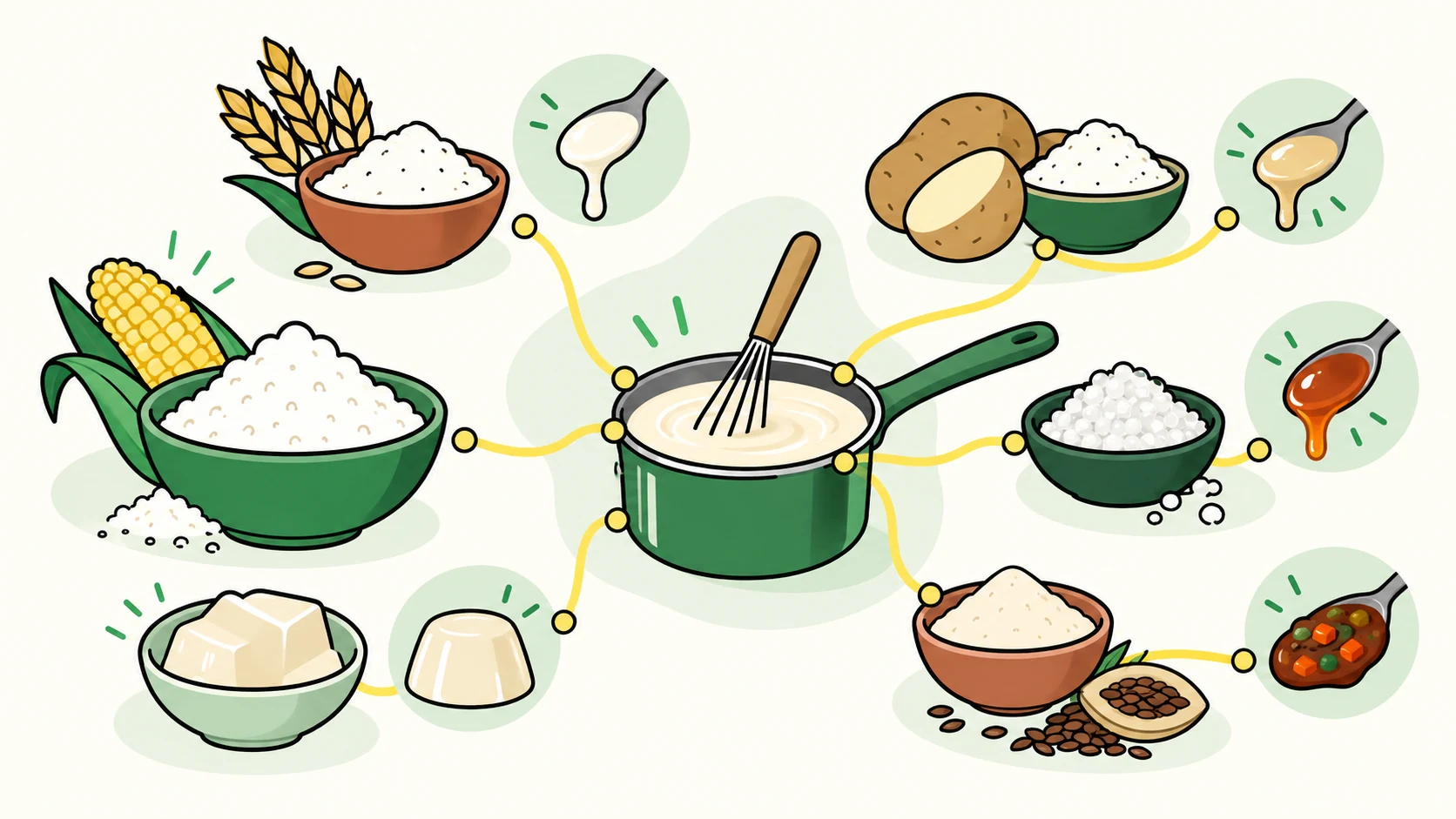
Compare label systems carefully
- US label
- Declared total carbohydrate
- EU / UK label
- Use the package in hand
Choose by cooking function
- Original role
- Texture
- Binding or thickening
- Verify in recipe
Which cornstarch alternative should you compare first?
Xanthan gum can be a practical first comparison. It is used in small amounts and can thicken both hot and cold liquids, but the current product label and recipe determine the carbohydrate contribution and useful dose. Do not infer an equality between a tablespoon of cornstarch and an uncited amount of xanthan gum.
1. Xanthan gum
Use the initial xanthan-gum amount specified by the current product or tested formula, followed by small measured adjustments when those directions allow. Product, liquid, temperature, acidity, fat, and desired texture can change the result. Do not assign a universal 0 g value or promise that flavor or reheating behavior will match cornstarch.
2. Glucomannan (konjac powder)
Glucomannan is made from konjac root and can form a different texture from cornstarch or xanthan gum. If a tested recipe supports it, begin with its specified small amount and add it gradually. Use the current product label rather than a generic 0 g estimate.
3. Guar gum
Guar gum can be tested in cold dressings, soups, or sauces where cooked cornstarch is unsuitable. Check the product label and a tested formula for the initial amount; texture depends on the complete mixture.
4. Psyllium husk powder
Psyllium husk absorbs liquid and can add body to some gravies or stews, but products, hydration, and textures vary. Use the amount in a tested recipe and the current label rather than assigning every teaspoon the same net-carb value or promising a particular mouthfeel.
5. Ground flaxseed
Ground flaxseed can add body, visible particles, and its own flavor to a stew or chili. Use a tested formula where that texture is acceptable; the exact ingredient entry, measured amount, and complete recipe determine the carbohydrate and result.
6. Unflavored whey protein isolate
Unflavored whey protein isolate can change the body of some dairy-based sauces, but it is not nutritionally or functionally equivalent to cornstarch. Follow a tested formula, keep the product's milk allergen in view, and use its current label instead of a universal 1 g estimate.
How Do These Cornstarch Substitutes Compare?
| Substitute | Carbohydrate reference | Starting trial | Possible use |
|---|---|---|---|
| Xanthan gum | Check current label | Follow product and tested formula | Sauces and gravies |
| Glucomannan (konjac) | Check current label | Follow tested recipe; add gradually | Sauces and fillings |
| Guar gum | Check current label | Follow product and tested formula | Cold dressings and sauces |
| Psyllium husk powder | Check current label | Follow tested recipe | Gravies and stews |
| Ground flaxseed | Use exact ingredient and amount | Follow a tested formula | Stews and chili |
| Whey protein isolate | Check current label | Follow tested dairy-based formula | Cream sauces |
| Cornstarch (baseline) | ~7 g per cited tbsp | — | Conventional starch thickening |
Use the net-carb calculator to document the exact label and measured amount. Recalculate the complete recipe because changing a thickener can also require changes to liquid or other ingredients.
How Do You Thicken a Sauce with Xanthan Gum?
One cautious method is to pull the pan off high heat, sprinkle the product- or recipe-directed amount of xanthan gum over the liquid while whisking, pause, then assess before adding more. This is not a guaranteed conversion. Follow the product and recipe directions and measure each addition.
- Pull the pan off high heat. Reduce to a low simmer or take it off the burner before the trial, following the product directions.
- Sprinkle it in evenly. Add it a little at a time over the surface, whisking hard, rather than dumping it in one spot where it will clump.
- Pause before judging. Wait as directed, then inspect the texture rather than assuming the first amount is final.
- Add only small measured increments. If the sauce is still thin, add a small amount, wait, and reassess.
- Record the result. Note the product, amount, liquid, temperature, and final texture before using the trial elsewhere.
Glucomannan and guar gum also need their own product directions and recipe tests; this xanthan method does not prove an interchangeable ratio. The guide to calculating keto macros explains why a thickener value cannot set a personal target or predict ketosis.
Frequently Asked Questions
How many net carbs are listed for cornstarch?
Can xanthan gum replace cornstarch in every gravy?
Can I use almond flour or coconut flour to thicken a sauce?
Does xanthan gum change the taste of a recipe?
Can these substitutes thicken cold recipes, like dressings?
Works cited
Your learning guide