Low-Carb Potato Alternatives: 7 Options Compared
For a mash or gratin, start by comparing cauliflower; for roasted pieces or a hash-style dish, consider radish. Choose the alternative for the cooking task, then use the comparisons below to check the stated serving, texture, and preparation. For cauliflower mash, drain thoroughly before blending to manage excess water.
The cited cooked-cauliflower cup calculates to about 3 g net carbs,2 while the cited medium-potato serving calculates to roughly 33 g.1 These are different serving definitions, useful for composition comparison rather than a personal keto verdict. Each swap is a recipe trial: vegetables differ in flavor, water, starch, and cooking behavior.
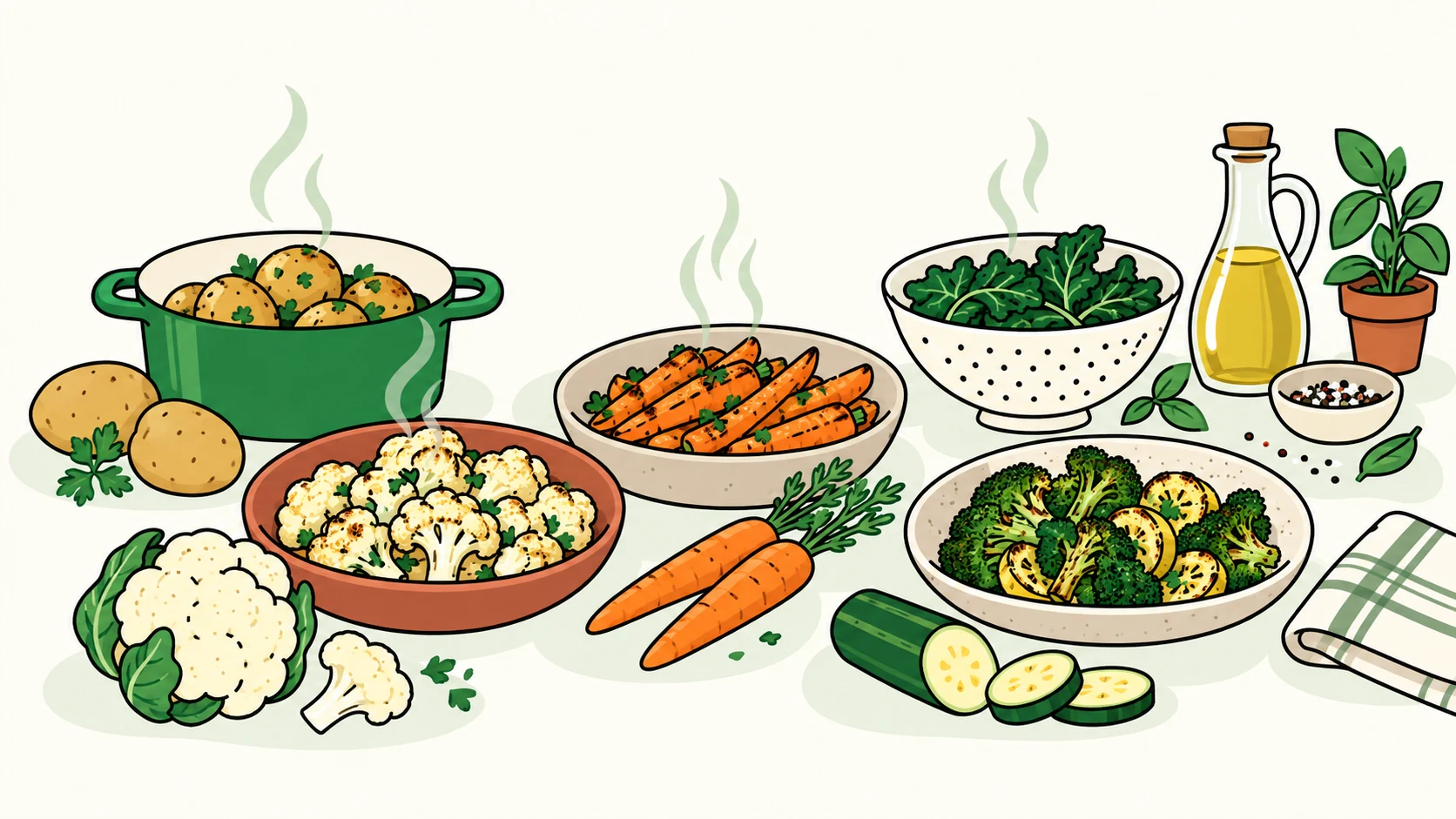
Compare label systems carefully
- US label
- Declared total carbohydrate
- EU / UK label
- Use the package in hand
Choose by cooking function
- Original role
- Texture
- Binding or thickening
- Verify in recipe
Which potato alternative should you compare first?
Cauliflower can be a practical first comparison for a mash or gratin. The cited cooked cup calculates to roughly 3 g net carbs.2 It has a mild flavor, but its water, structure, and browning differ from potato. Radish, daikon, kohlrabi, turnip, celeriac, and rutabaga may suit other preparations; none is a guaranteed match.
Seven potato alternatives compared
1. Cauliflower
The cited cooked-cauliflower cup calculates to about 3 g net carbs.2 Equal volume can be a starting trial for mash or gratin, followed by adjustment for water and texture. It does not reproduce potato starch, and no evidence here shows that most people will miss the difference.
Best for: mash, rice, gratin, shepherd's pie topping.
2. Radish
The cited cooked-radish cup calculates to about 2 g net carbs.3 Equal volume can be tested for roasted pieces or a hash-style dish. Boiling and roasting change flavor and water, but they do not guarantee potato-like crispness or remove all bitterness.
Best for: roasted "home fries," hash browns, pan-fried breakfast potatoes.
3. Daikon radish
The cited cooked-daikon cup calculates to around 3 g net carbs.3 It can be cut into batons, with equal weight used only as a starting trial. Drying surface moisture may support browning, but equipment and technique determine the result.
Best for: low-carb fries, stir-fries, braises.
4. Kohlrabi
The cited cooked-kohlrabi cup calculates to roughly 4 g net carbs.3 It has its own mildly sweet flavor and fibrous outer layer. Equal volume can be tested for boiling, mashing, or roasting, then adjusted for the dish.
Best for: mash, roasted wedges, soup.
5. Turnip
The cited cooked-turnip cup calculates to about 5 g net carbs.3 Flavor and water vary with the vegetable and preparation. Equal volume is a starting trial for mash or roasting rather than a guaranteed conversion.
Best for: mash, roasted wedges, stew.
6. Celeriac (celery root)
The cited cooked-celeriac cup calculates to about 11 g net carbs.3 That cup and a medium potato are not the same serving basis, so avoid a one-third claim. Celeriac has a celery-like flavor and can be tested alone or blended with cauliflower in a mash.
Best for: creamy mash, purées, gratin.
7. Rutabaga
The cited cooked-rutabaga cup calculates to around 10 g net carbs.3 It has its own sweetness and structure. Equal volume can be tested for roasting or mash, but the result should not be described as almost exactly the same as potato.
Best for: roasted wedges, mash, pot roast.
Net-carb comparison table
| Substitute | Net carbs (per cited cooked cup) | Starting ratio | Possible use |
|---|---|---|---|
| Potato (baseline) | ~33 g | — | — |
| Radish | ~2 g | Equal volume as a trial | Hash-style dishes, roasted pieces |
| Cauliflower | ~3 g | Equal volume as a trial | Mash, rice, gratin |
| Daikon radish | ~3 g | Equal weight as a trial | Batons, stir-fries |
| Kohlrabi | ~4 g | Equal volume as a trial | Mash, roasted wedges |
| Turnip | ~5 g | Equal volume as a trial | Mash, stew |
| Rutabaga | ~10 g | Equal volume as a trial | Roast, mash, pot roast |
| Celeriac | ~11 g | Equal volume as a trial | Mash, purée |
The potato baseline is a medium potato while the alternatives are cooked cups. Compare those stated servings directly; do not convert them into a universal per-serving reduction or personal daily-budget rule.13
Which substitute should you use for mash, fries, or gratin?
Match the alternative to the dish and test the method. Cauliflower, kohlrabi, turnip, or celeriac can be tried in a mash; radish or daikon can be tried as roasted pieces; sliced celeriac or rutabaga can be tested in a gratin. Water, cut size, pan, temperature, and cooking time affect whether any option holds, browns, or softens as intended.
How do you make low-carb cauliflower mash?
Steam a head of cauliflower florets until fork-tender, drain and press out excess water, then blend with butter and cream cheese until smooth. Water varies with the cauliflower and cooking method, so assess the texture while mixing rather than assuming it will behave like potato.
- Cut one head of cauliflower into even florets and steam or boil for 10 to 12 minutes until fork-tender.
- Drain in a colander and press out excess water with a clean towel.
- Blend or mash with butter, cream cheese, or heavy cream until smooth.
- Season with salt, pepper, and garlic, then adjust the liquid or continue over low heat until the texture suits the dish.
Kohlrabi, turnip, and celeriac need their own tested cooking times and liquid adjustments; this cauliflower method does not guarantee the same result. Use the net-carb calculator with the exact food and measured portion. The keto macros guide explains why a serving value cannot set a personal target or predict ketosis.
Rice-based sides are another common potato-adjacent swap — see our low-carb rice substitutes guide, or browse the full low-carb substitutes hub for flour, pasta, bread, and sugar swaps.
Frequently Asked Questions
Which potato alternative should I compare first?
What vegetable tastes the most like real potato?
Does this comparison include sweet potatoes?
What can I test in place of french fries?
Do potato substitutes taste like potatoes?
Works cited
Your learning guide