Keto plant proteins: compare tofu and meat alternatives
Direct answer: plant-protein foods can fit a keto eating pattern only when the exact form and portion fit the rest of the plan. Plain tofu, deep-fried tofu, textured vegetable protein, and formulated meat alternatives are different foods. Their carbohydrate, fiber, fat, sodium, and ingredient profiles should not be assumed from the category name.
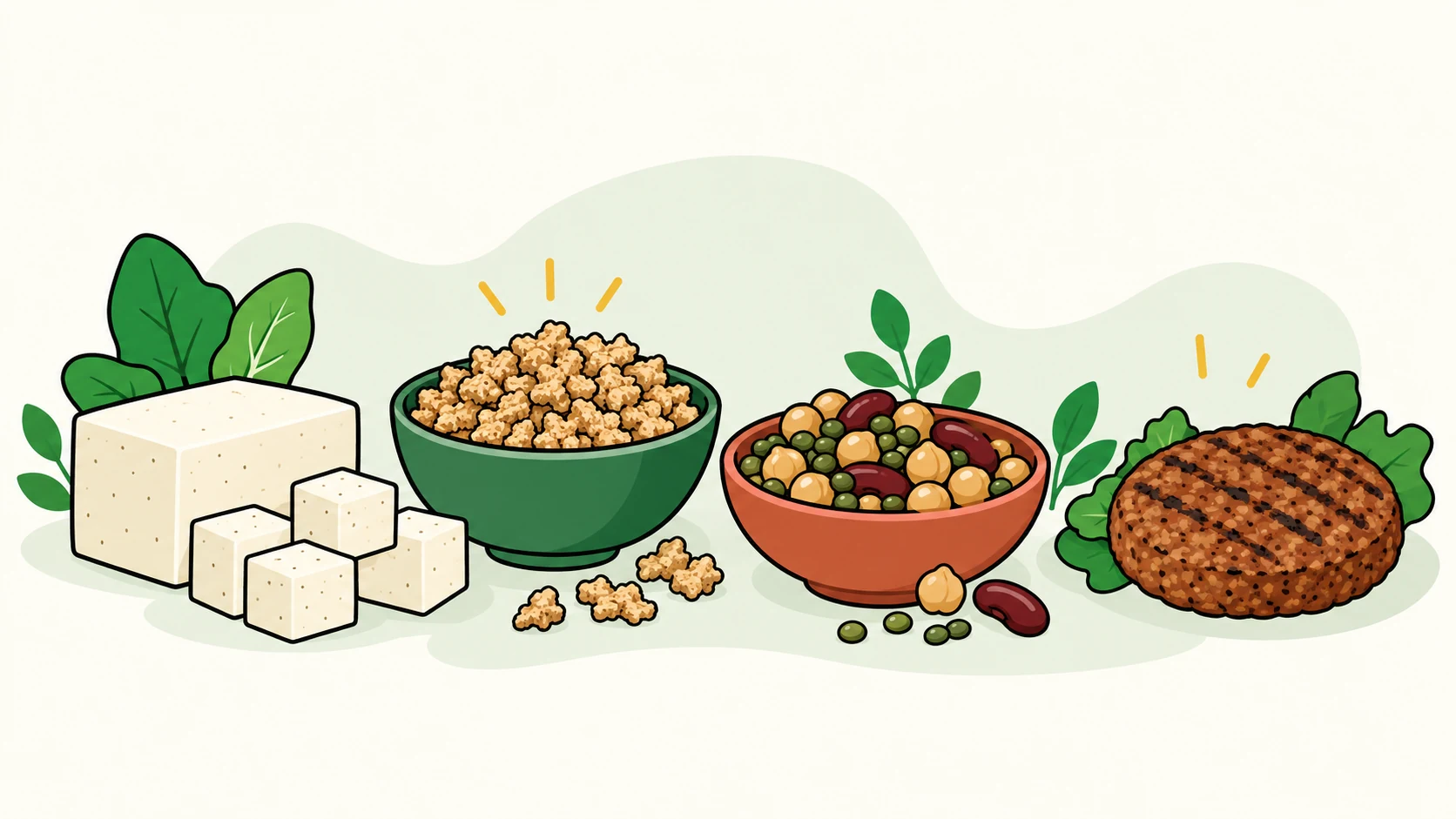
From food record to meal context
- Exact record
- Preparation
- Meal combination
- Personal context
Start with the food form, not the “plant-based” claim
Plant-protein products range from relatively simple soy foods to formulated patties and breaded alternatives. A food may be made from legumes or soy and still include starches, breading, sauces, oils, sweeteners, or other ingredients that change the record. The useful comparison is the named product in the form you will cook or eat, not a generic value for “vegan protein.”
Browse by the decision you are making
Small-screen view: this comparison table scrolls sideways. Swipe or drag it horizontally to see every column.
| Food form | Records to compare | What to verify |
|---|---|---|
| Tofu in distinct preparations | Tofu, tofu cheese, deep-fried tofu | Whether the record is plain or fried, plus the oil, sauce, marinade, and portion used in the meal. |
| Dry or rehydrated protein ingredients | Textured vegetable protein, dry | Dry versus prepared weight, package directions, and every ingredient added during rehydration or cooking. |
| Formulated meat alternatives | Veggie burger patty, no bun, vegetarian fillet, meatball, meatless | Binders, breading, sauces, product serving size, allergens, and the current package nutrition panel. |
| Breakfast and convenience alternatives | Meatless bacon strip, meatless breakfast sausage, vegetarian hot dog | Brand formulation, serving count, sodium, and what is served alongside it. |
Portion and label details are separate from a protein goal
USDA reports nutrients per 100 g. Each linked page also uses the source’s household portion and gram weight to calculate a practical comparison. That portion is not a protein target, a recommendation, or an estimate of a current branded product. Packaged meat alternatives can vary especially widely, so the label and ingredient list on the item in hand take priority.
On individual pages, calculated net carbs equal total carbohydrate minus dietary fiber, capped at zero. This consistent comparison method does not automatically subtract sugar alcohols or decide whether a food supports someone’s protein, energy, medical, allergy, or gastrointestinal needs. For the method, see how net carbs are calculated; use the net-carb calculator when you have a package label and a real portion.
Plan plant proteins as part of a complete pattern
The vegetarian keto framework explains how to approach a vegetarian ketogenic pattern beyond a food lookup. The vegan keto guide covers the more restrictive fully plant-based case. Neither replaces individual review of a product’s ingredients, fortification, allergens, or serving size.
For the rest of a meal, compare vegetables, nuts, seeds & legumes, dairy & alternatives, and fats & condiments. The keto grocery-shopping guide provides a meal-first label-reading process.
Complete plant protein record directory
Browse all 11 selected USDA records in this plant protein group
Entries are grouped by food concept, then by the exact USDA food form. Open the record that matches the preparation and product you are comparing.
Bacon strip meatless
- Meatless bacon stripsmeatless
Chicken meatless breaded
- Chicken, meatless, breaded, friedfried · meatless
Hot dog vegetarian
- Hot dog, vegetarianvegetarian
Meatball meatless
- Meatless meatballsmeatless
Meatless breakfast sausage
- Meatless breakfast sausagemeatless
Textured vegetable protein
Tofu
- Tofuplain
- Deep-fried tofudeep-fried
- Tofu cheesecheese-style
Vegetarian fillet
- Vegetarian filletvegetarian
Veggie burger patty no bun
- Veggie burger patty, no bunprepared food
Source and method
The records in this directory come from USDA FoodData Central’s Survey (FNDDS) release. Each individual page preserves the source food description, preparation wording, FoodData Central ID, portion weight, and per-100 g nutrient values. A current product, restaurant preparation, or home recipe may not match that record, so the database does not fill in information missing from a package label.
Article history
- Updated food-category guidance after final factual and editorial review
- First published
Your learning guide