Keto meat, poultry & eggs: compare preparation and ingredients
Direct answer: many plain meat, poultry, and egg records contain little calculated net carbohydrate, but the preparation and product formulation still matter. Coatings, marinades, sweet cures, sauces, and meatless alternatives can describe a different food from the plain raw or cooked item beside it.
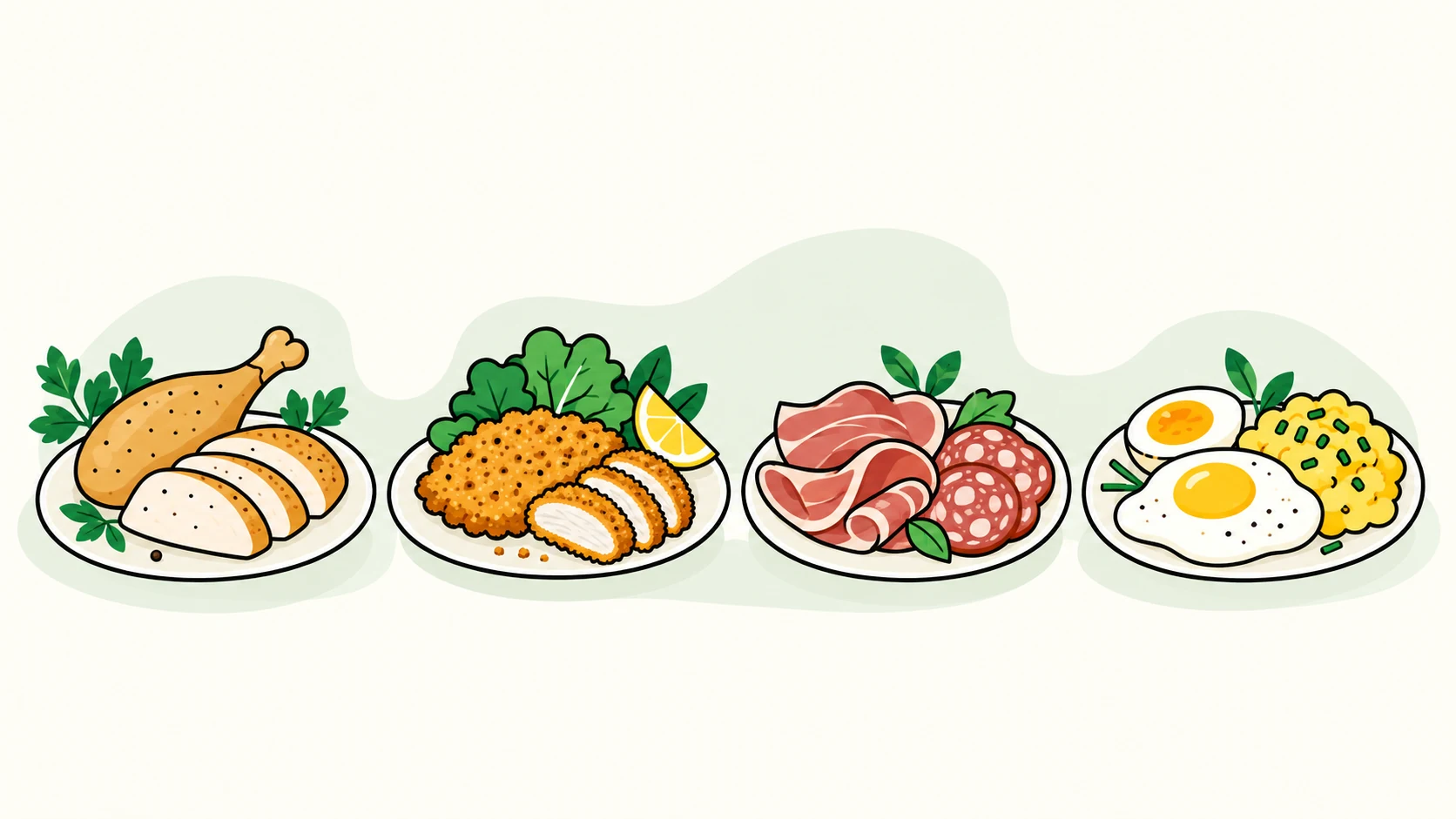
From food record to meal context
- Exact record
- Preparation
- Meal combination
- Personal context
Compare the preparation, not just the protein source
“Chicken,” “beef,” or “eggs” is not precise enough for a nutrition comparison. The database distinguishes raw from cooked foods and preserves terms such as skin eaten, coated, deli, sausage, or meatless. That allows a reader to compare a food record without silently assuming that every recipe or brand has the same ingredients.
Browse by the question you are actually asking
Small-screen view: this comparison table scrolls sideways. Swipe or drag it horizontally to see every column.
| Comparison | Records to open | What can change the result |
|---|---|---|
| Plain meat and poultry forms | Beef, ground, raw, chicken breast, baked or roasted, chicken thigh, baked or roasted | Skin, cooking method, added fat, sauce, and the edible portion. |
| Egg preparation | Egg, whole, raw, egg, whole, boiled or poached, egg omelet or scrambled, no added fat | Added milk, cheese, vegetables, cooking fat, and the number of eggs actually used. |
| Cured, deli, and convenience products | Beef jerky, bologna, hot dog, turkey | Brand recipe, sweeteners, starches, sodium, allergens, and serving size on the current package. |
| Coated animal-protein preparations | Chicken breast, fried, coated, chicken drumstick, fried, coated, chicken wing, fried, coated | Breading, batter, sauces, and ingredient changes between recipes. |
For tofu and formulated meat alternatives, use the separate plant proteins directory. It keeps those records together so a meatless product is not treated as interchangeable with a plain animal-protein record.
Portion and food safety are separate questions
The listed portion on a page is a USDA household measure used to scale per-100 g data. It is not a protein target or a recommendation about how much to eat. The database also cannot replace cooking-temperature, storage, allergen, pregnancy, kidney-disease, or medication-specific guidance. Use the food label and a clinician’s advice when those questions apply.
Calculated net carbs on the linked pages equal total carbohydrate minus dietary fiber, capped at zero. This is a consistent comparison method, not a promise that a food is appropriate for every ketogenic diet or medical condition. The net-carbs guide explains the calculation; the meal-prep and storage guide addresses the separate practical issue of preparing food safely.
Build the rest of the plate deliberately
Use vegetables, seafood, and fats & condiments to compare the components commonly paired with these records. The keto food list and high-protein keto guide explain broader dietary patterns without treating a food-composition table as a personal plan.
Complete meat, poultry & egg record directory
Browse all 89 selected USDA records in this meat, poultry & egg group
Entries are grouped by food concept, then by the exact USDA food form. Open the record that matches the preparation and product you are comparing.
Bacon bits
- Bacon bitsprepared food
Bacon or side pork
- Bacon or side pork, fresh, cookedfresh · cooked
Beef bacon
- Cooked beef baconcooked
Beef chipped
- Uncooked dried chipped beefdried · uncooked
Beef corned
- Corned beefprepared food
Beef deli meat
- Beef deli meatprepared food
Beef jerky
- Beef jerkyprepared food
Beef sausage
- Beef sausageprepared food
Beef stew meat
- Beef stew meatwhole food
Blood sausage
- Blood sausageprepared food
Bologna
- Bolognaprepared food
Bratwurst
- Bratwurstprepared food
Canadian bacon
- Cooked Canadian baconcooked
Chicken
- Canned chicken with meat onlycanned · meat-only
Chicken breast
- Chicken breast, baked, broiled, or roasted, skin eaten, from rawraw · baked · broiled · roasted · from-raw · skin-eaten
- Breaded fried chicken breast with skinraw · fried · coated · from-raw · coating-eaten
- Chicken breast, baked, broiled, or roasted, skin not eaten, from rawraw · baked · broiled · roasted · from-raw · skin-not-eaten
- Fried chicken breast, skin/coating not eatenraw · fried · coated · from-raw · coating-not-eaten
- Rotisserie chicken breast with skinrotisserie · skin-eaten
- Skinless breaded fried chicken breastraw · fried · coated · skinless · prepared · from-raw · coating-eaten
- Skinless rotisserie chicken breastrotisserie · skin-not-eaten
Chicken deli meat
- Chicken deli meatprepared food
Chicken drumstick
- Chicken drumstick, baked, broiled, or roasted, skin eaten, from rawraw · baked · broiled · roasted · from-raw · skin-eaten
- Breaded fried chicken drumstick with skinraw · fried · coated · from-raw · coating-eaten
- Chicken drumstick, baked, broiled, or roasted, skin not eaten, from rawraw · baked · broiled · roasted · from-raw · skin-not-eaten
- Fried chicken drumstick, skin/coating not eatenraw · fried · coated · from-raw · coating-not-eaten
- Rotisserie chicken drumstick with skinrotisserie · skin-eaten
- Skinless breaded fried chicken drumstickraw · fried · coated · skinless · prepared · from-raw · coating-eaten
Chicken feet
- Chicken feetwhole food
Chicken salad spread
- Chicken salad spreadprepared food
Chicken tail
- Chicken tailwhole food
Chicken thigh
- Chicken thigh, baked, broiled, or roasted, skin eaten, from rawraw · baked · broiled · roasted · from-raw · skin-eaten
- Breaded fried chicken thigh with skinraw · fried · coated · from-raw · coating-eaten
- Chicken thigh, baked, broiled, or roasted, skin not eaten, from rawraw · baked · broiled · roasted · from-raw · skin-not-eaten
- Fried chicken thigh, skin/coating not eatenraw · fried · coated · from-raw · coating-not-eaten
- Rotisserie chicken thigh with skinrotisserie · skin-eaten
- Skinless breaded fried chicken thighraw · fried · coated · skinless · prepared · from-raw · coating-eaten
- Skinless rotisserie chicken thighrotisserie · skin-not-eaten
Chicken wing
- Chicken wing, baked, broiled, or roasted, from rawraw · baked · broiled · roasted · from-raw
- Chicken wing, baked or broiled, from pre-cookedcooked · baked · broiled · pre-cooked
- Chicken wing, fried, coated, from rawraw · fried · coated · from-raw
- Chicken wing, rotisserierotisserie
Chicken wings
- Plain chicken wingsplain
- Plain pre-cooked chicken wingspre-cooked · plain
Chorizo
- Chorizoprepared food
Egg substitute
- Egg substitute, omelet, scrambled, or fried, no added fatfried · no-added-fat
Egg whites
- Raw egg whitesraw
- Cooked egg whites, no added fatcooked · no-added-fat
- Egg whites, omelet, scrambled, or friedfried · no-added-fat
Egg yolks
- Raw egg yolksraw
- Cooked egg yolks, no added fatcooked · no-added-fat
Eggs
- Whole eggs, rawwhole · raw
- Egg omelet or scrambled egg, no added fatomelet-or-scrambled · no-added-fat
- Whole eggs, baked, fat addedwhole · baked · fat-added
- Whole eggs, baked, no added fatwhole · baked · no-added-fat
- Whole eggs, boiled or poachedwhole · boiled-or-poached
- Whole eggs, fried no added fatwhole · fried · no-added-fat
- Whole eggs, pickledwhole · pickled
Ground beef
- Ground beef, rawraw · ground
Ham
- Canned hamcanned
Ham deli meat
- Ham deli meatprepared food
Ham ground
- Ground hamprepared food
Ham luncheon meat loaf type
- Ham luncheon meat, loaf typeprepared food
Ham prosciutto
- Prosciuttoprepared food
Ham salad spread
- Ham salad spreadprepared food
Head cheese
- Head cheeseprepared food
Hot dog beef
- Hot dog, beefprepared food
Hot dog meat and poultry
- Hot dog, meat and poultryprepared food
Hot dog turkey
- Hot dog, turkeyprepared food
Italian sausage
- Italian sausageprepared food
Knockwurst
- Knockwurstprepared food
Liver paste or pate
- Liver, paste or pateingredient
Liverwurst
- Liverwurstprepared food
Luncheon meat loaf type
- Luncheon meat, loaf typeprepared food
Mortadella
- Mortadellaprepared food
Polish sausage
- Polish sausageprepared food
Pork bacon smoked or cured
- Pork bacon, smoked or cured, cookedcooked · smoked
Pork pig's feet
- Pork, pig's feet, pickledpickled
Pork sausage
- Pork sausageprepared food
Pork skin rinds
- Pork rindsprepared food
Scrapple
- Cooked scrapplecooked
Spam
- Spamprepared food
Thuringer
- Thuringerprepared food
Turkey
- Canned turkeycanned
Turkey bacon
- Cooked turkey baconcooked
Turkey deli meat
- Turkey deli meatprepared food
Turkey or chicken and pork sausage
- Turkey or chicken and pork sausageprepared food
Turkey or chicken sausage
- Turkey or chicken sausageprepared food
Vienna sausage
- Vienna sausage, cannedcanned
Source and method
Each linked record is traceable to USDA FoodData Central’s Survey (FNDDS) release. The page preserves the source’s food description and preparation wording, gives the FoodData Central ID, and shows both per-100 g values and the calculation for the listed portion. Current recipes and packaged products can vary; the record should not be used to fill in missing label information.
Article history
- Updated food-category guidance after final factual and editorial review
- First published
Your learning guide