Keto vegetables: compare carbs, forms, and portions
Direct answer: vegetables are not one keto answer. Many plain, non-starchy vegetable records have relatively little calculated net carbohydrate in their listed portions, while starchy vegetables and prepared versions can be materially different. Compare the exact food form and portion before adding it to a plan.
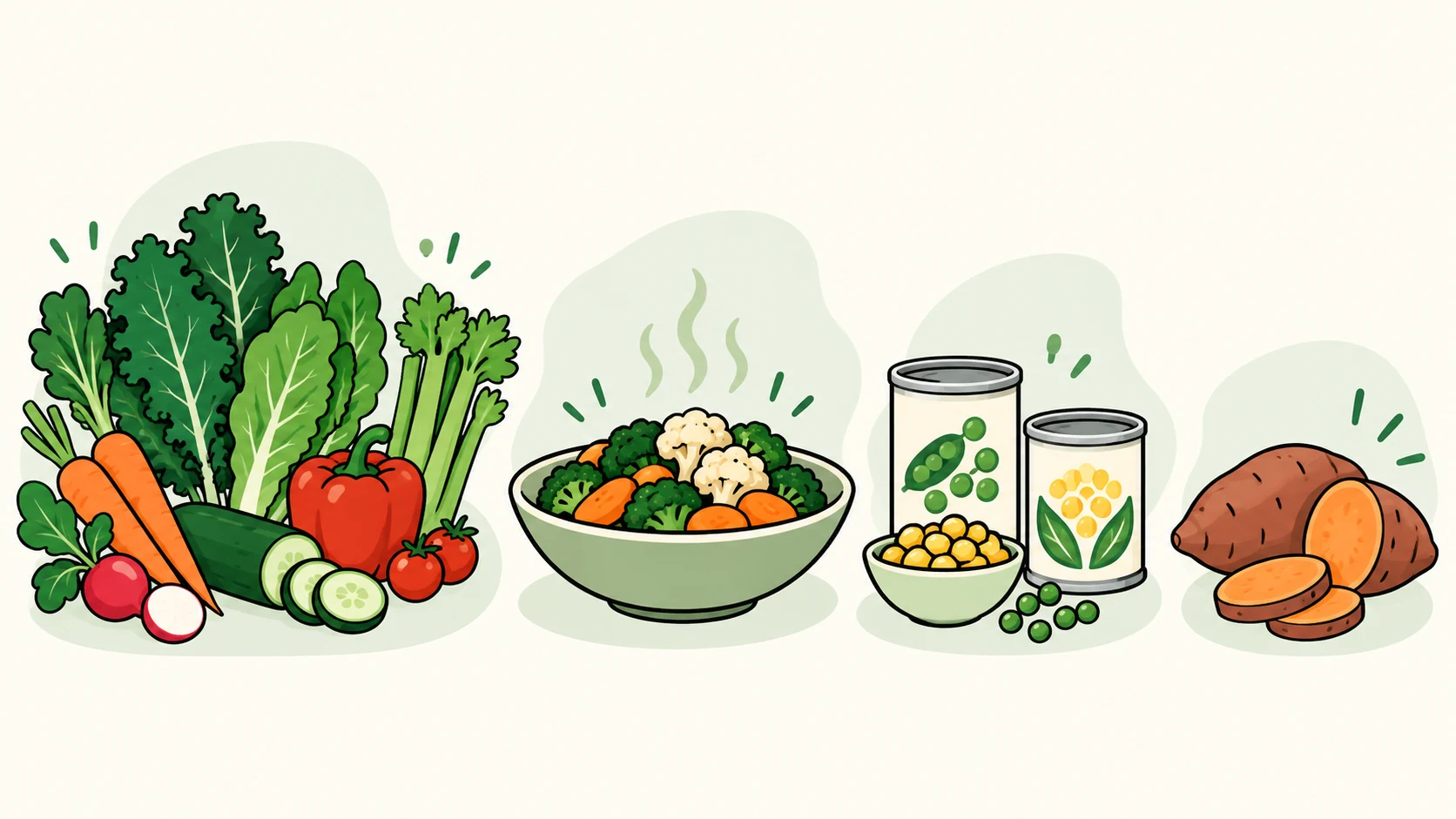
From food record to meal context
- Exact record
- Preparation
- Meal combination
- Personal context
Start with the food form
The word “vegetable” can hide the decision that matters. Raw, cooked, canned, frozen, drained, breaded, and sauced foods are separate records because water, added ingredients, and household measures can change the comparison. A cup of a raw leafy vegetable is not nutritionally interchangeable with a cup of a cooked root vegetable, even when both are described casually as vegetables.
The links below are useful starting points, not a ranked list of “good” and “bad” foods. Open an individual entry for the record’s portion, per-100 g values, preparation description, and source identifier.
Browse vegetable records by meal decision
Small-screen view: this comparison table scrolls sideways. Swipe or drag it horizontally to see every column.
| If you are comparing… | Start with these records | What to verify |
|---|---|---|
| Raw salad and crunchy vegetables | Cabbage, green, raw, cucumber, raw, broccoli, raw | The household measure and any dressing, topping, or dip added later. |
| Cooked non-starchy sides | Cauliflower, fresh, cooked, mushrooms, fresh, cooked, spinach, fresh, cooked | Whether the record is raw or cooked, plus oil, sauce, and the amount actually served. |
| Canned or prepared vegetables | Carrots, canned, cooked, beets, canned, cooked, asparagus, canned, cooked | Syrup, sauce, breading, drained weight, and sodium on the product in hand. |
| Starchy vegetables | Corn, canned, cooked, potato, canned, winter squash, raw | The listed portion and the rest of the meal’s carbohydrate budget; do not assume the category decides it. |
Use the listed portion without mistaking it for a recommendation
Every individual food page shows two views: USDA-reported nutrients per 100 g and a calculation for one listed household portion. The common portion makes records practical to compare, but it is not a prescribed serving size. Cooking can concentrate or dilute a food by changing water content, and a sauce or frying fat can describe a different food altogether.
On this site, calculated net carbs = total carbohydrate − dietary fiber, capped at zero. It is a transparent planning convention, not a separate USDA nutrient or a guarantee about ketosis. Read the net-carbs method before applying it to packaged foods, where labels, fiber rules, and sugar alcohol disclosures can differ.
Put vegetable choices into a meal context
The database helps answer “what does this record contain?” It does not decide your carbohydrate target, energy needs, food preferences, medication plan, or how a vegetable fits with protein and fat in a meal. For the broader sequence, use the keto food list, then the grocery-shopping guide and meal-planning guide.
If you are comparing another part of the plate, continue to meat, poultry & eggs, seafood, or fats & condiments.
Complete vegetable record directory
Browse all 101 selected USDA records in this vegetable group
Entries are grouped by food concept, then by the exact USDA food form. Open the record that matches the preparation and product you are comparing.
Alfalfa sprouts
Asparagus
- Asparagus, rawraw
- Asparagus, canned, cooked, no added fatcanned · cooked · no-added-fat
- Asparagus, fresh, cooked, no added fatfresh · cooked · no-added-fat
- Asparagus, frozen, cooked, no added fatfrozen · cooked · no-added-fat
Banana peppers
Bean sprouts
Beet greens
Beets
- Beets, rawraw
- Beets, canned, cooked, no added fatcanned · cooked · no-added-fat
- Beets, fresh, cooked, no added fatfresh · cooked · no-added-fat
Broccoflower
Broccoli
- Broccoli, rawraw
- Broccoli, fresh, cooked, no added fatfresh · cooked · no-added-fat
- Broccoli, frozen, cooked, no added fatfrozen · cooked · no-added-fat
Broccoli chinese
Broccoli raab
Brussels sprouts
- Brussels sprouts, rawraw
- Brussels sprouts, fresh, cooked, no added fatfresh · cooked · no-added-fat
- Brussels sprouts, frozen, cooked, no added fatfrozen · cooked · no-added-fat
Cactus
- Cactus, rawraw
- Cactus, cooked, no added fatcooked · no-added-fat
Carrots
- Carrots, rawraw
- Carrots, canned, cooked, no added fatcanned · cooked · no-added-fat
- Carrots, fresh, cooked, no added fatfresh · cooked · no-added-fat
- Carrots, frozen, cooked, no added fatfrozen · cooked · no-added-fat
Cauliflower
- Cauliflower, rawraw
- Cauliflower, fresh, cooked, no added fatfresh · cooked · no-added-fat
- Cauliflower, frozen, cooked, no added fatfrozen · cooked · no-added-fat
Celery
- Celery, rawraw
Chard
- Chard, rawraw
Chinese cabbage
- Chinese cabbage, rawraw
- Chinese cabbage, cooked, no added fatcooked · no-added-fat
Collards
- Collards, rawraw
- Collards, fresh, cooked, no added fatfresh · cooked · no-added-fat
- Collards, frozen, cooked, no added fatfrozen · cooked · no-added-fat
Corn
- Corn, rawraw
- Corn, canned, cooked, no added fatcanned · cooked · no-added-fat
- Corn, fresh, cooked, no added fatfresh · cooked · no-added-fat
- Corn, frozen, cooked, no added fatfrozen · cooked · no-added-fat
Cress
- Cress, rawraw
Cucumber
Dandelion greens
Eggplant
- Eggplant, rawraw
- Eggplant, cooked, no added fatcooked · no-added-fat
Fennel bulb
Garlic
- Garlic, rawraw
Green beans
- Green beans, rawraw
- Green beans, canned, cooked, no added fatcanned · cooked · no-added-fat
- Green beans, fresh, cooked, no added fatfresh · cooked · no-added-fat
- Green beans, frozen, cooked, no added fatfrozen · cooked · no-added-fat
Green cabbage
- Green cabbage, rawraw
- Green cabbage, cooked, no added fatcooked · no-added-fat
Green peas
- Green peas, rawraw
- Green peas, canned, cooked, no added fatcanned · cooked · no-added-fat
- Green peas, fresh, cooked, no added fatfresh · cooked · no-added-fat
- Green peas, frozen, cooked, no added fatfrozen · cooked · no-added-fat
Hot peppers
Jicama
- Jicama, rawraw
Kale
- Kale, rawraw
- Kale, fresh, cooked, no added fatfresh · cooked · no-added-fat
- Kale, frozen, cooked, no added fatfrozen · cooked · no-added-fat
Kohlrabi
Lima beans
- Lima beans, from frozen, no added fatfrozen · from-frozen · no-added-fat
Mushrooms
- Mushrooms, rawraw
- Mushrooms, fresh, cooked, no added fatfresh · cooked · no-added-fat
Mustard greens
- Mustard greens, rawraw
- Mustard greens, fresh, cooked, no added fatfresh · cooked · no-added-fat
- Mustard greens, frozen, cooked, no added fatfrozen · cooked · no-added-fat
Okra
- Fresh okra cooked with no added fatfresh · cooked · no-added-fat
- Okra, frozen, cooked, no added fatfrozen · cooked · no-added-fat
Onions
- Onions, rawraw
- Onions, cooked, no added fatcooked · no-added-fat
Onions green
Peas and carrots
- Canned peas and carrots cooked with no added fatcanned · cooked · no-added-fat
Plantain
- Plantain, rawraw
- Plantain, cooked, no added fatcooked · no-added-fat
Potato
- Canned potato with no added fatcanned · no-added-fat
Red cabbage
Rutabaga
Snow peas
- Raw snow peasraw
- Fresh snow peas cooked with no added fatfresh · cooked · no-added-fat
- Frozen snow peas cooked with no added fatfrozen · cooked · no-added-fat
Spinach
- Spinach, rawraw
- Spinach, canned, cooked, no added fatcanned · cooked · no-added-fat
- Spinach, fresh, cooked, no added fatfresh · cooked · no-added-fat
- Spinach, frozen, cooked, no added fatfrozen · cooked · no-added-fat
Summer squash yellow
Sweet green peppers
Sweet potato
- Baked sweet potato with no added fatbaked · no-added-fat
- Sweet potato, boiled, no added fatboiled · no-added-fat
- Sweet potato, canned, no added fatcanned · no-added-fat
Sweet red peppers
Tomatoes
Turnip
- Turnip, rawraw
Turnip greens
- Fresh turnip greens cooked with no added fatfresh · cooked · no-added-fat
- Turnip greens, frozen, cooked, no added fatfrozen · cooked · no-added-fat
Watercress
Winter squash
- Winter squash, rawraw
- Winter squash, cooked, no added fatcooked · no-added-fat
Zucchini
Source and method
These links lead to records selected from USDA FoodData Central’s Survey (FNDDS) release. The individual pages preserve the source food description, preparation, FoodData Central identifier, and the USDA portion weight used to calculate the listed-portion column. A current packaged product or restaurant dish may differ from the source record; use its label and recipe when that is the food you will eat.
Article history
- Updated food-category guidance after final factual and editorial review
- First published
Your learning guide