Keto seafood: compare fish, shellfish, and preparation
Direct answer: seafood does not have a single keto classification. Many plainly prepared fish records have very little calculated net carbohydrate, while shellfish, sauces, breading, pickling, and composite dishes can change the comparison. The relevant question is which seafood record, prepared how, and in what portion.
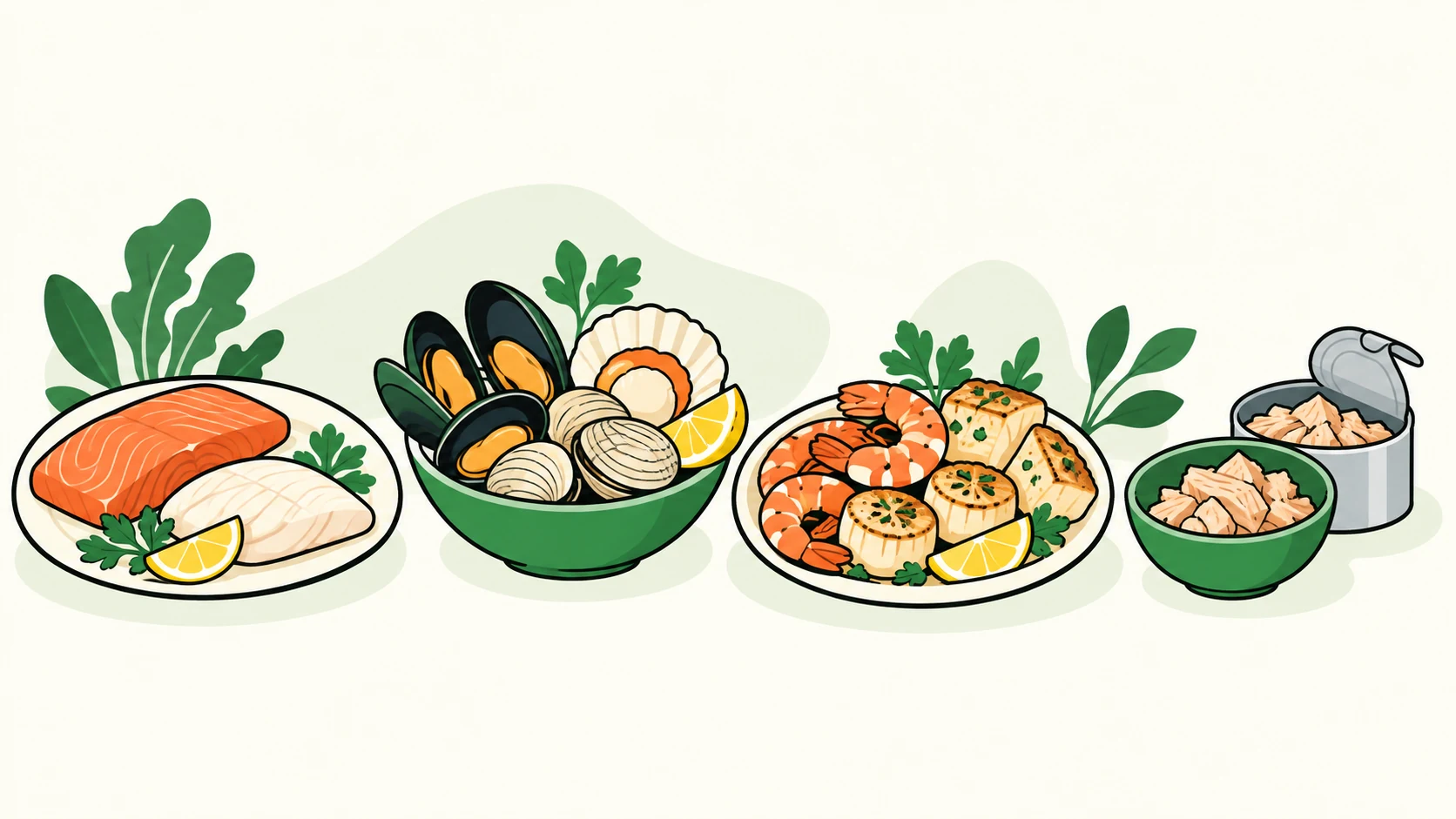
From food record to meal context
- Exact record
- Preparation
- Meal combination
- Personal context
A fish dish is more than the fish
The database keeps cooked, canned, smoked, pickled, coated, and composite foods separate. This is important because the cooking or preservation description can carry ingredients that a generic “fish” value misses. Use the linked entry’s source wording rather than applying one record to another preparation.
Browse seafood by preparation
Small-screen view: this comparison table scrolls sideways. Swipe or drag it horizontally to see every column.
| Food decision | Records to compare | What to check next |
|---|---|---|
| Plain fish and canned fish | Fish, cod, grilled, fish, tuna, canned, fish, salmon, canned | Whether the current product includes oil, sauce, seasoning, or a different drained weight. |
| Shellfish and mollusks | Crab, clams, baked or broiled, oysters, canned | Exact species, preparation, sauce, and the portion you plan to serve. |
| Smoked, pickled, or preserved fish | Fish, salmon, smoked, fish, sardines, canned, fish, pickled | Ingredients, sodium, sugar, oil, and package portion. |
| Seafood dishes with added ingredients | Shrimp cocktail, fish, stick, cocktail sauce | Whether breading, batter, sauce, or a restaurant recipe is part of the food being counted. |
Read the comparison in context
Every entry reports USDA nutrients per 100 g and calculates one listed household portion from the source’s gram weight. This makes records comparable, but it does not tell you a preferred serving size or predict an individual ketone response. On individual pages, calculated net carbs are total carbohydrate minus dietary fiber, capped at zero.
The data are not a seafood-safety, allergen, mercury, sustainability, pregnancy, or medication guide. Those questions require the current product information and, when relevant, advice from an appropriate clinician or official public-health source. For food-composition decisions, use the exact record; for practical shopping and storage, see the keto grocery-shopping guide and freezing and storage guide.
Continue the meal comparison
Compare the supporting components separately: vegetables, dairy & alternatives, and fats & condiments. The keto food list offers a broader planning framework without replacing individual labels or food records.
Complete seafood record directory
Browse all 60 selected USDA records in this seafood group
Entries are grouped by food concept, then by the exact USDA food form. Open the record that matches the preparation and product you are comparing.
Abalone
- Abalonewhole food
Anchovy
- Anchovywhole food
Bass
- Bass, baked or broiledbaked · broiled
- Grilled bassgrilled
- Steamed basssteamed
Calamari
- Cooked calamaricooked
Catfish
- Grilled catfishgrilled
- Steamed catfishsteamed
Caviar
- Caviarwhole food
Clams
- Clams, rawraw
- Clams, baked or broiledbaked · broiled
- Clams, cannedcanned
- Clams, steamed or boiledboiled · steamed
Cod
- Grilled codgrilled
- Steamed codsteamed
Crab
- Crabwhole food
- Crab, cannedcanned
Crayfish
- Cooked crayfishcooked
Escargot
- Escargotwhole food
Fish
- Raw fishraw
- Canned fishcanned
- Fish sticksstick
- Pickled fishpickled
- Smoked fishsmoked
Flounder
- Grilled floundergrilled
- Steamed floundersteamed
Haddock
- Grilled haddockgrilled
- Steamed haddocksteamed
Imitation crab meat
- Imitation crab meatimitation
Lobster
- Lobsterwhole food
Mackerel
- Grilled mackerelgrilled
- Mackerel, cannedcanned
Mussels
- Musselswhole food
Oysters
- Oysters, rawraw
- Oysters, cannedcanned
- Steamed oysterssteamed
Perch
- Grilled perchgrilled
- Steamed perchsteamed
Pompano
- Grilled pompanogrilled
- Steamed pompanosteamed
Salmon
- Salmon, rawraw
- Salmon, cannedcanned
- Salmon, smokedsmoked
- Steamed salmonsteamed
Sardines
- Canned sardinescanned
Scallops
- Grilled scallopsgrilled
- Scallops, steamed or boiledboiled · steamed
Shrimp
- Shrimp, baked or broiledbaked · broiled
- Grilled shrimpgrilled
- Shrimp, cannedcanned
- Shrimp, drieddried
- Shrimp, steamed or boiledboiled · steamed
Shrimp cocktail
- Shrimp cocktailprepared food
Tilapia
- Steamed tilapiasteamed
Trout
- Steamed troutsteamed
Tuna
- Tuna, rawraw
- Tuna, cannedcanned
- Tuna, cookedcooked
Turtle
- Turtlewhole food
Whiting
- Steamed whitingsteamed
Source and method
This hub organizes selected seafood entries from USDA FoodData Central’s Survey (FNDDS) release. Each food page gives the FoodData Central ID, source food description, preparation state, selected portion, and source traceability. A restaurant dish, fish-counter item, or package is only comparable when its form and ingredients match the record.
Article history
- Updated food-category guidance after final factual and editorial review
- First published
Your learning guide