Keto fruit: compare forms, portions, and calculated net carbs
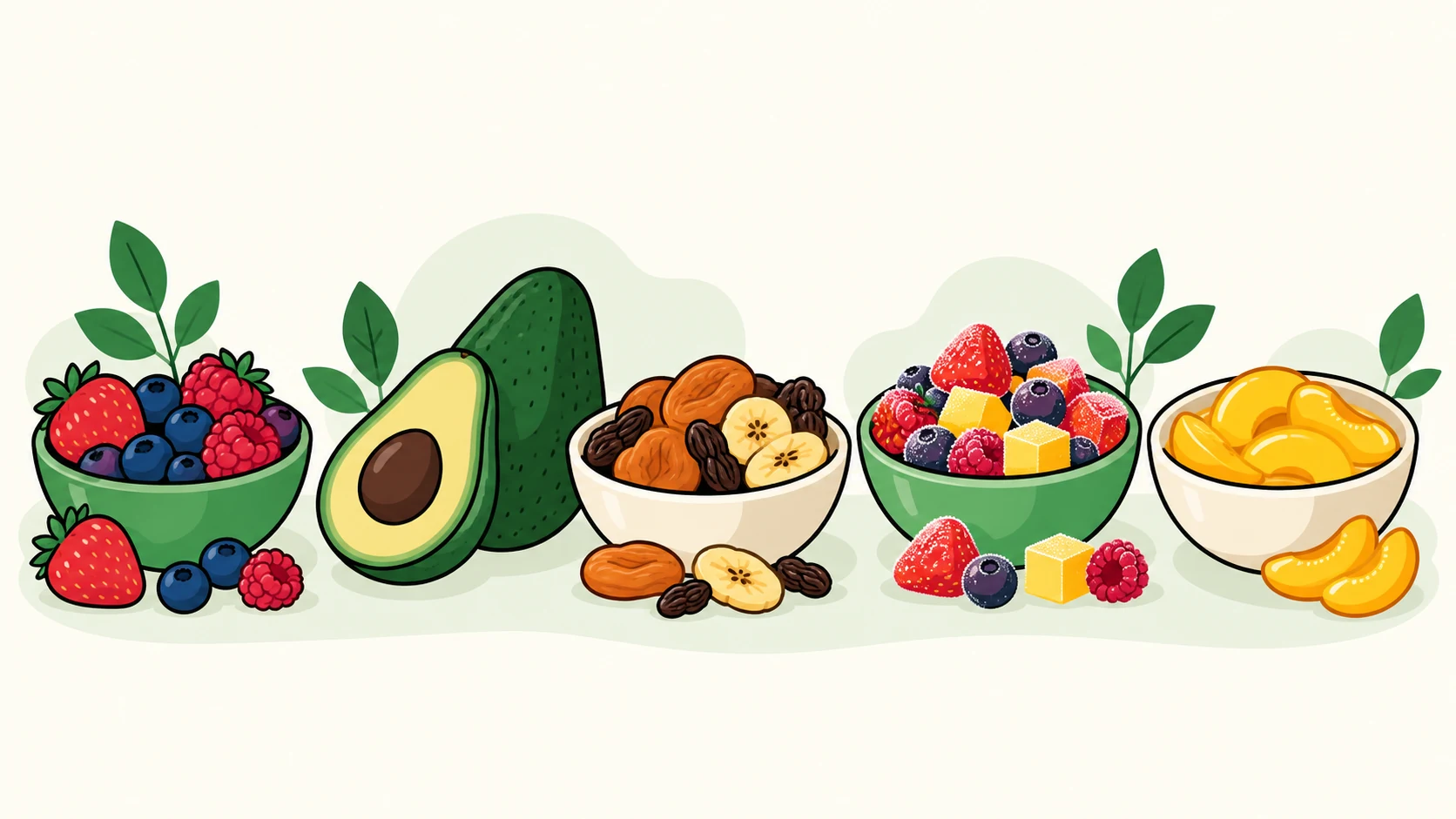
Direct answer: fruit is not automatically included or excluded by a keto approach. The useful comparison is the named fruit in its recorded form and listed portion. Avocado, berries, whole fruit, dried fruit, canned fruit, and fruit sauces can have very different carbohydrate and fiber values.
From food record to meal context
- Exact record
- Preparation
- Meal combination
- Personal context
Compare the form before the fruit name
A fruit’s name alone omits the information that changes a nutrition record. Drying removes water; a canned product may use syrup; a sauce can contain other ingredients; and “one cup” may represent a very different amount of food from a slice or a single piece. Use the individual food page as the factual reference, then decide how that portion fits your own plan.
Explore useful fruit comparisons
Small-screen view: this comparison table scrolls sideways. Swipe or drag it horizontally to see every column.
| Food form | Records to compare | Why the comparison is useful |
|---|---|---|
| Avocado as a distinct fruit record | Avocado, raw | It is botanically a fruit but has a different macronutrient profile from most sweet fruits, so it should not be treated as a proxy for the entire category. |
| Raw and frozen berries | Blackberries, raw, strawberries, raw, raspberries, frozen | Compare the exact raw or frozen record and its listed portion rather than relying on a generic “berries” value. |
| Whole fruit with a smaller listed measure | Grapefruit, raw, cantaloupe, raw, apple, raw | Portion descriptions can be a section, wedge, cup, or fruit. The page gives both the source measure and per-100 g reference. |
| Dried, canned, and sweetened preparations | Apple, dried, blueberries, canned, cranberry sauce | Processing can change water content or add ingredients, so these are not substitutes for their raw counterparts. |
Do not turn a per-100 g comparison into a daily target
Per 100 g is the common denominator for comparing foods. The listed-portion column is calculated from the USDA portion weight so a record can also be read in a kitchen context. Neither column tells you a universal amount of fruit to eat, predicts ketosis, or accounts for the rest of a meal.
This database calculates net carbs as total carbohydrate minus dietary fiber, capped at zero. That calculation is useful for a consistent comparison of food composition, but it is not a separate USDA nutrient field. For an explanation of its limits, see how net carbs are calculated. For a packaged fruit product, use the actual label and ingredient list rather than assuming that the database record matches a current brand.
Continue from comparison to planning
For an editorial overview of fruit within a low-carbohydrate pattern, read keto-friendly fruits. The keto food list and meal-planning guide put individual choices into a whole-meal and whole-week context.
You can also compare fruit with vegetables, nuts, seeds & legumes, and snacks & sweets when deciding whether the relevant difference is the food itself, its form, or its portion.
Complete fruit record directory
Browse all 61 selected USDA records in this fruit group
Entries are grouped by food concept, then by the exact USDA food form. Open the record that matches the preparation and product you are comparing.
Apple
- Apple, rawraw
- Apple, drieddried
Applesauce
- Unsweetened applesauceunsweetened
Apricot
- Apricot, rawraw
- Apricot, drieddried
Asian pear
Avocado
- Avocado, rawraw
Banana
- Banana, rawraw
Banana chips
- Banana chipsprepared food
Blackberries
Blueberry
- Blueberries, rawraw
- Blueberries, cannedcanned
- Blueberries, drieddried
- Blueberries, frozenfrozen
Cantaloupe
Cherries
- Cherries, rawraw
- Cherries, drieddried
Clementine
Cranberries
Cranberry sauce
- Cranberry sauceingredient
Currants
- Dried currantsdried
Date
- Dateswhole food
Dragon fruit
- Dragon fruitwhole food
Fig
- Fig, rawraw
- Fig, drieddried
Grapefruit
Grapes
- Grapes, rawraw
Guava
- Guava, rawraw
Honeydew melon
Kiwi fruit
Kumquat
- Kumquat, rawraw
Lemon
- Lemon, rawraw
Lime
- Lime, rawraw
Lychee
- Lycheewhole food
Mango
- Mango, rawraw
- Mango, drieddried
- Mango, frozenfrozen
Nectarine
Orange
- Orange, rawraw
Papaya
- Papaya, rawraw
Passion fruit
Peach
- Peach, rawraw
- Peach, drieddried
- Peach, frozenfrozen
Pear
- Pear, rawraw
- Pear, drieddried
Persimmon
Pineapple
- Pineapple, rawraw
- Pineapple, frozenfrozen
Plum
- Plum, rawraw
Pomegranate
Prune
- Prune, drieddried
Raisins
- Raisinswhole food
Raspberry
- Raspberries, rawraw
- Raspberries, frozenfrozen
Starfruit
Strawberries
Tamarind
- Tamarindwhole food
Tangerine
Watermelon
Source and method
The food entries in this hub come from USDA FoodData Central’s Survey (FNDDS) release. Each linked page shows its own source description, FoodData Central ID, preparation state, portion weight, and nutrient values. The directory does not infer values for a fruit variety, recipe, or package that is not the same as the listed record.
Article history
- Updated food-category guidance after final factual and editorial review
- First published
Your learning guide