Keto grains, starches & baked foods: compare portions first
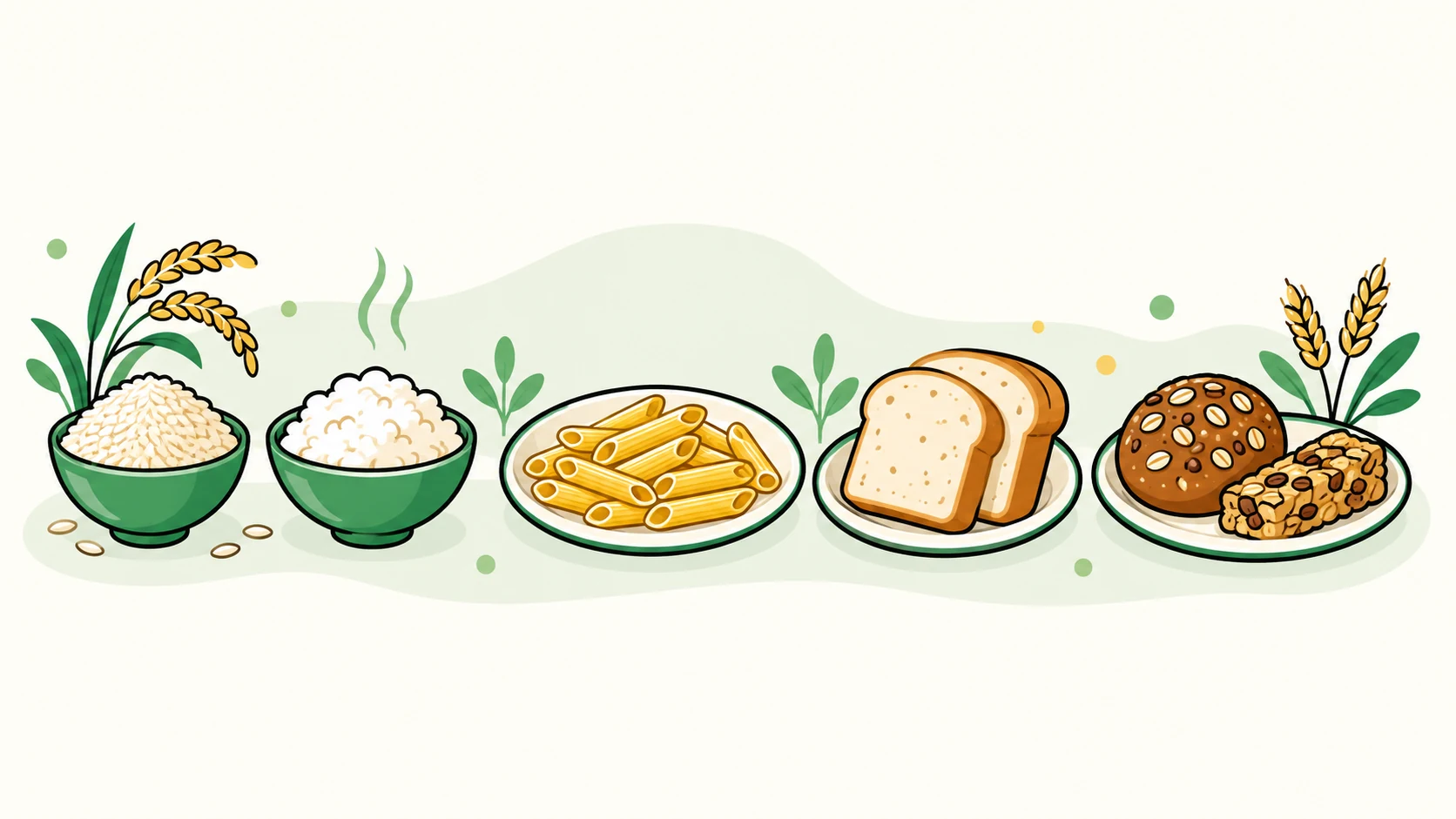
Direct answer: most grain, starch, and baked-food records require deliberate portion accounting in a restrictive keto plan; the category name is not enough to decide the fit. Breads, rice, pasta, cereals, and baked goods differ by recipe, water content, cooking state, and household measure.
From food record to meal context
- Exact record
- Preparation
- Meal combination
- Personal context
Cooked, dry, and baked forms are not interchangeable
One of the easiest comparison errors is treating a dry grain, a cooked grain, and a finished baked product as though they have the same portion basis. The database preserves terms such as “cooked,” “dry, yields,” “toasted,” and “frozen” so readers can see which source record is being used. That precision matters more than whether a food is described generally as whole grain or refined.
Browse by the food you want to replace or account for
Small-screen view: this comparison table scrolls sideways. Swipe or drag it horizontally to see every column.
| Food type | Records to compare | What to verify |
|---|---|---|
| Bread, bagels, and rolls | Bagel, bread, whole wheat, bread, pita | Slice, bun, or full-item weight; homemade and restaurant breads can differ substantially. |
| Rice, pasta, and grain sides | Rice, white, cooked, rice, brown, cooked, pasta, whole grain, cooked | Cooked versus dry basis, recipe additions, and the amount plated. |
| Hot and cold cereals | Oatmeal, regular or quick, whole wheat cereal, cooked, cereal, shredded wheat | Milk, sweeteners, fruit, and whether the package serving matches the record. |
| Prepared baked items | Waffle, plain, frozen, muffin, English, whole wheat, French toast, plain | Toppings, fillings, recipe changes, and number of pieces eaten. |
A lower label claim does not answer every question
The individual pages calculate net carbs as total carbohydrate minus dietary fiber, capped at zero. It is a consistent way to compare USDA records; it is not a universal carbohydrate allowance or a verdict on a person’s eating pattern. The listed portion is based on a USDA household measure and is not a serving recommendation.
Use the net-carbs guide to understand the method. When deciding whether to use an alternative, compare ingredients and the actual package label rather than assuming a food described as “whole grain,” “gluten free,” or “low carb” is nutritionally equivalent to another record.
Move from comparison to a practical alternative
If you are looking for a specific swap, the site also has separate guides for a low-carb bread substitute, low-carb rice substitute, and low-carb pasta substitute. Use vegetables and nuts, seeds & legumes to compare possible ingredients without assuming they are like-for-like replacements.
Complete grain, starch & baked-food record directory
Browse all 55 selected USDA records in this grain, starch & baked-food group
Entries are grouped by food concept, then by the exact USDA food form. Open the record that matches the preparation and product you are comparing.
Bagel
- Bagelprepared food
Brown and wild rice
- Brown and wild rice, cooked, no added fatcooked · no-added-fat
Brown rice
- Brown rice, cooked, no added fatcooked · no-added-fat
Bulgur
- Bulgur with no added fatno-added-fat
Cornmeal mush
- Cornmeal mush with no added fatno-added-fat
Couscous
- Couscous, plain, cookedcooked · plain
English whole grain white muffin
English whole wheat muffin
Focaccia italian
French or vienna whole wheat bread
French toast
- Plain French toastplain
French toast whole grain
Fruit flavored oatmeal
- Oatmeal, instant, fruit flavored, no added fatno-added-fat · instant
Fruit muffin
- Muffin, fruitprepared food
Hush puppy
- Hush puppyprepared food
Maple flavored oatmeal
- Oatmeal, instant, maple flavored, no added fatno-added-fat · instant
Other cereal
- Cereal, other, plainplain
Pancakes
- Plain frozen pancakesfrozen · plain
Pita bread
- Bread, pitaprepared food
Pita whole wheat bread
Plain puffs cereal
- Cereal, plain puffsplain
Potato bread
- Bread, potatoprepared food
Quinoa
- Quinoa with no added fatno-added-fat
Regular or quick oatmeal
- Oatmeal, regular or quick, made with water, no added fatno-added-fat · regular
Shredded wheat cereal
Tortilla whole wheat
Waffle
- Waffle, plain, frozenfrozen · plain
Wheat bagel
- Bagel, wheatprepared food
White and wild rice
- White and wild rice, cooked, no added fatcooked · no-added-fat
White rice
- White rice, cooked, no added fatcooked · no-added-fat
Whole grain fruit waffle
- Waffle, whole grain, fruit, frozenfrozen · whole
Whole grain noodles
- Cooked whole-grain noodlescooked · whole
Whole grain pancakes
- Whole-grain pancakeswhole
- Pancakes, whole grain, frozenfrozen · whole
Whole grain pasta
- Pasta, whole grain, cookedcooked · whole
Whole grain waffle
- Waffle, whole grainwhole
- Waffle, whole grain, frozenfrozen · whole
- Waffle, whole grain, reduced fatwhole · reduced-fat
Whole grain white bagel
Whole grain white bread
- Bread, whole grain whitewhole
- Bread, whole grain white, toastedwhole · toasted
Whole grain white hamburger bun roll
Whole grain white hot dog bun roll
Whole grain white roll
Whole wheat bagel
- Bagel, whole wheatwhole
Whole wheat bread
- Bread, whole wheatwhole
- Bread, whole wheat, made from home recipe or purchased at bakery, toastedwhole · toasted
- Bread, whole wheat, toastedwhole · toasted
Whole wheat cereal
- Whole wheat cereal, cookedcooked · whole
Whole wheat hamburger bun roll
Whole wheat hot dog bun roll
Whole wheat roll
- Whole-wheat rollwhole
Wild 100% rice
- 100% wild rice, cooked, no added fatcooked · no-added-fat
Yellow rice
- Yellow rice, cooked, no added fatcooked · no-added-fat
Source and method
This hub links to USDA FoodData Central Survey (FNDDS) records. The individual page retains the source preparation description, FoodData Central ID, portion, and per-100 g values. A food package, restaurant serving, or home recipe should only be compared to the record when the preparation and ingredients actually match.
Article history
- Updated food-category guidance after final factual and editorial review
- First published
Your learning guide