Keto nuts, seeds & legumes: compare food forms and portions
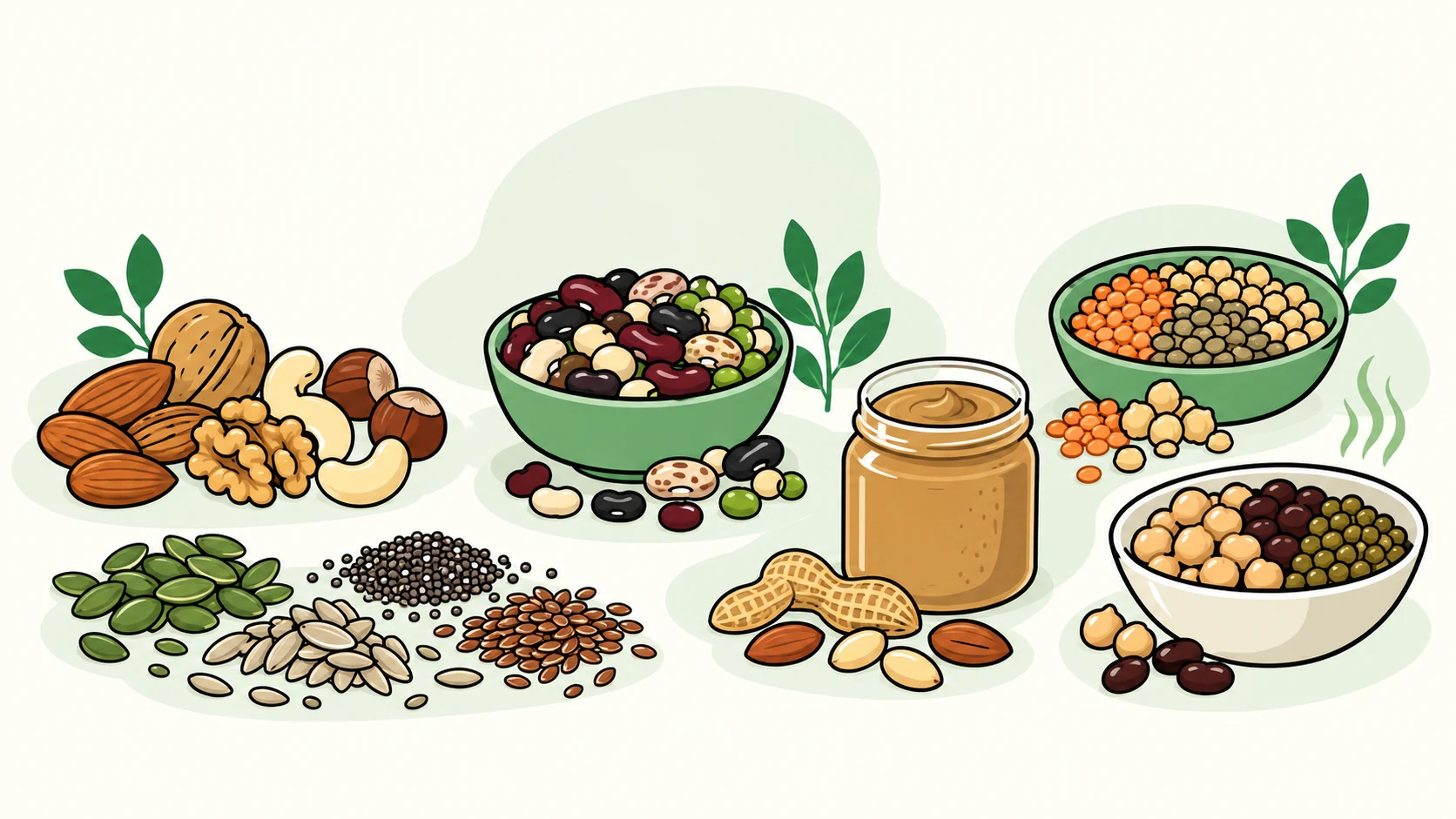
Direct answer: nuts, seeds, and legumes are not one keto category. A whole nut, a nut butter, a seed, a cooked bean, and a sweetened paste can have different carbohydrate, fiber, and portion profiles. The named food, its preparation, and the amount eaten are more useful than the category label.
From food record to meal context
- Exact record
- Preparation
- Meal combination
- Personal context
Dense foods need a precise portion comparison
Many of these records use a cup, tablespoon, ounce, or cooked yield as the source’s household measure. That makes the listed-portion values traceable, but it does not mean those measures are interchangeable or recommended. A tablespoon of a spread and a cup of beans are different food situations, even if both are included in this hub.
Browse by form, not by a blanket rule
Small-screen view: this comparison table scrolls sideways. Swipe or drag it horizontally to see every column.
| Food form | Records to compare | What to verify |
|---|---|---|
| Whole nuts | Macadamia nuts, walnuts, pecans, unroasted | The actual handful, coating, roasting ingredients, and package serving size. |
| Seeds and seed-like ingredients | Chia seeds, flax seeds, pumpkin seeds, unsalted | Whether a tablespoon, recipe amount, or larger household measure is relevant to the meal. |
| Nut and seed spreads | Almond butter, lower sodium, cashew butter, peanut butter | Added sugar, oil, starch, flavorings, allergens, and the product label. |
| Beans, lentils, and chickpeas | Black beans, canned, lentils, from dried, chickpeas, canned | Dry versus cooked measure, sauce, drained weight, and the carbohydrate contribution of the planned portion. |
| Processed legume dishes | Baked beans, beans and tomatoes, hummus, plain | Recipe ingredients and whether a prepared product matches the source description. |
Net carbs are only one comparison field
The individual pages calculate net carbs as total carbohydrate minus dietary fiber, capped at zero. That convention helps compare the source records consistently, but it cannot decide a person’s total carbohydrate limit, protein needs, energy needs, or tolerance for a particular food. A packaged item can also differ from the source record, particularly when it contains sweeteners, starches, or added fiber.
Use the net-carbs guide for the method and the net-carb calculator for a label and portion you enter yourself. For anyone with a nut, peanut, sesame, soy, or other food allergy, the database is not an allergen-safety resource: read the current label and account for cross-contact warnings.
Plan with the rest of the diet, not one ingredient
These foods can be compared alongside vegetables, dairy & alternatives, and grains, starches & baked foods. Readers planning a vegetarian or vegan pattern can continue to the vegetarian keto framework or vegan keto guide; both require more than a net-carb lookup.
Complete nut, seed & legume record directory
Browse all 52 selected USDA records in this nut, seed & legume group
Entries are grouped by food concept, then by the exact USDA food form. Open the record that matches the preparation and product you are comparing.
Almond butter
- Lower-sodium almond butterlower-sodium
Almond paste
- Almond pasteingredient
Almonds unroasted
- Unroasted almondswhole food
Baked beans
- Baked beansbaked
Baked beans vegetarian
- Baked beans, vegetarianbaked · vegetarian
Beans and tomatoes
- Beans and tomatoes with no added fatno-added-fat
Black beans
- Canned black beans with no added fatcanned · from-canned · no-added-fat
- Dried black beans cooked with no added fatdried · from-dried · no-added-fat
Brazil nuts
- Brazil nutswhole food
Cashew butter
- Cashew butteringredient
Cashews unroasted
- Unroasted cashewswhole food
Chestnuts
- Chestnutswhole food
Chia seeds
- Chia seedswhole food
Chickpeas
- Canned chickpeas with no added fatcanned · from-canned · no-added-fat
- Dried chickpeas cooked with no added fatdried · from-dried · no-added-fat
Coconut
- Fresh coconutfresh
Coconut packaged
- Coconut, packagedprepared food
Flax seeds
- Flax seedswhole food
Hazelnuts
- Hazelnutswhole food
Hummus
- Hummus, plainplain
Kidney beans
- Canned kidney beans with no added fatcanned · from-canned · no-added-fat
- Dried kidney beans cooked with no added fatdried · from-dried · no-added-fat
Lentils
- Dried lentils cooked with no added fatdried · from-dried · no-added-fat
Macadamia nuts
- Macadamia nutswhole food
Natto
- Nattoprepared food
Papad grilled or broiled
- Papad, grilled or broiledgrilled · broiled
Peanut butter
- Peanut butteringredient
- Lower-sodium peanut butterlower-sodium
- Lower-sugar peanut butterlower-sugar
Peanuts
- Boiled peanutsboiled
- Peanuts, roasted, saltedroasted · salted
- Peanuts, roasted, unsaltedroasted · unsalted
Peanuts dry roasted
- Peanuts, dry roasted, saltedroasted · salted · dry
- Peanuts, dry roasted, unsaltedroasted · unsalted · dry
Peanuts unroasted
- Unroasted peanutswhole food
Pecans unroasted
- Unroasted pecanswhole food
Pine nuts
- Pine nutswhole food
Pinto beans
- Canned pinto beans with no added fatcanned · from-canned · no-added-fat
- Dried pinto beans cooked with no added fatdried · from-dried · no-added-fat
Pork and beans
- Pork and beansprepared food
Pumpkin seeds
- Unsalted pumpkin seedsunsalted
Refried beans
- Refried beansprepared food
Sesame seeds
- Sesame seedswhole food
Soy nuts
- Soy nutswhole food
Split peas
- Dried split peas cooked with no added fatdried · from-dried · no-added-fat
Sunflower seeds
- Plain salted sunflower seedsplain · salted
- Plain unsalted sunflower seedsplain · unsalted
Tahini
- Tahiniingredient
Walnuts excluding honey roasted
Wasabi peas
- Wasabi peasprepared food
White beans
- Canned white beans with no added fatcanned · from-canned · no-added-fat
- Dried white beans cooked with no added fatdried · from-dried · no-added-fat
Source and method
This hub organizes selected records from USDA FoodData Central’s Survey (FNDDS) release. Each linked page presents its food description, preparation state, FoodData Central ID, source portion, and per-100 g nutrient values. The directory does not assume a generic nut, seed, bean, or branded spread has the same composition as a named source record.
Article history
- Updated food-category guidance after final factual and editorial review
- First published
Your learning guide